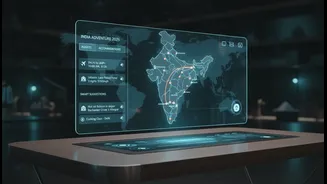










The Old Way: Planning Was a Part-Time Job
Until recently, planning a trip in India was a monumental task. It involved juggling countless inputs: the best time to visit a place while avoiding monsoons, finding hotels that please everyone from grandparents to toddlers, and stitching together a workable
itinerary from scattered blog posts and reviews. This process was often a stressful, time-consuming affair that required sifting through a sea of information, managing complex budgets in a spreadsheet, and endless back-and-forth with family members. The result was often a compromise, a trip that ticked the boxes but perhaps lacked the seamless joy it was supposed to inspire. For many, the logistical hurdles became so daunting that the excitement of the trip itself began to fade before it even started.
The New Co-Pilot: AI Enters the Chat
In 2026, the Indian traveler has a powerful new ally: the AI trip planner. These intelligent tools, available as apps and websites, are acting as personal travel assistants that are fundamentally changing the planning process. Instead of spending hours researching, travelers can now provide simple prompts like "a 7-day family-friendly trip to Kerala under ₹80,000" and receive a detailed, day-by-day itinerary in seconds. These platforms analyze vast amounts of data—from flight prices and hotel reviews to weather patterns and local festival dates—to create optimized and personalized plans. A recent report shows that 68% of Indian travelers are likely to use AI for planning their next trip, signaling a major shift from manual research to automated, intelligent assistance.
What 'Practical' Really Means
The true revolution of AI in travel is how it makes the entire experience more practical. This isn't just about speed; it's about efficiency and value. For budget-conscious travelers, AI tools analyze pricing trends to suggest the cheapest times to book flights and can track expenses in real time, preventing costly overruns. For families and large groups with diverse needs, AI excels at personalization. It can build an itinerary that includes a museum for the parents, a playground for the kids, and a restaurant with vegetarian options that everyone can agree on, all while ensuring travel times between locations are realistic. This moves the focus away from logistical headaches and toward the actual experience.
Smarter, Not Sterile: Keeping the Human Touch
A common concern is that AI might make travel too predictable, stripping away the joy of spontaneous discovery. However, most travelers are using AI not as a pilot, but as a co-pilot. They use it for the heavy lifting—research, budgeting, and logistics—which frees up mental energy to be more present and spontaneous during the trip itself. Many AI platforms integrate human elements, such as user reviews and local recommendations, ensuring the suggestions aren't just algorithmic but are grounded in real-world experience. The goal of these tools isn't to replace human curiosity but to enhance it by removing friction. AI handles the boring parts so that travelers have more time for the moments that matter.
Beyond the Itinerary: AI On the Go
The role of AI extends far beyond the pre-trip planning phase. Once on the ground, these tools become invaluable in-trip companions. Need a real-time language translation to order at a local eatery? AI can do that. Stuck in traffic and need an alternate route? Your AI map has it covered. Some apps provide real-time alerts for flight delays or gate changes, while others offer hyperlocal insights, suggesting a nearby attraction you might have otherwise missed. For travelers in India, some specialized AI planners even account for the country's unique complexities, like navigating IRCTC train schedules, monsoon-related route changes, and crowded festival seasons, making them truly indispensable.