


An Unexpected Connection
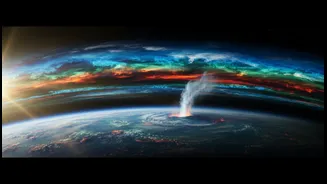
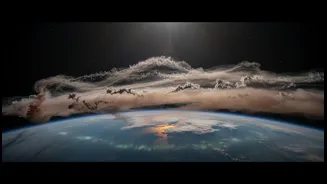
For decades, we’ve thought of the stratosphere, the atmospheric layer roughly 10 to 50 kilometres above us, as a realm primarily influenced by ozone-depleting chemicals we produced on the ground. This layer is critical, housing the ozone that shields
us from harmful ultraviolet radiation. However, a growing body of research is revealing a powerful and direct link between extreme events on Earth's surface—specifically, massive wildfires and volcanic eruptions—and the delicate chemistry of this vital atmospheric region. Scientists are now understanding that what happens on the ground doesn't stay on the ground, with significant consequences for our planet's climate and protective ozone layer.
The Smoke That Reaches the Heavens
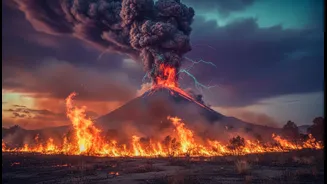
The key to this connection from wildfires lies in a phenomenon known as pyrocumulonimbus clouds, or “fire-triggered thunderstorms”. When a wildfire becomes incredibly intense, the immense heat generates a powerful updraft, creating its own weather system. These firestorms are so strong they can blast smoke, ash, and other combustion byproducts directly into the normally stable and cloudless stratosphere. Once there, these smoke particles, which include black carbon and organic compounds, don't just disappear. They can persist for months, or even over a year, drifting on stratospheric winds and spreading across an entire hemisphere. The 2019-2020 Australian “Black Summer” fires, for example, injected over a million tons of smoke into the stratosphere, providing scientists with an unprecedented, real-world laboratory.
A Chemical Attack on Ozone
Once in the stratosphere, these smoke particles become tiny platforms for destructive chemical reactions. Researchers have discovered that the surfaces of these wildfire aerosols can absorb chlorine-containing molecules that are normally stable. This process activates the chlorine, turning it into a form that aggressively destroys ozone molecules. Studies following the Australian fires showed a tangible impact: a 3-5% depletion in ozone over mid-latitude regions of the Southern Hemisphere. Shockingly, the smoke particles even drifted over Antarctica, widening the ozone hole by an estimated 10% compared to the previous year. As climate change leads to more frequent and intense wildfires, this newly understood mechanism poses a significant threat to the decades-long recovery of the ozone layer.
Volcanoes: A Similar, Potent Force
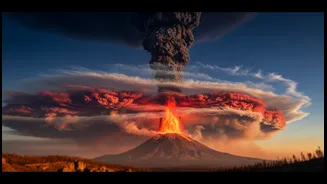
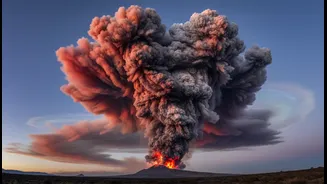
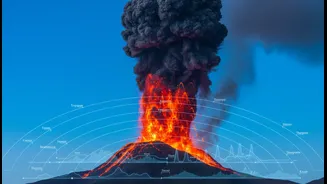
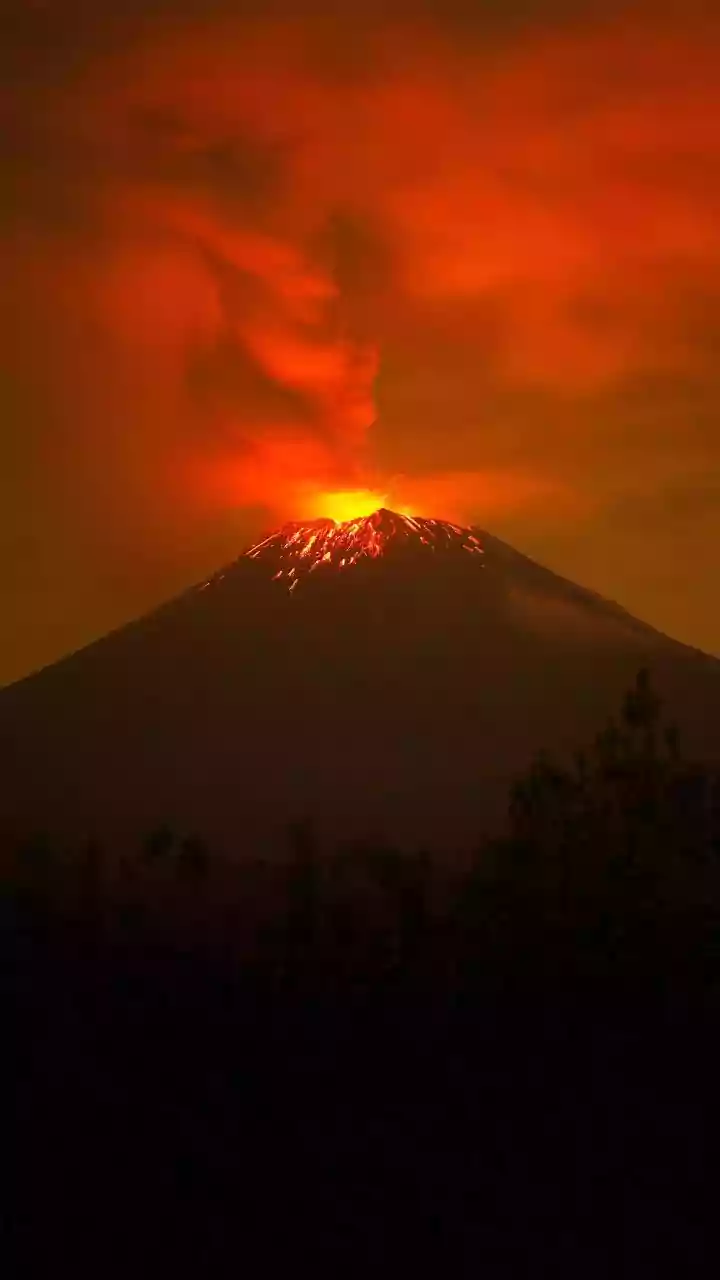
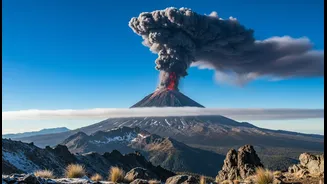
Wildfires aren't the only force of nature capable of this stratospheric disruption. Volcanoes have long been known to impact climate, primarily through the injection of sulfur dioxide. This gas converts into sulfate aerosols in the stratosphere, which reflect sunlight and can cause temporary global cooling. But like wildfire smoke, these volcanic aerosols also provide surfaces for ozone-depleting chemical reactions. Furthermore, both wildfires and volcanoes have recently been found to pump enormous amounts of water vapour into the stratosphere. This “humidification” of the dry stratosphere is a previously overlooked effect that can also enhance ozone-destroying chemical cycles and act as a greenhouse gas, further complicating the climate picture.
A Warmed Stratosphere, A Changed Climate
The impact isn't just chemical. The dark, carbon-rich particles from wildfires are highly effective at absorbing sunlight. When a dense plume of smoke resides in the stratosphere, it absorbs solar energy and causes significant local warming. Following the 2020 Australian fires, researchers measured a striking stratospheric temperature increase of up to 3.5°C that lasted for months—a stronger signal than from many recent volcanic eruptions. This warming can alter stratospheric circulation patterns, potentially affecting weather systems in the lower atmosphere. It demonstrates that these surface events don't just add pollutants; they actively change the physical environment of the stratosphere, with cascading effects on the entire climate system.