




What Exactly Are Compression Cubes?
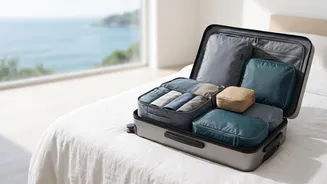
Think of a standard packing cube, which is a zippered fabric container used to organise clothes. Now, add a second, outer zipper. That's a compression cube. You fill the cube, close the main zipper, and then zip the second one, which squeezes the cube and pushes
out excess air. This simple mechanism makes the contents flatter and more compact, reducing the volume of soft items like t-shirts, jumpers, and jeans. They are not vacuum bags; they simply consolidate fabric into a dense, manageable block, creating a more structured and organised suitcase. This organisation is often cited by travellers as their main benefit.
The Golden Rule: Roll, Don't Just Fold
The debate between rolling and folding clothes is long-standing, but when it comes to compression cubes, rolling often has the edge. Tightly rolling items like t-shirts, trousers, and knitwear minimises wrinkles and allows you to pack the cube more densely. This method lets you see every item at a glance and fills the cube's volume efficiently before you even touch the compression zipper. For more structured items like button-down shirts or blazers that are prone to creasing, careful folding is preferable. You can even use a hybrid approach: roll casual wear in one cube and fold formal wear in another to get the best of both worlds.
Strategise Your Cubes for Peak Organisation
The true magic of cubes lies in categorisation. Instead of a single jumbled pile, you create a modular system. Dedicate specific cubes to different types of clothing: one for tops, one for bottoms, another for underwear and socks. This not only makes packing logical but also simplifies unpacking. When you arrive at your destination, you can transfer the cubes directly into hotel drawers without making a mess. For even greater efficiency, consider using different coloured cubes for different categories or using a double-sided cube—one side for clean clothes and the other for dirty laundry.
The Art of the Squeeze: How to Compress Properly
To get the most out of your compression cubes, avoid overfilling them. An overstuffed cube will create uneven, lumpy blocks that are difficult to arrange in your suitcase and can put stress on the zippers. A good guideline is to fill the cube so it's snug but not straining before you attempt the compression zip. When zipping, guide the fabric away from the zipper track with your finger to prevent snagging. A properly filled and compressed cube should be firm and relatively flat, making it easy to stack with others.
Play Tetris with Your Bag
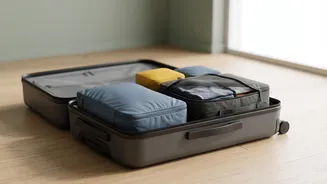
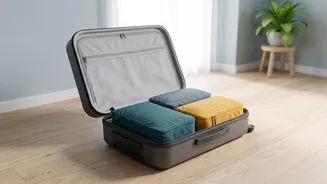
Once your clothes are neatly compressed into rectangular blocks, packing your cabin bag becomes a simple game of Tetris. Start by placing the largest and heaviest cubes at the bottom of your suitcase, near the wheels, to create a stable base. Then, fit the smaller cubes around them, filling in the gaps. This modular approach eliminates the wasted space that often occurs with loosely packed items. Items that you don't compress, like shoes or toilemetry bags, can be tucked into the remaining nooks and crannies.
A Crucial Reminder on Weight
Compression cubes save space, not weight—this is the most important limitation to remember. While they are fantastic for making bulky items like jumpers and jackets more compact, the weight remains the same. It can be tempting to use the extra space to pack more items, but this can easily push your cabin bag over the airline's weight limit. Before you head to the airport, always weigh your fully packed bag. Use compression cubes to travel lighter and more efficiently, not just to pack more.