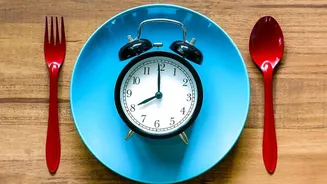








Aligning With Your Body's Clock
At the heart of this discovery is your body's internal 24-hour clock, known as the circadian rhythm. This natural cycle governs nearly every bodily function, from when you feel sleepy to your metabolism. Your digestive system isn't designed to be working
hard at all hours; it has its own rhythm, being most efficient during the day and preparing to wind down in the evening. When you eat a late dinner, you force your body to digest food at a time when it's biologically programmed for rest and repair. This mismatch can throw your metabolic processes out of sync. By eating earlier, you work in harmony with your body’s clock, setting the stage for optimal function overnight.
How an Earlier Dinner Boosts Fat Burning
The term "fat oxidation" simply means burning fat for energy. Several studies show that eating late can reduce your body's ability to do this effectively. When you eat, particularly a meal rich in carbohydrates, your blood sugar and insulin levels rise. Insulin's job is to manage this sugar, but it also signals your body to stop breaking down fat. If you go to bed with elevated insulin, your fat-burning potential is significantly suppressed overnight. Finishing your last meal at least two to three hours before sleep allows your blood sugar and insulin to return to baseline. This creates a longer fasting window overnight, prompting your body to switch its primary fuel source from the glucose from your recent meal to your stored fat, thus increasing fat oxidation.
The Connection to Deeper, Restful Sleep
A late, heavy meal can be a significant roadblock to high-quality sleep. The process of digestion is an active one, increasing your core body temperature and heart rate. However, to fall asleep and enter the deep, restorative stages of sleep, your body's core temperature needs to drop. Eating close to bedtime works against this natural process, potentially making it harder to fall asleep and reducing the amount of deep sleep you get. Studies have found a clear link between delayed meal times and poorer sleep quality. An early dinner avoids this conflict, allowing your digestive system to do most of its work before you lie down, preventing issues like acid reflux and creating the cool, calm internal environment needed for a peaceful night.
Practical Tips to Make the Shift
The idea of eating dinner two hours earlier might seem daunting, especially with a busy schedule. The key is to make gradual changes. Start by shifting your dinner time by just 15 to 30 minutes for a week. Once you're comfortable, shift it again. Make your evening meal lighter and easier to digest, focusing on lean protein and fibre, which can help with satiety. If you find yourself hungry before bed, opt for a small, light snack like a handful of nuts or a banana, rather than a full meal. Planning ahead can also make a huge difference. Knowing what you’ll have for dinner removes the last-minute stress that often leads to late eating. Consistency is crucial, as a regular eating schedule helps regulate your circadian rhythm for both better metabolism and sleep.