


Beyond the 'Goldilocks Zone'
You've likely heard of the 'habitable zone', often called the 'Goldilocks zone'. It’s the not-too-hot, not-too-cold region around a star where a planet could theoretically have liquid water on its surface. For a long time, this was the primary filter
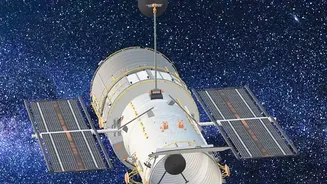
in our search for life-sustaining worlds. The logic was simple: find an Earth-sized, rocky planet in this temperate zone, and you might find a world with oceans, and maybe even life. This model gave us exciting candidates like Kepler-186f, the first Earth-sized planet found in another star's habitable zone. But as our telescopes, particularly the James Webb Space Telescope (JWST), have become more powerful, they've revealed that a planet's address is only a tiny part of the story.
An Atmosphere of Possibility
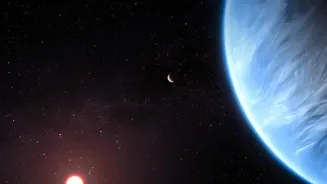
It’s now clear that a planet's atmosphere is just as important, if not more so, than its distance from its star. An atmosphere can trap heat, shield the surface from harmful radiation, and, most importantly, hold clues about what's happening on the ground. The JWST is a game-changer because it can perform detailed atmospheric characterization, looking for 'biosignatures'—gases like methane and carbon dioxide that could indicate biological processes. For example, recent JWST analysis of the exoplanet K2-18 b detected both methane and carbon dioxide, which, combined with a lack of ammonia, strongly suggests the presence of a water ocean. This ability to peek into the air of distant worlds is turning the search from a simple location hunt into a complex chemical investigation.
Meet the 'Hycean' Worlds
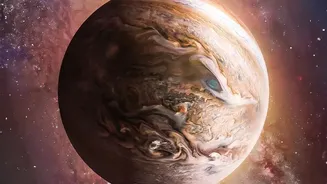
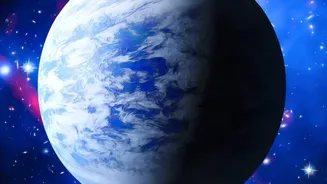
Perhaps the most radical shift in our thinking comes from a new class of planet entirely: 'Hycean' worlds. Coined in 2021 by researchers at the University of Cambridge, the term—a mix of 'hydrogen' and 'ocean'—describes planets with deep, global oceans under hydrogen-rich atmospheres. These planets are typically larger than Earth but smaller than Neptune and were previously overlooked. Because hydrogen is an excellent greenhouse gas, a Hycean planet can maintain liquid water oceans even if it's far from its star. This dramatically widens the potential habitable zone, bringing many more known exoplanets into the conversation. While none are confirmed yet, worlds like K2-18 b are considered prime candidates. The life on such a planet would be entirely aquatic, thriving in conditions vastly different from Earth's.
The Star You Orbit Matters
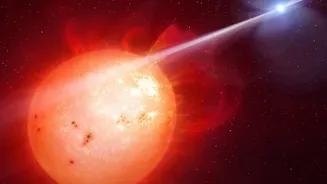
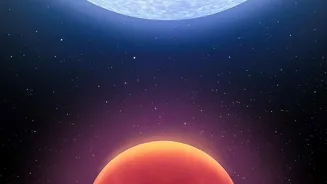
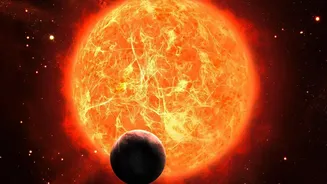
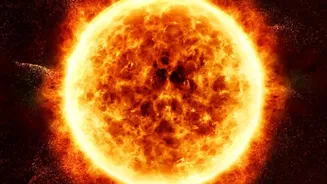
The type of star a planet orbits also plays a crucial role. Most stars in our galaxy are red dwarfs, which are smaller, cooler, and longer-lived than our sun. This makes them common hosts for exoplanets, including promising ones like the seven worlds of the TRAPPIST-1 system. However, red dwarfs can be volatile, blasting their nearby planets with powerful flares that could strip away atmospheres and sterilize surfaces. A planet needs protection, such as a strong magnetic field, to be truly habitable in such a system. Conversely, astronomers recently identified a potential gas giant in the habitable zone of a star 2,000 degrees hotter than our sun, proving that even environments we once considered too extreme might harbor planets in stable orbits.
A New Definition of Habitable
All this new information is pushing scientists to move beyond just 'habitable' and 'uninhabitable'. Some researchers have proposed the term 'euhabitable'—meaning 'suitable for life'—to distinguish planets that have the right ingredients for life (like nutrients and a protective magnetosphere) from those that are merely in the right location. A planet like Jupiter's moon Europa, which may have a subsurface ocean warmed by internal forces, could be euhabitable despite being far outside the sun's traditional habitable zone. This shift acknowledges that life might not always depend on surface water in direct contact with the atmosphere. The focus is evolving from finding a mirror image of Earth to identifying any world that could, by its own unique chemistry and geology, spark and sustain life.