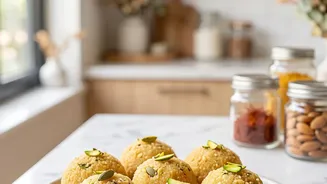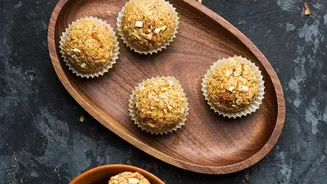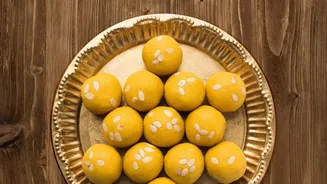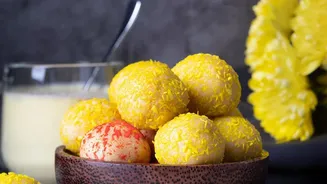





Besan ladoo should be a melt-in-your-mouth delight, but it often ends up hard and dense. This common kitchen frustration usually comes down to a few key mistakes. Let's break down the science of making perfectly soft ladoos every single time.
The Art of Roasting Besan
The single
most important step in making besan ladoo is roasting the gram flour, or besan. This is where the magic happens, but it's also where things can go wrong. The goal is to cook the besan slowly on a low flame until its raw, chalky smell is replaced by a deep, nutty aroma. Rushing this process on high heat is a primary cause of hard ladoos. The flour burns before it can cook through, resulting in a bitter taste and a tough texture. Under-roasting is just as bad, leaving the ladoos with an unpleasant raw flour taste that sticks to the roof of your mouth. Patience is key here; continuous stirring for 15-25 minutes over a low heat ensures every particle is evenly toasted and golden. The colour should transform to a sandy brown, and the kitchen should be filled with its signature fragrance.
Getting the Ghee Ratio Right
Ghee does more than just add flavour; it's the binding agent that determines the final texture. Too little ghee is a direct path to a dry, crumbly mixture that refuses to hold its shape, resulting in hard ladoos. On the other hand, too much ghee will create a greasy, loose mixture that may be too soft to form into balls, especially in warmer weather. The ideal besan-to-ghee ratio is often cited as 2:1 by weight. Many experts suggest adding ghee gradually rather than all at once. Starting with about half the ghee and adding more as you roast allows the flour to absorb the fat evenly. The final roasted mixture should be cohesive and smooth, not swimming in oil. If you find your mixture is too dry to bind, you can always mix in a tablespoon or two of warm, melted ghee to fix it.
The Crucial Sugar Step
When and how you add sugar is another critical factor. The biggest mistake is adding sugar to the besan mixture while it is still hot. This will cause the sugar to melt and then recrystallize as it cools, creating a sticky, then rock-hard, texture. Always let the roasted besan cool down until it is just warm to the touch before mixing in the sugar. The type of sugar also matters. While granulated sugar can work if powdered finely, the best texture often comes from 'tagar' or 'boora', a type of porous, crystalline sugar that gives ladoos a desirable grainy yet melt-in-the-mouth quality. Using finely powdered sugar ensures it blends evenly without creating a grainy feel. If your mixture becomes too runny after adding sugar, you can try refrigerating it for 15-20 minutes to help it firm up before shaping.
Choosing Your Flour
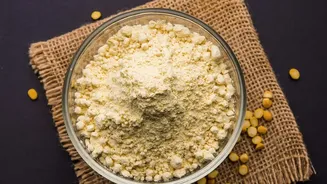
While standard fine besan is commonly used, many traditional recipes call for a slightly coarser variety, often sold as 'ladoo besan'. This coarser flour provides a more textured, grainy bite and can prevent the ladoos from feeling pasty or sticking to your teeth. If you can only find fine besan, some cooks recommend adding a tablespoon or two of semolina (suji/rava) during the roasting process to mimic that desirable coarse texture. Regardless of the type, using fresh, good-quality besan is essential, as old flour can taste bitter and ruin the final product. The right flour, combined with proper roasting, is the foundation for a perfect ladoo.
Troubleshooting and Binding
Even with careful preparation, you might face issues when it's time to shape the ladoos. If the mixture is too dry and crumbly, it simply means you need a little more binder. Add a tablespoon of warm melted ghee and mix until it comes together. If the opposite happens and your mixture is too loose or soft, it's likely due to either too much ghee or adding sugar when the besan was too hot. In this case, letting the mixture chill in the refrigerator for about 20 minutes should help the ghee solidify, making it firm enough to shape. When rolling, press the mixture firmly in your palm to help it bind before gently shaping it into a ball. A little warmth from your hands can help melt the ghee just enough to create a smooth, perfect sphere.