








Thinking Below the Surface
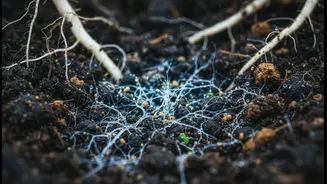
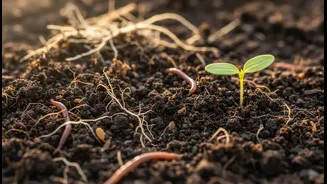
For decades, farming has focused on what can be added to the soil, primarily through chemical fertilisers. But a major shift is underway. Scientists are now looking at soil not as an inert medium, but as a living, breathing ecosystem teeming with billions
of microorganisms. This new perspective reveals that the key to a good harvest isn’t just about the right amount of Nitrogen, Phosphorus, and Potassium (NPK), but about fostering the complex web of life beneath our feet. Healthy soil is rich in organic matter and microbial activity, which helps it retain water, resist erosion, and make nutrients more available to plants. This biological approach is the foundation of the encouraging news coming from labs and research farms.
The Power of Microbes
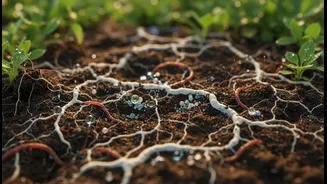
One of the most exciting frontiers in soil science is the use of biostimulants. These are not fertilisers, but rather substances or microorganisms that enhance a plant's natural processes. Think of them as health supplements for the soil. Microbial biostimulants introduce beneficial bacteria and fungi that perform critical jobs. Some microbes, for instance, are experts at 'unlocking' phosphorus that is already in the soil but in a form plants can't use. Others help fix nitrogen from the atmosphere, reducing the need for chemical inputs. These tiny allies improve root development, boost nutrient uptake, and can even help plants better withstand stresses like drought and salinity. This leads to healthier plants, better yields, and a reduced dependency on costly chemical fertilisers.
Smarter Farming Through Technology
Guesswork is rapidly being replaced by data. In the past, soil testing was a slow process, often taking weeks to get results from a lab. By then, it was often too late to make timely decisions. Today, new technologies are putting the power of a lab directly into farmers' hands. Portable, smartphone-based soil testing kits can now provide real-time analysis of key soil parameters like nutrient levels and pH in minutes. Devices like 'Bhu Parikshak' developed by IIT Kanpur or the handheld 'NutriSens' system give instant feedback, allowing farmers to apply exactly what the soil needs, right when it needs it. This move towards precision agriculture saves money, increases crop quality, and prevents the environmental damage caused by over-fertilisation.
Carbon: The Unsung Hero
The conversation around carbon is changing. While too much carbon in the atmosphere is a problem, carbon in the soil is a farmer's best friend. Regenerative agriculture practices, also known as carbon farming, focus on drawing carbon from the atmosphere and storing it in the soil as organic matter. Methods like minimum tillage, planting cover crops, and integrating trees into farmland (agroforestry) build up this vital soil carbon. The benefits are immense. A one percent increase in soil organic matter can significantly boost the soil's water-holding capacity, making farms more resilient to drought. Healthier, carbon-rich soils lead to better productivity and can even create new income streams for farmers through carbon credit markets.