






The Philosophy: Why Bodyweight Works
Bodyweight training, or calisthenics, is effective because it uses your own mass as resistance. This form of exercise is highly functional, meaning it strengthens your muscles in ways that support everyday movements, from lifting groceries to climbing
stairs. By engaging multiple muscle groups and stabilising muscles simultaneously, these workouts improve strength, balance, coordination, and mobility. The key to getting 'maximum results' isn't about having gear, but about consistency and progressive overload—gradually making the exercises more challenging over time.
The Essential Warm-Up
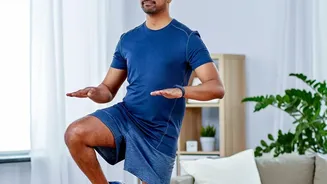
Never skip a warm-up. Preparing your body for exercise is crucial for preventing injury and improving performance. A dynamic warm-up increases blood flow to your muscles and lubricates your joints. Spend five minutes performing simple movements to get your body ready. Try a sequence of 30 seconds of jumping jacks, 10 bodyweight squats, 10 arm circles in each direction, and 5 lunges per leg. This prepares your body for the work ahead without causing fatigue.
Upper Body and Core Strength
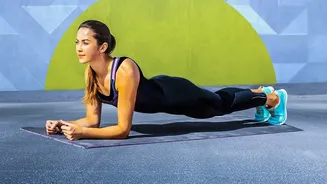
A strong upper body and core are the foundation of functional fitness, improving posture and stability. Push-ups are a classic for a reason, targeting the chest, shoulders, and triceps. If a standard push-up is too difficult, start with incline push-ups against a wall or desk, or perform them on your knees. The plank is another essential exercise for core stability. Aim to hold a straight line from your head to your heels, engaging your core. You can modify by dropping to your knees or increase the challenge with plank shoulder taps.
Lower Body Power
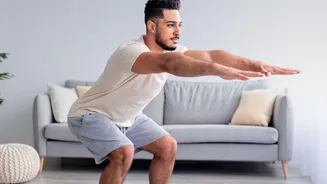
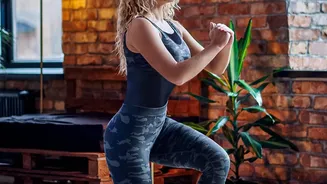
Your legs contain your largest muscle groups, and working them effectively burns calories and builds foundational strength. Bodyweight squats are a cornerstone of any routine, targeting your quads, hamstrings, and glutes. Focus on keeping your chest up and lowering until your thighs are parallel to the floor. Lunges, both forward and reverse, are excellent for training each leg independently, which helps correct strength imbalances and improves balance. For an added glute and hamstring challenge, glute bridges are simple yet powerful: lie on your back with knees bent and lift your hips toward the ceiling.
Cardio Without the Noise
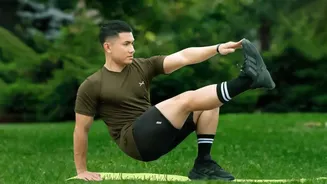
You don't need to jump around to get your heart rate up, making small-space workouts apartment-friendly. Mountain climbers are a fantastic no-jump option for boosting cardiovascular fitness while also engaging the core. Burpees, done without the jump, are another great choice. Simply perform the squat, plank, and push-up components, then stand back up. These compound movements involve the whole body, providing a cardiovascular challenge without disturbing your neighbours.
Putting It All Together: A Sample Routine
Consistency is more important than intensity when you're starting. Aim to perform a full-body workout three times a week on non-consecutive days. A simple and effective circuit could look like this: perform each exercise for 45 seconds, followed by 15 seconds of rest before moving to the next. Complete 2-3 rounds of the entire circuit. 1. Bodyweight Squats 2. Push-ups (any variation) 3. Reverse Lunges (alternating legs) 4. Plank 5. Glute Bridges 6. Mountain Climbers As you get stronger, you can increase the challenge by adding more reps, slowing down the movement to increase time under tension, or reducing rest time between exercises.