


The Twin Environmental Problems
Every year, India faces the monumental task of managing millions of tonnes of agricultural residue, like rice husks, corn cobs, and sugarcane bagasse. Often, this waste is burned, contributing to severe air pollution. At the same time, our water sources
are increasingly contaminated with microplastics—tiny plastic particles less than 5mm in size that come from degraded plastic waste. These particles are notoriously difficult to remove with traditional water treatment methods and pose a threat to ecosystems and potentially human health. This creates a dual crisis: a surplus of organic waste on land and a plague of plastic pollution in water.
What Is Biochar?
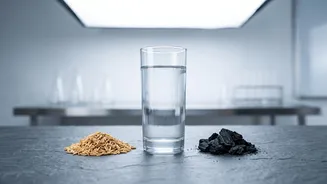
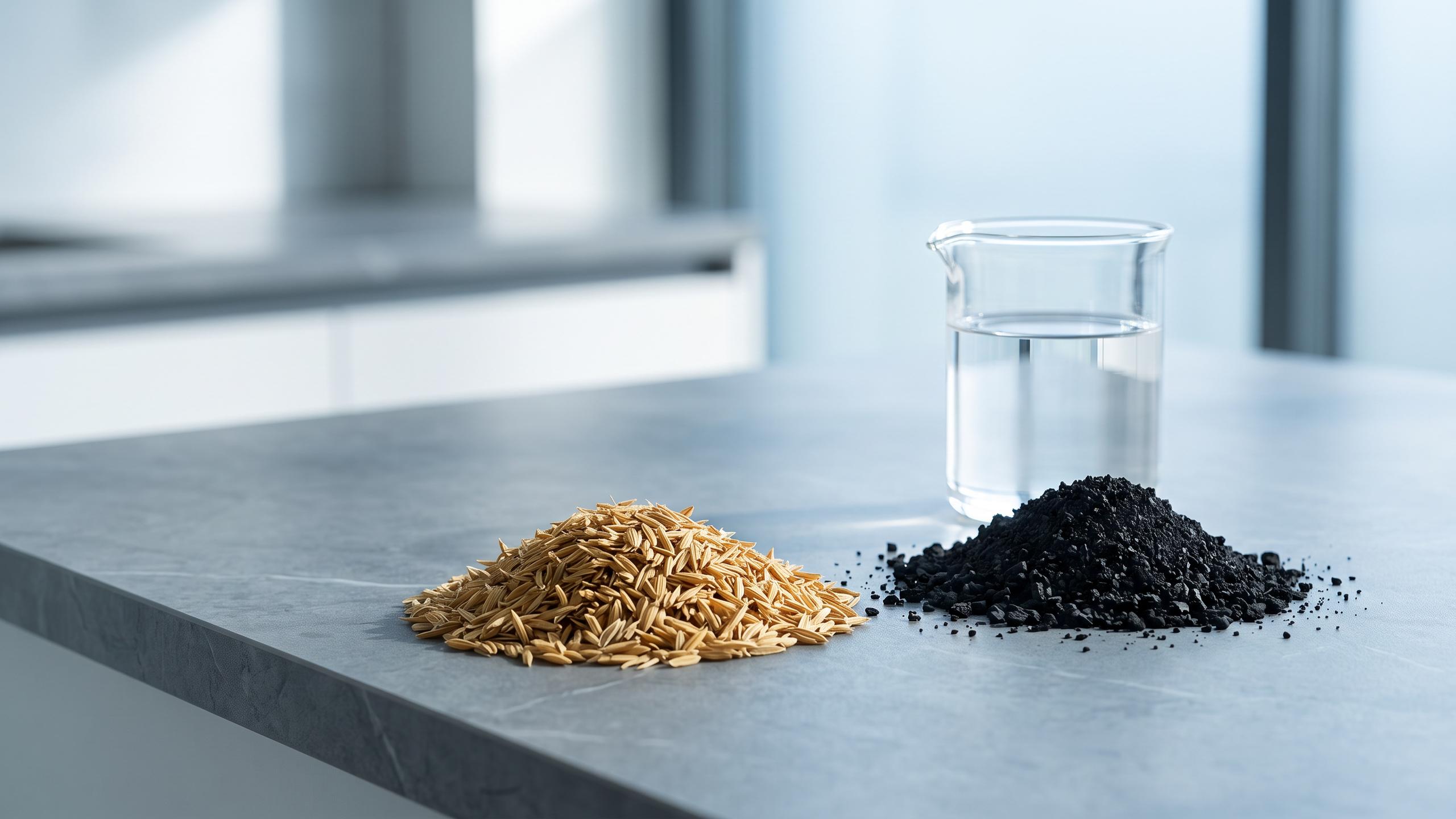
Enter biochar, a special type of charcoal that is emerging as an environmental hero. It’s created by heating biomass—in this case, agricultural waste—in a low-oxygen environment through a process called pyrolysis. Unlike regular charcoal meant for burning, biochar is produced with the goal of creating a stable, carbon-rich material. The result is a lightweight, highly porous substance with a massive internal surface area. Think of it as a high-tech sponge, engineered by nature and heat, ready to soak up pollutants.
From Farm to Filter: The Process
The creation of biochar is a model of circular economy principles. It starts by collecting agricultural waste that would otherwise be discarded or burned. This biomass is fed into a pyrolysis reactor, where it is heated to temperatures between 400 and 700 degrees Celsius in the near-absence of oxygen. This process prevents the waste from combusting and instead breaks it down into a solid, carbon-rich biochar. The specific feedstock and temperature used can be adjusted to create biochar with different properties, tailoring it for specific tasks. For instance, biochar made from corn cobs or pinewood has shown excellent results in filtering pollutants.
The Science of Trapping Microplastics
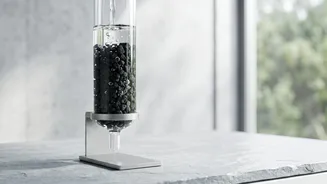
Biochar's effectiveness as a microplastic filter comes down to its unique physical and chemical properties. Its vast network of microscopic pores acts as a physical sieve, trapping plastic particles as water passes through. But it's not just a simple trap. The surface of biochar has specific chemical characteristics that cause pollutants to stick to it through a process called adsorption. Mechanisms like electrostatic attraction and hydrophobic interactions cause the tiny plastic fragments to cling to the biochar's surface, effectively pulling them out of the water. Studies have demonstrated that biochar filters can remove over 90% of microplastics from water under laboratory conditions.
A Low-Cost, Sustainable Game-Changer
Perhaps the most significant aspect of this technology is its affordability and sustainability. The raw material—agricultural waste—is abundant and often available at little to no cost. This makes biochar significantly cheaper to produce than conventional filter materials like activated carbon. By turning waste into a valuable resource, the technology supports rural economies and provides a financial incentive to avoid crop burning. Furthermore, the process is carbon-negative; it locks carbon that would have been released into the atmosphere into a stable solid form that can last for centuries.
The Road Ahead
While the promise of biochar is immense, there are challenges to scaling it from the lab to large-scale, real-world applications. The performance of biochar can vary depending on the feedstock and production process, so consistency is key. Researchers are working to optimize production methods and test biochar filters in complex environmental conditions, not just in controlled lab settings. Issues like market development, regulatory policies, and the initial investment for production facilities also need to be addressed to unlock its full potential. Despite these hurdles, the technology is already being used in some commercial applications for waste valorization and is being actively explored for broader use.