







A New Space Age For India
For decades, a career in India's space sector meant one thing: joining the Indian Space Research Organisation (ISRO). But a seismic shift is underway. The government's decision to open the sector to private players in 2020, followed by the establishment
of the Indian National Space Promotion and Authorisation Centre (IN-SPACe), has created a vibrant new ecosystem. IN-SPACe acts as a single-window agency, empowering private companies to build and launch rockets, own and operate satellites, and sell space-based services. This policy change, coupled with liberalised foreign direct investment norms, has seen private funding pour into the sector, with over 400 startups now part of India's space story. The industry, valued at around $9 billion in 2023, is projected to potentially reach $45 billion by 2030, signaling a massive expansion in jobs and economic contribution.
The Bedrock: Manufacturing and Hardware
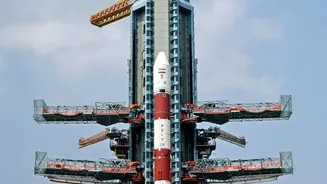
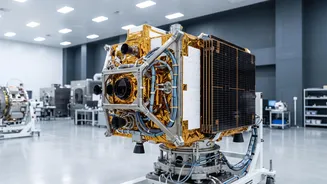
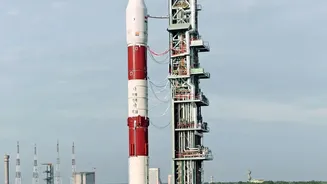
Every satellite in orbit and every rocket that carries it there begins on the factory floor. This makes manufacturing the foundational pillar of the commercial space boom. The demand is surging for professionals who can build everything from entire launch vehicles to the smallest, most precise components. Companies like Skyroot Aerospace, which successfully launched India's first private rocket, and Agnikul Cosmos, known for its 3D-printed engines, are actively hiring engineers. The key roles include propulsion engineers, structures and avionics specialists, and manufacturing engineers with expertise in additive manufacturing. Established giants like Larsen & Toubro and Godrej Aerospace are also expanding their space divisions. This field needs mechanical, electrical, and aerospace engineers who can design, build, and test the hardware that powers India's journey to the stars. The work is tangible, with a direct impact on making space access more affordable and frequent.
The Brains: Data Analytics and Services
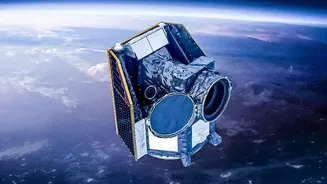
The fastest-growing segment of the space economy isn't in orbit; it's right here on Earth, in the form of data. Satellites generate petabytes of information, creating a massive demand for data scientists, remote sensing experts, and AI/ML engineers who can turn raw data into valuable insights. Bengaluru-based startup Pixxel, for example, is building a constellation of hyperspectral imaging satellites and hires data scientists to help clients in agriculture, mining, and environmental monitoring. Another player, SatSure, focuses on satellite data analytics for agriculture and infrastructure. These careers don't always require a traditional aerospace background. Expertise in Python, MATLAB, data analysis, and GIS is highly sought after. Professionals in this domain help solve real-world problems, from improving crop yields and managing climate risk to enabling smarter urban planning, all powered by data from space.
The Command Centre: Mission Operations
Launching a satellite is only the beginning. A dedicated team is required to manage its journey, maintain its health, and ensure it completes its mission successfully. This is the world of mission operations. Professionals in this area work in ground stations, managing the control and command of spacecraft. Their responsibilities include trajectory management, satellite health monitoring, and collision avoidance. As private companies like Dhruva Space and Bellatrix Aerospace deploy their own satellites and in-space propulsion systems, the need for skilled mission operations specialists is growing. This career path is ideal for those with a background in systems engineering, telecommunications, and flight dynamics. It’s a high-stakes, real-time environment where precision and quick thinking are paramount to safeguarding valuable assets orbiting hundreds of kilometres above Earth.