





The View From Above
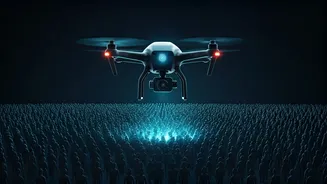
When you think of a Mela, you might picture ancient traditions, but organisers are now looking to the sky for modern solutions. Drones equipped with high-definition cameras have become a common sight, soaring at safe altitudes to provide a bird's-eye
view of the proceedings. This live aerial footage is streamed directly to a central control room, where experts monitor the flow of people in real time. This allows them to spot potential bottlenecks or areas of dangerous congestion long before they become critical. At events like the Gangasagar Mela in West Bengal, this technology helps authorities decide when to open or close gates to manage movement, ensuring a steadier and safer flow of pilgrims.
The Specter of Stampedes
India has a grim history of deadly stampedes at large religious gatherings. The sheer number of people, often concentrated in small areas, creates a high-risk environment. The Kumbh Mela, for instance, has seen tragic incidents in the past, including one in 1954 where hundreds died. These tragedies are the primary motivation for adopting new technology. The main goal is to prevent history from repeating itself by moving from reactive measures to proactive prevention. By using Artificial Intelligence to analyse crowd density and predict movement patterns, authorities hope to dismantle dangerous situations before they can even begin. The system can automatically sound an alarm if a part of the crowd becomes too dense, allowing for immediate intervention.
Kumbh Mela as a Tech Hub
The Maha Kumbh Mela, the world's largest human gathering, has transformed into a testing ground for cutting-edge crowd management technology. Organisers now use a sophisticated network of hundreds of CCTV cameras, drones, and AI-powered analytics. The AI algorithm processes footage to estimate crowd size, not by counting individuals, but by analysing density and flow, even counting heads or torsos in dense visuals. This data is cross-checked with information from railway and bus operators to create a comprehensive picture of the crowd's size and movement. This allows for what officials call a 'hold-and-release' method, where crowds can be temporarily held in designated areas to ease pressure on the most sensitive points, like the main bathing ghats.
More Than Just Crowd Counts
The technology's benefits extend far beyond simply preventing stampedes. At the Gangasagar Mela, tech has been used to track the movement of vessels and vehicles, providing information on passenger numbers and driver details. Some drones can even be used to make announcements or deliver food packets if necessary. During recent health crises, they were used to monitor social distancing. Other innovations include QR code-enabled wristbands for children and the elderly, which help reunite families if someone gets lost in the crowd. Mobile apps provide pilgrims with real-time information on everything from traffic to the location of medical tents and toilets, making the entire experience more manageable and less stressful for everyone involved.
The Human Element and Future Challenges
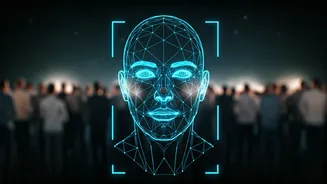
While technology offers powerful tools, it is not a complete solution. Officials acknowledge that these systems are there to assist, not replace, human judgment. There are also significant challenges to consider. The high cost of deploying and maintaining these systems can be a barrier. More importantly, the use of widespread surveillance, including facial recognition, raises legitimate concerns about data privacy and the potential for misuse. Organisers of the Kumbh Mela have stated that they are using Indian companies with domestic servers to maintain control over the data. As this technology becomes more sophisticated, with experiments in Generative AI to detect fights or suspicious behaviour, balancing safety with individual privacy will be the critical challenge for the future of Mela planning.