






The Big Move: AI Everywhere
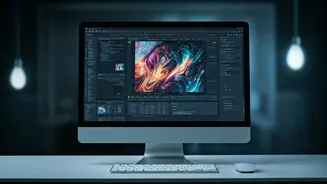
Adobe's latest strategy is to deeply embed its family of generative AI models, called Firefly, across its entire product ecosystem. This isn't just about adding a few AI novelties. From Photoshop and Illustrator to Premiere Pro and the all-in-one Adobe Express,
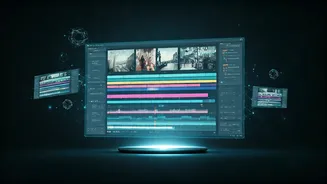
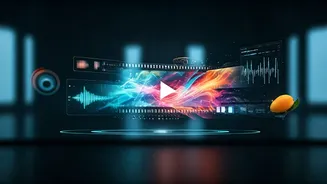
AI is becoming a core function. Features like Generative Fill in Photoshop, which allows users to add, remove, or extend parts of an image with a simple text prompt, have moved from beta experiments to essential tools. The company has also expanded into video and audio, with tools that can generate custom music, sound effects, and even extend video clips using AI. This move shows Adobe is not treating AI as a separate product but as a foundational layer for all creative work.
AI as a Creative Co-Pilot
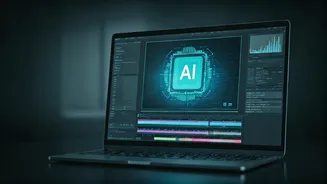
The message from Adobe is clear: AI is not here to replace creators, but to act as their co-pilot. The new tools are designed to automate tedious tasks and accelerate the ideation process, freeing up professionals to focus on strategy and high-level concepts. For example, the Firefly Image 3 model can generate photorealistic images from text descriptions, while Reference Image features allow creators to match the style of a specific picture, providing a powerful brainstorming tool. Similarly, AI-powered features in Adobe Express can help users, even those without professional design skills, create social media content, rewrite text, and translate it into dozens of languages with a single click. This transforms the creative process from a blank page to a conversation with an intelligent assistant.
Democratising Design for the Creator Economy
This AI integration is a strategic move to capture the booming creator economy. By making powerful tools more accessible through platforms like Adobe Express, the company is lowering the barrier to entry for millions of aspiring creators, small business owners, and marketers in India and beyond. Features that simplify complex tasks—like turning long-form videos into social media clips or animating static images—are built for speed and mobile-first workflows. This 'democratisation' of creativity means more people can produce high-quality content. However, it also means Adobe is further cementing its ecosystem, encouraging users to stay within its suite of interconnected apps for a seamless workflow from creation to publishing.
The Indian Context: Opportunity and Anxiety
For India's massive and diverse creative industry, Adobe's AI push presents both immense opportunity and significant questions. On one hand, it empowers a new generation of digital creators to produce world-class work without expensive resources. It can accelerate workflows for freelancers and small agencies, making them more competitive. On the other hand, it raises concerns about the future of certain jobs. The automation of tasks traditionally done by junior designers, photo editors, or VFX artists is a reality that the industry must confront. As AI becomes more capable, the value shifts from technical execution to unique ideas, strategy, and cultural nuance—areas where human creativity remains irreplaceable.
The Road Ahead: A Hybrid Future
Adobe's strategy is a clear indicator that the future of creativity is hybrid. It's a blend of human ingenuity and machine intelligence. The debate is shifting from whether AI can be creative to how humans can best leverage it as a tool. While ethical questions around AI-generated content, copyright, and the potential for a 'sea of sameness' persist, the direction of travel is set. By acquiring specialist companies like Topaz Labs, Adobe is also betting on the future of on-device AI processing, making these powerful tools work faster and more efficiently without constant cloud reliance. For creators, adapting to this new landscape means embracing curiosity and learning to collaborate with their new AI co-pilots.