


From Gaganyaan to a Home in Orbit
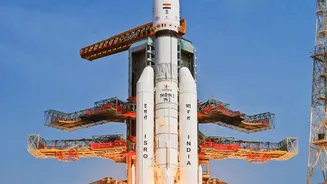
India's ambition to build a space station is the logical next step after its Gaganyaan human spaceflight programme. Think of Gaganyaan as the final exam before graduation. The missions, which aim to send Indian astronauts into a 400-kilometre orbit and
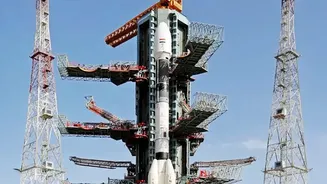
return them safely, are designed to test and master the critical technologies needed for long-duration space presence. These include life-support systems to keep astronauts alive, crew safety protocols, and the complex art of spacecraft docking. The Gaganyaan missions, with the first crewed flight targeted for 2027, will provide ISRO with the foundational experience required to transport astronauts to the future station and ensure their survival for months at a time. Essentially, before India can build a house in orbit, Gaganyaan must first prove it can safely drive there.
The Blueprint: What Is the Bharatiya Antariksha Station?
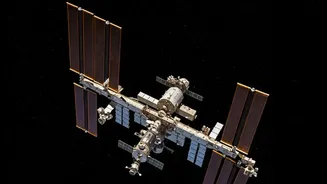
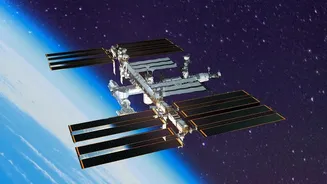
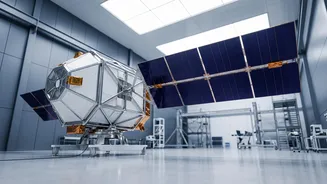
The Bharatiya Antariksha Station, or BAS, is envisioned as a modular outpost orbiting Earth at an altitude of about 400-450 kilometres. Unlike monolithic structures, it will be assembled piece by piece in space. The plan involves five distinct modules that will be launched separately and connected in orbit. These include a base module, habitation and laboratory modules, and a core-docking module. The first component, BAS-01, is scheduled for launch in 2028. The complete station, with an expected mass of around 52 tonnes, is targeted for completion by 2035. Once fully operational, it is designed to host a crew of three to four astronauts for extended stays of three to six months, giving India a continuous human presence in low Earth orbit.
Life and Work in Zero Gravity
The primary purpose of the BAS is to serve as a cutting-edge laboratory in space. The microgravity environment offers a unique setting for research that is impossible to replicate on Earth. Indian scientists and astronauts will conduct long-duration experiments in a range of fields, from material science and fluid physics to biotechnology and human physiology. For example, research on the station could lead to breakthroughs in medicine by studying how diseases progress or how cells behave without the influence of gravity. It could also pave the way for manufacturing novel materials and alloys with unique properties. The station will also be a vital testbed for studying the long-term effects of space on the human body, generating crucial data needed for future deep-space missions, including a planned crewed trip to the Moon by 2040.
A New Address, A New Stature
Building its own space station is about more than just science; it is a profound strategic statement. When the BAS becomes operational, India will join an exclusive club of nations — alongside the US, Russia, and China — that have demonstrated the capability to build and maintain such a complex facility. This grants India greater autonomy in space exploration, freeing it from reliance on international partners for long-duration human missions and microgravity research. The station enhances India’s geopolitical stature and reinforces its position as a leading space-faring nation. Furthermore, as a key part of the 'Amrit Kaal Vision 2047,' the BAS is expected to drive high-tech manufacturing, spur innovation, and inspire a new generation to pursue careers in science and technology, significantly boosting India’s share of the global space economy.
The Ambitious Road Ahead
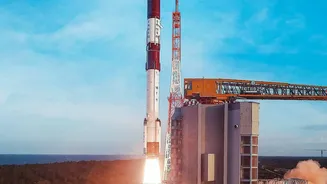
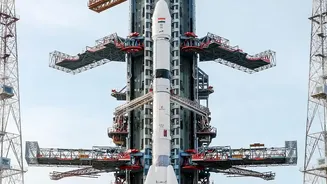
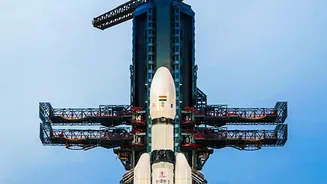
While the vision is clear and funding for the initial phase is approved, the path to 2035 is paved with immense challenges. Assembling a 52-tonne station in orbit requires mastering automated and crewed docking manoeuvres with flawless precision. ISRO's calendar is incredibly packed, as it must develop the station's modules while simultaneously running Gaganyaan flights and preparing for other major missions to Venus and the Moon. The project also necessitates the development of next-generation heavy-lift launch vehicles to carry the large modules into orbit and a new launch pad to support them. The success of the BAS hinges on the perfect convergence of multiple complex, high-stakes projects, each pushing the boundaries of India's technological capabilities.