




The New Space Playbook
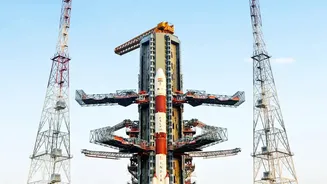
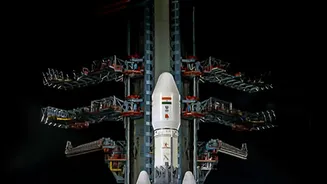
For decades, the Indian Space Research Organisation (ISRO) was the beginning and end of India’s space story. But the global space economy, projected to surpass a trillion dollars, demanded a new approach. In 2020, the government announced a landmark policy,
creating the Indian National Space Promotion and Authorisation Centre (IN-SPACe). This body acts as a single-window agency to nurture and authorise private companies to build everything from rockets to satellites and use ISRO’s world-class facilities. The goal is to shift ISRO's focus to pioneering research and deep space exploration, while private players handle routine manufacturing and commercial launches. This has unleashed a wave of innovation, with over 400 startups now in the fray. Here are some of the trailblazers leading the charge.
Skyroot Aerospace: India's Private Rocket Pioneer
Hyderabad-based Skyroot Aerospace made history in July 2026 with the successful orbital launch of its Vikram-1 rocket. This milestone achievement made India only the third country, after the US and China, to have a privately built rocket deliver satellites into orbit. Founded by former ISRO engineers, Skyroot aims to make space access more affordable and on-demand, primarily for the booming small satellite market. The Vikram series of rockets are designed for quick assembly and cost-effective launches. Following its historic maiden flight, the company is already targeting its next launch by the end of 2026 and has begun securing multi-launch commercial contracts, signaling strong market confidence.
Agnikul Cosmos: 3D Printing a Path to Orbit
Chennai's Agnikul Cosmos is revolutionizing rocket science with a unique approach: 3D printing. The company manufactures a semi-cryogenic engine, Agnilet, as a single, seamless component, a feat that drastically reduces complexity and production time. Its flagship launch vehicle, Agnibaan, is a highly customisable rocket designed to carry small satellites to low Earth orbit. After a successful sub-orbital test flight in May 2024, Agnikul is now scaling up production at its facility within IIT Madras, with a sharp focus on reusability for its future orbital missions. The ability to offer 'launch-on-demand' services from mobile launchpads gives it a distinct edge in the competitive market.
Pixxel: A Health Monitor for the Planet
While some startups build the rides to space, Pixxel is focused on the view from above. The Bengaluru-based company is deploying a constellation of the world's most advanced hyperspectral imaging satellites. Unlike standard cameras, hyperspectral sensors capture images across hundreds of invisible light wavelengths, revealing a massive amount of detail about the Earth's surface. This data can detect crop diseases weeks before they are visible, identify mineral deposits, monitor pollution, and track the effects of climate change with incredible precision. With its 'Firefly' satellites already operational and providing data to global clients, Pixxel is building a veritable health monitor for the planet.
Dhruva Space: The Full-Stack Solution
Founded in 2012, Dhruva Space is a veteran in India’s private space scene, offering end-to-end solutions. The Hyderabad-based company operates as a full-stack provider, manufacturing scalable satellite platforms for various mission sizes, from tiny CubeSats to larger 500 kg spacecraft. Beyond building satellites, Dhruva also provides the critical ground infrastructure needed to communicate with them, offering a 'Ground-Station-as-a-Service' (GSaaS) that other startups can use. It also makes satellite deployers, the systems that release spacecraft into orbit from a rocket. By covering the entire value chain, Dhruva Space acts as a key enabler for the entire ecosystem.