



The Tale of Two Grains
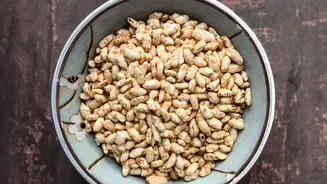
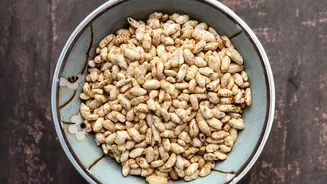
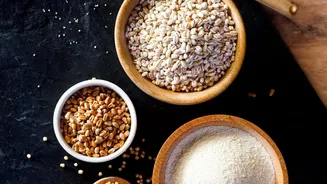
At the heart of this comparison are two very different ingredients. Rice, a true cereal grain, is a staple food for a massive portion of the world's population. Puffed rice is typically made from white rice, where the bran and germ have been removed.
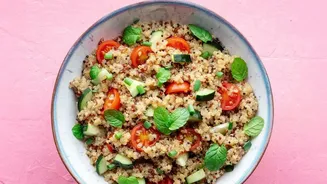
While puffed brown rice exists, which is a whole grain, the common variety is not. Quinoa, on the other hand, is technically a seed from a flowering plant related to spinach and amaranth. Often called a 'pseudocereal', it's consumed like a grain and is celebrated for being a whole food. Unlike white rice, quinoa always contains its germ, bran, and endosperm, making it a complete package from the start.
The Science of the 'Puff'
The method of puffing is a fascinating process of heat and pressure. For puffed rice, kernels are often conditioned with steam, as they naturally lack moisture, and then subjected to intense heat. This causes the moisture inside to flash into steam, expanding the starchy grain from within. This can be done in various ways, including hot air, pressure chambers ('gun puffing'), or the traditional Indian method of hot salt frying. Quinoa can be puffed similarly. Often, the tiny seeds are simply toasted in a hot, dry pan, where they pop like miniature popcorn. Commercially, both grains undergo high-temperature, short-time processes that create their light, airy texture. The key is the rapid expansion that turns a dense grain into a crispy snack.
Nutritional Showdown: Protein and Fibre
Here is where the differences become stark. Quinoa is a nutritional powerhouse. A single cooked cup provides about 8 grams of protein and 5 grams of fibre. Crucially, quinoa is a 'complete protein', meaning it contains all nine essential amino acids our bodies can't produce on their own. This is rare for a plant-based food. Puffed rice, especially from white rice, offers very little in comparison. A serving contains minimal protein (around 1 gram) and significantly less fibre (often under 0.5 grams). This makes quinoa puffs far more effective at promoting feelings of fullness and supporting muscle repair. Quinoa's fibre and protein also help slow digestion.
The Glycemic Index Factor
The glycemic index (GI) measures how quickly a food raises blood sugar levels. This is a critical factor for energy stability and for individuals managing blood sugar. Quinoa has a low GI, typically around 53. Its combination of protein and fibre slows the absorption of carbohydrates, leading to a more gradual rise and fall in blood sugar. White rice, and by extension puffed white rice, has a high GI, often 73 or higher. This can cause a rapid spike in blood sugar, followed by a crash, which may lead to renewed hunger and cravings sooner. For sustained energy without the crash, quinoa is the clear winner.
Micronutrients and Minerals
Beyond the major nutrients, quinoa puffs also have an edge in vitamins and minerals. Quinoa is a good source of magnesium, iron, and manganese. A cup of cooked quinoa delivers a significant portion of your daily needs for these essential minerals, which are important for everything from bone health to energy metabolism. Puffed white rice loses many of these micronutrients during the refining process that removes the bran and germ. While puffed brown rice retains more of these nutrients, standard puffed rice is nutritionally much lighter. Quinoa simply packs more nutritional value into every bite.
How to Choose the Right Puff
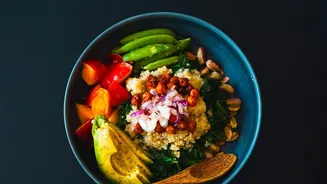
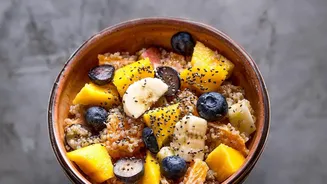
So, which one should you choose? It depends on your goal. If you are looking for a nutrient-dense snack that provides sustained energy, protein, and fibre, quinoa puffs are the superior choice. They are excellent for post-workout recovery, adding to salads for crunch, or as a standalone snack to keep you full between meals. Puffed rice, a beloved ingredient in snacks like bhel puri, is much lower in calories and can be a good option for a very light, quick-digesting snack where nutrient density isn't the primary concern. It provides crunch and volume for very few calories, but it won't offer the same satiety or nutritional benefits as its quinoa counterpart.