





A New Frontier for Private Enterprise
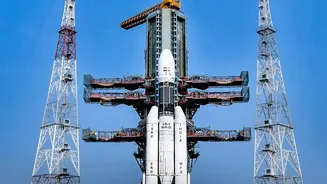
For decades, India's space ambitions were driven almost exclusively by the Indian Space Research Organisation (ISRO). Today, the landscape is transforming. Following the Indian Space Policy of 2023, the sector has been thrown open to private companies,
creating a vibrant ecosystem of innovation and commerce. The establishment of IN-SPACe (Indian National Space Promotion and Authorisation Centre) as a single-window agency is accelerating this shift, helping hundreds of startups enter the market. This move is designed to let ISRO focus on pioneering research and exploration like the Gaganyaan human spaceflight mission, while private players handle more routine operations and develop new commercial applications. India's space economy, valued at around $8.4 billion, is now projected to grow to $44 billion by 2033, creating a surge in demand for skilled professionals.
Beyond the Rocket Scientists
While aerospace engineers and physicists remain central to the mission, the popular image of a space career is dramatically expanding. The modern space industry is not just about building and launching rockets; it's about what we do with the data, technology, and opportunities that space provides. Private companies like Skyroot Aerospace, Agnikul, and Pixxel are not only hiring engineers but are also building out teams for finance, operations, and marketing. This expansion means the sector is actively seeking talent from diverse backgrounds to solve new and complex problems, many of which have more to do with business on Earth than exploration in the cosmos.
Data Scientists and AI Specialists
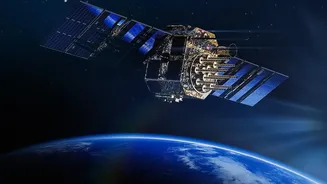
Satellites generate enormous amounts of data. From Earth observation images used in agriculture and urban planning to high-throughput communications, the real value is often in the analysis. This has created a massive demand for data scientists, machine learning engineers, and AI specialists. These professionals are tasked with turning raw satellite data into actionable insights for clients in sectors ranging from disaster management to financial services. The downstream applications of space technology are expected to generate the majority of future revenue, making data analytics a cornerstone of the new space economy.
The Rise of Space Lawyers and Policy Experts
As the space sector becomes more commercialised and crowded, it is creating a host of complex legal questions. Who is liable for a satellite collision? Who owns resources mined on the Moon? How are international launch contracts structured? This has given rise to the specialised field of space law. Lawyers are needed to advise startups on regulatory compliance, intellectual property, and international treaties. With IN-SPACe creating new frameworks and private companies navigating a web of national and international rules, legal and policy experts are becoming indispensable to the industry's growth.
Doctors and Healthcare Innovators
With India’s own human spaceflight programme, Gaganyaan, on the horizon, the field of space medicine is gaining prominence. This involves more than just keeping astronauts healthy in zero gravity. It includes studying the effects of space travel on the human body, which can lead to medical innovations that benefit people on Earth. Telemedicine, for example, is a key service that can be enhanced by satellite technology, providing healthcare to remote areas. This convergence of space technology and healthcare opens doors for doctors, biomedical engineers, and public health professionals.
Communicators, Designers and Business Gurus
With hundreds of private space startups now competing for investment and customers, the need for strong business development, marketing, and communications teams is critical. These companies need to sell complex products and services, from launch capabilities to satellite data analytics. They also need to tell compelling stories to attract top talent and public support. This requires marketing strategists, public relations specialists, and business development managers who can translate technical achievements into commercial success. Furthermore, designers are needed to create user-friendly interfaces for the software that controls satellites and analyses their data.