








The Science of a Rainy Day Bad Hair Day
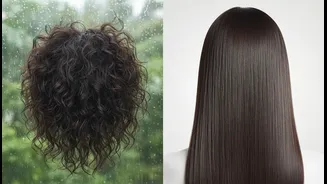
Ever wonder why your sleek hair suddenly develops a mind of its own on a humid day? It’s all about science. Hair is made of keratin proteins, held together by chemical bonds. One of these, the hydrogen bond, is particularly sensitive to water in the air.
When it's humid, your hair—especially if it's dry or porous—absorbs moisture from the atmosphere. This excess moisture disrupts the hydrogen bonds, causing the hair shaft to swell and the outer layer, or cuticle, to lift up. The result is that rough, puffy, and untamed texture we call frizz. Curly and chemically treated hair is often more porous, making it even more susceptible to this frustrating transformation.
Your Anti-Frizz Plan Starts Before the Wash
Good hair during the monsoon isn't about a single product; it's about a consistent routine. And that routine begins even before you step into the shower. Many Indian households have long trusted the power of oiling, and for good reason. Applying a lightweight oil like coconut or almond the night before a wash helps to nourish the hair and create a barrier. This pre-wash ritual strengthens roots, which is crucial as hair tends to be weaker and more prone to falling during the rainy season. Another great pre-emptive strike is applying a nourishing hair mask overnight or for 30 minutes before you shampoo. This gives your hair a deep dose of hydration, making it less thirsty for the humidity in the air.
Rethink Your Washing and Conditioning Ritual
When the goal is to fight frizz, how you wash your hair matters immensely. First, consider washing your hair two to three times a week, as over-washing can strip it of its natural oils, leading to more dryness and frizz. Opt for a gentle, sulphate-free shampoo. Sulphates can be harsh and leave hair vulnerable. When you rinse, use lukewarm or cool water, as hot water can open up the cuticle even more. And never, ever skip conditioner. It's the most critical step for smoothing the hair cuticle. Look for conditioners with hydrating ingredients like argan oil, keratin, or shea butter that lock in moisture and create a protective shield. Once a week, swap your regular conditioner for a deep-conditioning mask for an extra boost of nourishment.
The Gentle Art of Drying and Styling
Your fight against frizz continues after the shower. One of the biggest mistakes is rubbing hair vigorously with a regular coarse towel. This roughs up the cuticle and creates instant frizz. Instead, gently squeeze out excess water using a soft microfiber towel or even an old cotton T-shirt. While your hair is still damp, apply a leave-in conditioner or an anti-frizz serum. This creates a final barrier against humidity. Focus the product on the mid-lengths and ends. When it comes to styling, try to reduce heat usage, as it can cause further damage. If you must use heat, always apply a heat protectant. On particularly humid days, protective hairstyles like loose braids or a chic bun can be your best friends, minimizing your hair's exposure to the damp air.
DIY Masks for a Dose of Home-Care
Sometimes, the best remedies are waiting in your kitchen. For generations, Indian families have used natural ingredients to keep hair healthy. A simple and effective mask uses curd (yogurt), which contains lactic acid to smooth the hair. Mix a cup of plain curd with a tablespoon of honey, a natural humectant that attracts moisture. Apply this mixture to your hair, leave it on for 30 minutes, and then rinse and shampoo as usual. Another powerful combination for deep conditioning is mashed avocado and banana mixed with a bit of coconut or olive oil. Avocado provides nourishing fats and vitamins, while banana is rich in potassium and natural oils that help tame frizz. These weekly treatments can significantly improve your hair's texture and resilience against humidity.