

The Illusion of Complexity
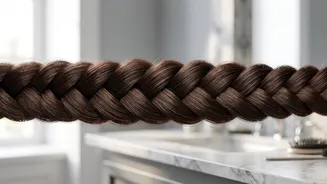
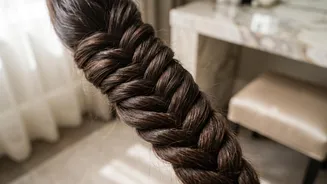
The primary reason a fishtail braid looks so intricate is because of its unique weaving pattern. Unlike a standard three-strand braid where you are constantly weaving chunky sections over and under each other, a fishtail braid is built by repeatedly taking
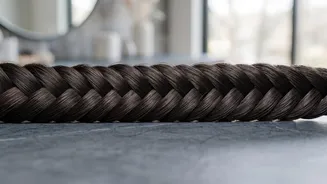
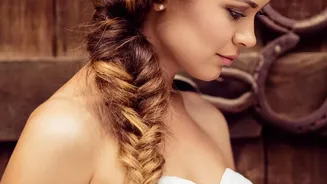
very small, thin strands of hair from the outer edge of one of the two main sections and crossing them over to join the opposite section. This action, repeated over and over, creates a series of interlocking 'V' shapes that mimic the bones of a fish's skeleton, hence the name. The sheer number of these small, crossed-over strands builds a detailed texture that the eye perceives as incredibly complex and time-consuming work.
A Tale of Two Sections
The fact that it only uses two foundational sections is the core of its elegant deception. Holding three sections of hair for a traditional or French braid requires more complex finger work. In contrast, managing just two sections is often easier for many people once they find their rhythm. With a fishtail, your hands are simply holding two large ponytails. The entire braiding action happens on the outside, as you peel off a small strand from the left and pass it to the right, then peel a strand from the right and pass it to the left. This repetitive, two-step motion is far less complicated than the 'over-and-under' weaving of a three-strand braid, yet it produces a visually richer result.
The Power of the Pancake
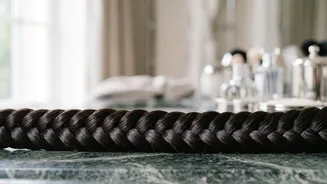
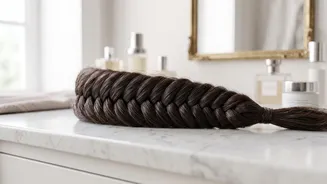
A pristine, tight fishtail braid is impressive, but the style's intricacy is often amplified when it's deliberately loosened. This technique, known as 'pancaking', involves gently pulling at the outer edges of the finished braid. This simple action widens the braid, separates the small woven sections, and makes the herringbone pattern more pronounced and visible. A pancaked fishtail looks fuller, more voluminous, and effortlessly bohemian. This controlled messiness enhances the illusion of complexity, making it look like an even more elaborate and artfully constructed style when, in reality, it's just a well-executed braid that has been gently pulled apart.
Mastering the Basic Steps
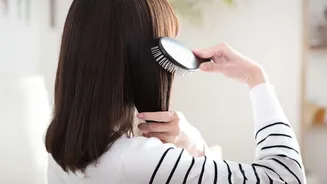
Convinced it's easier than it looks? Here’s the basic method. First, brush your hair to remove any tangles and divide it into two equal sections. For beginners, securing your hair in a low ponytail first can make it much easier to manage. Hold one section in each hand. Take a thin strand—about a pencil's width—from the outer edge of the left section. Cross this small piece over the top of the left section and have it join the inside of the right section. Now, repeat on the other side: take a thin strand from the outer edge of the right section, cross it over the right section, and join it with the left section. Continue this alternating pattern all the way down and secure the end with an elastic.
Tips for a Flawless Fishtail
To achieve the best results, consistency is key. Try to take strands of the same thickness each time for a uniform, neat pattern. If you find your hair is too slippery or clean, the braid may not hold as well. This style actually works wonderfully on second or third-day hair because the natural oils provide more grip. If your hair is freshly washed, a light mist of texture spray can add the grit you need to keep the strands in place. Don't be discouraged if your first attempt isn't perfect. The hand motion can take a few tries to feel natural, but once it clicks, it's a surprisingly fast and simple way to create a stunning look.