


The Moment That Sparked Debate
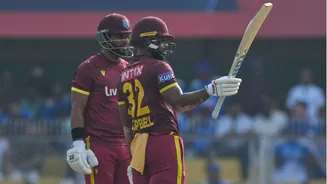
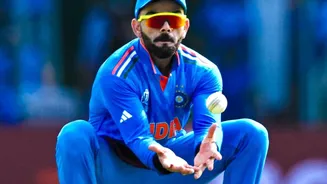
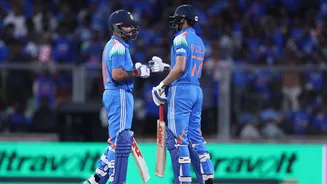
It was the 20th over of the West Indies innings in the second ODI, a match finely poised. Part-time bowler Naman Dhir induced a false shot from captain Shai Hope, who chipped the ball uppishly towards short mid-wicket. It travelled at a comfortable height
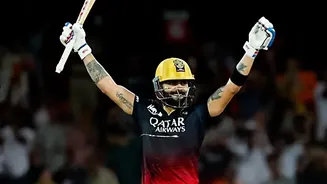
straight to Virat Kohli, arguably one of the safest fielders in the Indian setup. What happened next was unthinkable. The ball went in but didn't stick. Hope, given a crucial reprieve, went on to score a punishing half-century, shifting the momentum of the game. While any player can drop a catch, when it's Kohli, it feels different. It was a moment that crystallised a quiet but growing concern among fans and pundits alike.
Beyond a Single Blunder
It's tempting to dismiss the Guwahati drop as a one-off anomaly. However, the data suggests this may not be the case. While his intensity and ground fielding remain top-tier, there's a troubling pattern emerging in his catching, particularly in recent years. For a player who set unprecedented standards for fitness and fielding in Indian cricket, any dip becomes magnified. The question is no longer about his commitment, which remains absolute, but about whether his reflexes, once supernatural, are finally showing signs of human limitation. This is not about one dropped catch; it's about a potential trend that could have significant implications for Team India.
A Look at the Numbers
Statistics in cricket don't lie, but they can be complex. While specific recent drop-rates are hard to consolidate officially, the anecdotal evidence from recent series has been mounting. Commentators and former players have pointed to an increasing number of missed opportunities. The issue isn't that Kohli has become a poor fielder overnight—far from it. At 37, he remains one of the fittest athletes in the sport. In ODIs, he has taken 169 catches, the most by any Indian fielder, surpassing legends like Mohammad Azharuddin. However, the concern is about a potential decline from his own peak, especially in crucial slip-catching positions during Test matches and in high-pressure situations in white-ball cricket. The standards he set were so high that even a minor regression is glaring.
Age, Focus, or Just a Slump?
So what could be behind this perceived dip? The most obvious factor is age. At nearly 38, maintaining the razor-sharp reflexes required for elite-level slip and close-in fielding is a monumental challenge. Years of wear and tear and the sheer volume of cricket played can take a toll. Another theory is focus. As a senior statesman in the team, Kohli's primary role is to anchor the batting. His resurgence as a batsman has been phenomenal, but it's possible that the immense mental energy required for his batting has inadvertently taken a fraction away from his fielding concentration. This isn't a lack of effort but a natural redistribution of mental resources. For a player who has redefined what's possible, it’s a difficult but necessary conversation.
Why It Matters for Team India
A dropped catch is more than just a missed wicket; it can deflate a bowler, extend a partnership, and ultimately alter the outcome of a match. India's overall fielding has been under scrutiny recently, with dropped catches becoming a recurring problem across formats. In this context, a slip from a leader like Kohli is felt more acutely. It sends a ripple effect through the team. With major tournaments always on the horizon, every run saved and every chance taken is vital. The saying 'catches win matches' is a cliché because it's true. The Indian team management faces a delicate dilemma: how to address a potential decline in a champion player who still offers immense value with his bat and his on-field presence.