



Beyond the Empty White Box
The popular image of minimalism—stark white walls, a single chair, an echo—is more of a caricature than a reality. This vision often feels cold and impersonal, suggesting a life devoid of comfort and personality. This is the language of deprivation. A
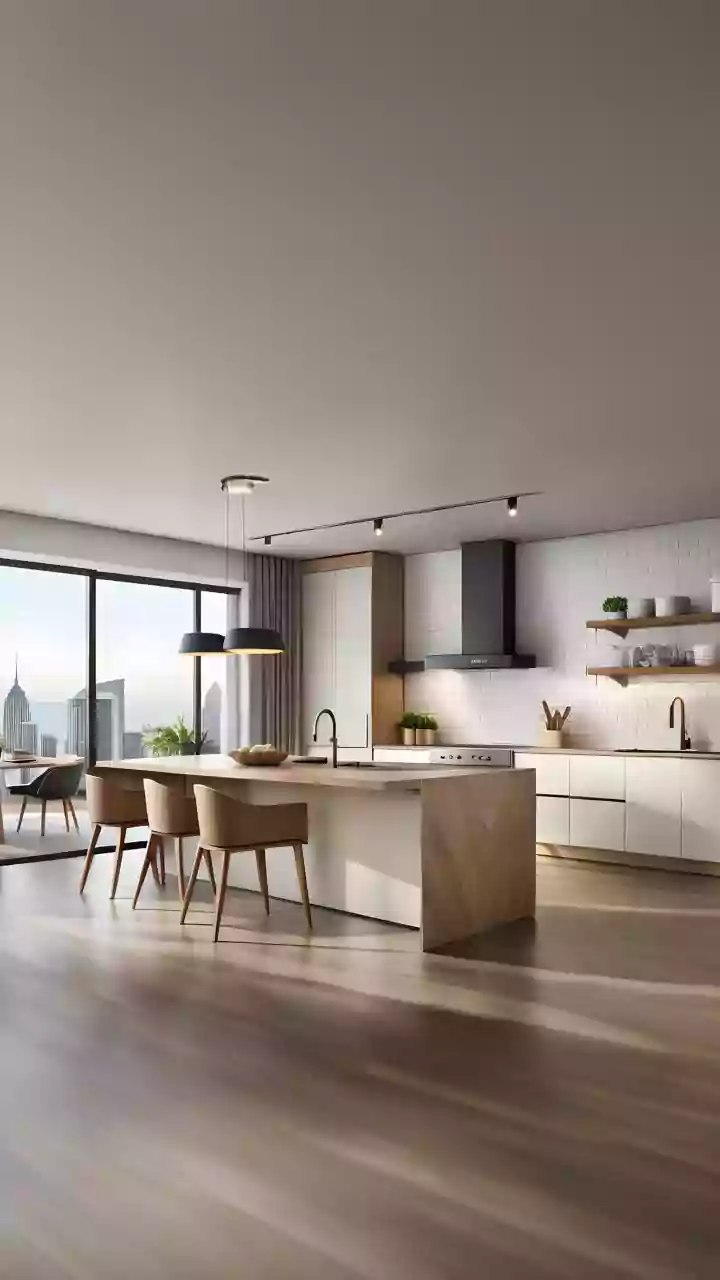
truly minimalist space, however, is not empty; it is intentional. The philosophy is not about subtraction for its own sake, but about distilling a space down to its essential qualities to create a sense of calm and clarity. It's the difference between a bare room and a space that has room to breathe. The goal is to remove visual noise so the essential can speak more clearly, a principle championed by minimalist pioneers like architect John Pawson.
The Art of Intentional Editing
To 'edit' a space is to make conscious choices. It means every object has earned its place because it is useful, beautiful, or deeply meaningful. This is a far cry from deprivation, which implies a forced or reluctant sacrifice. Editing is an act of empowerment. It’s a process of asking 'why' before you keep or buy something. Instead of filling a space, you are curating it. This approach transforms decluttering from a chore into a creative act. It’s not about how many things you can get rid of, but about the value of what remains. By focusing on what’s important, you create a home that supports your life rather than just storing your possessions.
Warmth Through Texture, Light, and Colour
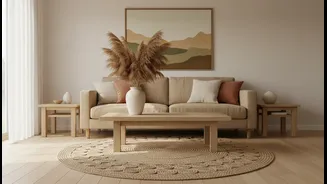
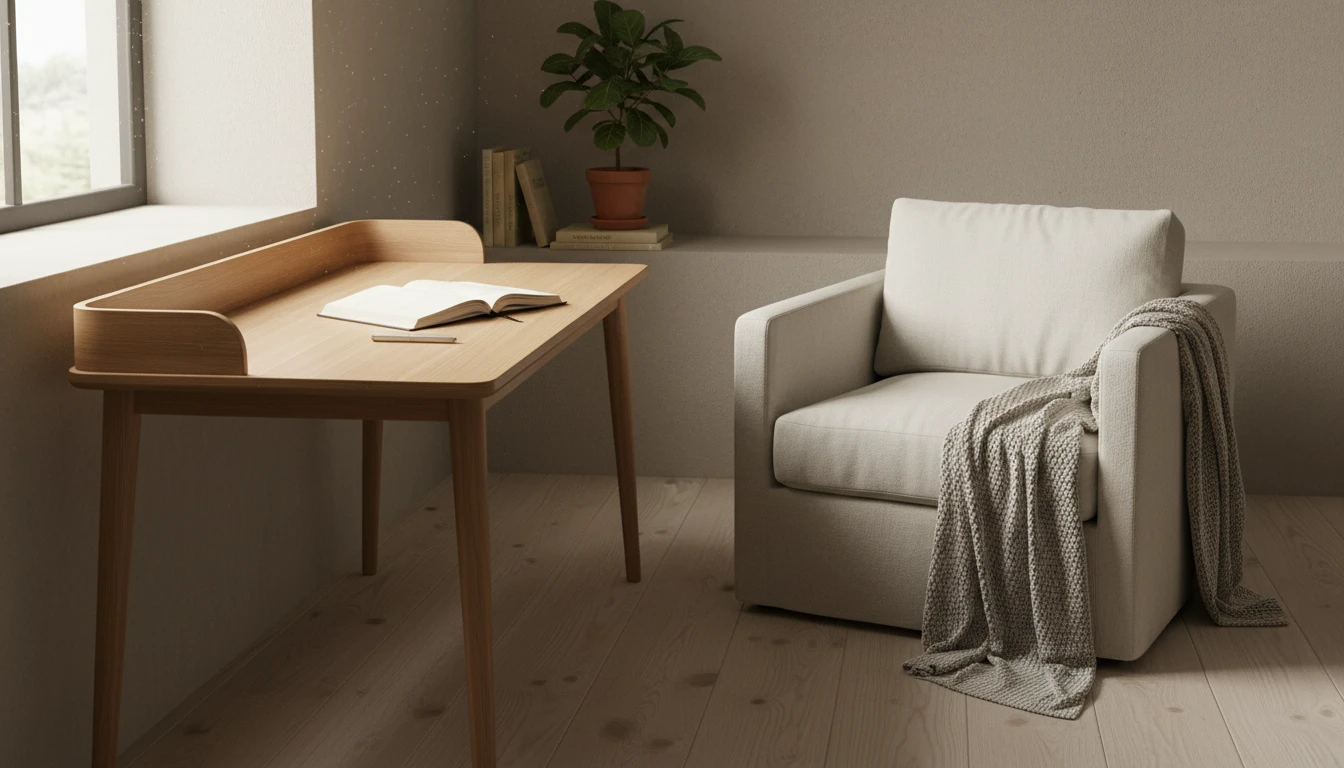
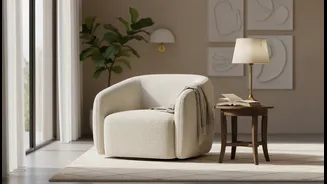
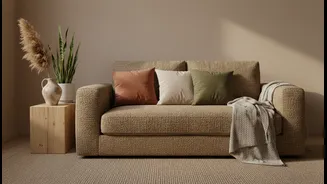
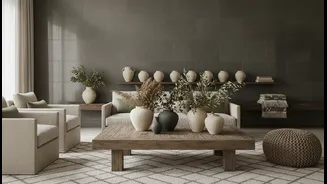
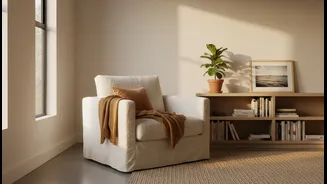
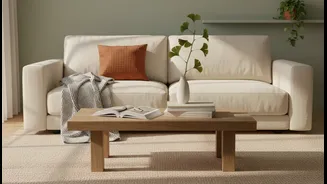
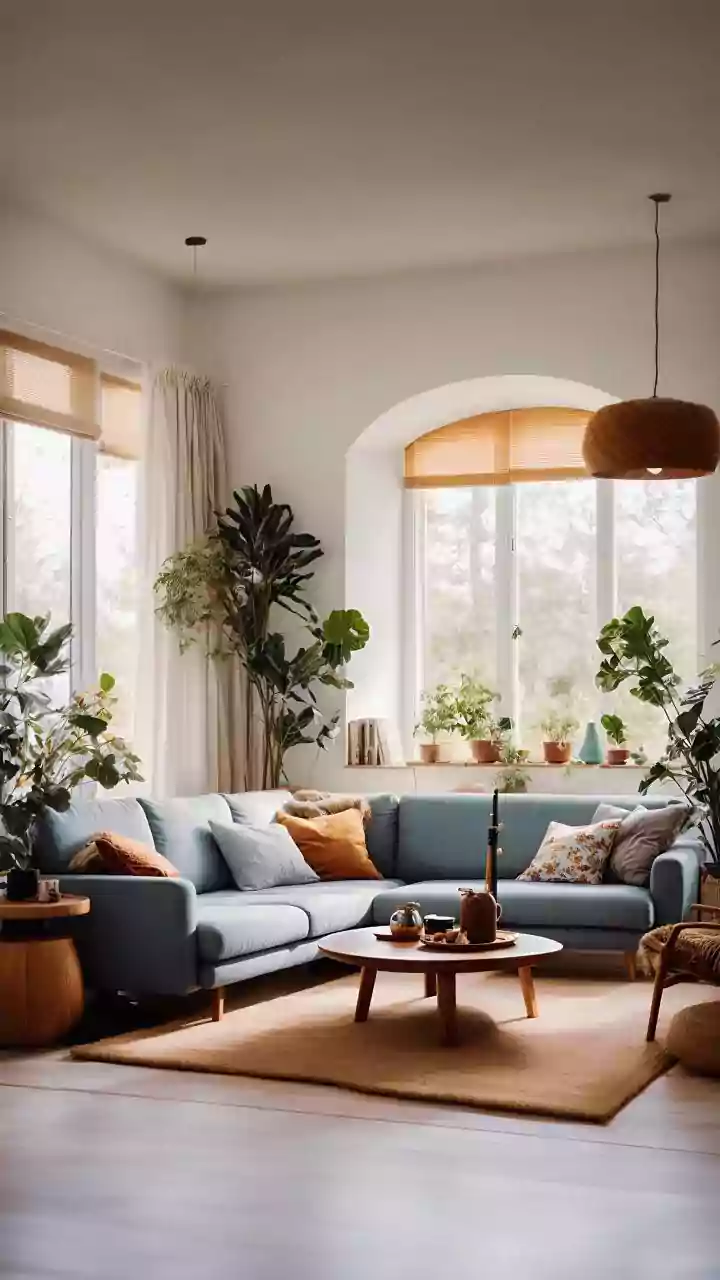
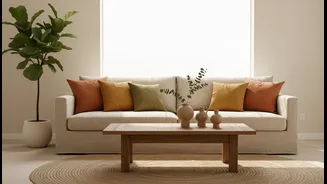
An edited space avoids feeling sterile by embracing warmth. This is achieved not through more objects, but through a richer sensory palette. Layering natural materials like wood, linen, wool, and stone adds depth and comfort without creating clutter. A warm minimalist palette moves beyond harsh whites to include shades of cream, beige, taupe, and soft earth tones. These colours create a soothing backdrop that feels serene and liveable. Lighting also plays a crucial role. Harsh overhead lights are replaced with multiple, softer sources—like table lamps with linen shades or floor lamps with dimmers—that create a warm, inviting glow reminiscent of candlelight.
Personal Objects as Purposeful Anchors
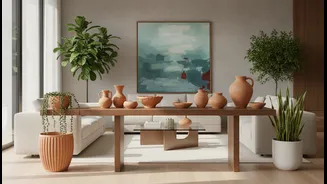
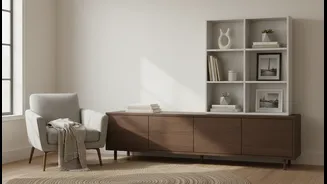
Minimalism is often mistakenly seen as anonymous, but an edited home is deeply personal. While clutter is eliminated, personality is not. The key is to select a few meaningful items and give them space to shine. A single piece of large artwork, a handcrafted ceramic bowl, or a collection of beloved books on a simple shelf become focal points. These objects are not random decorations; they are anchors that tell your story. By choosing quality over quantity, you give more weight to the things you truly love. A well-worn leather chair or a vintage wooden table adds character and a sense of history that new, mass-produced items often lack.
A Living Space, Not a Museum
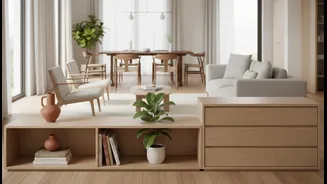
Finally, an edited home is not a static exhibit. It is a flexible, living environment that evolves with you. The process of editing is ongoing. It’s about creating a system that is easy to maintain, allowing your home to remain a place of refuge from the chaos of the outside world. This approach encourages a more mindful relationship with your belongings and your space. It's not about achieving a perfect, untouchable look, but about creating a home that feels calm, supportive, and authentically yours. It’s a space where you have everything you need and value, and nothing you don’t.