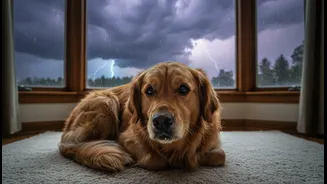






Understanding the Storm-Driven Fear
A dog's fear of thunderstorms is not irrational. Their senses are far more acute than ours, allowing them to detect environmental shifts long before we can. This phobia is often a complex reaction to multiple triggers: the deep rumble of thunder, flashes
of lightning, changes in barometric pressure, and even the buildup of static electricity in the air. For some dogs, especially long-haired breeds, this static charge can cause uncomfortable shocks unless they find a place to 'ground' themselves, which is why many seek refuge in bathrooms near pipes. A single traumatic experience during a storm or repeated exposure can cement this fear, which often worsens over time if not addressed.
How Acute Fear Becomes Chronic Anxiety
When a dog experiences the intense stress of a phobia, their body is flooded with stress hormones. If this happens repeatedly, the brain learns to associate not just the storm itself but also predictive cues—like wind or darkening skies—with danger. This process is called generalization. What begins as a specific fear of thunder can expand into a broader noise aversion, where fireworks, vacuum cleaners, or even car alarms trigger a similar panic response. More importantly, studies have found a significant link between storm phobia and other anxiety disorders, particularly separation anxiety. The constant state of high alert can decrease a dog's overall quality of life, leading to chronic stress and potentially even impacting their immune system.
Key Signs of Thunderstorm Phobia
Recognizing the signs early is the first step toward management. While some symptoms are obvious, others are more subtle indicators of distress. Look for trembling, excessive panting, and hiding, which are classic signs. Other dogs may become restless and pace incessantly, whine or bark, or become unusually clingy, seeking constant reassurance from their owner. Some may refuse food, yawn or lick their lips excessively, or even engage in destructive behaviors like chewing or scratching at doors in an attempt to escape the perceived threat. In severe cases, this panic can lead to self-injury.
Creating a Safe Space
One of the most effective immediate strategies is to provide your dog with a safe haven. This is a designated quiet, comfortable area where they can retreat during a storm. Often, a dog will choose this space themselves, like a closet, a bathroom, or under a bed. You can enhance this spot by adding cozy bedding, a favorite toy, or an item of your clothing for its familiar scent. Closing blinds to block lightning flashes and using a white noise machine, calming music, or even a fan can help mask the sound of thunder. The goal is to give your dog a sense of control and security in a predictable environment.
Management and Modification Techniques
Comforting your dog during a storm is perfectly acceptable and does not reinforce the fear; it helps them feel safe. Beyond immediate comfort, you can use wearable solutions like pressure wraps, which apply gentle, constant pressure that has a calming effect similar to swaddling an infant. For long-term improvement, behavior modification is key. This involves desensitization and counter-conditioning: playing recordings of storm sounds at a very low volume while engaging your dog in an enjoyable activity, like playing or receiving high-value treats. Over many sessions, you can gradually increase the volume, helping to change your dog's emotional response to the sound from fear to something positive.
When to Consult a Professional
If your dog's phobia is severe, causes them to harm themselves, or is drastically reducing their quality of life, it is crucial to seek professional help. A veterinarian can rule out any underlying medical issues, as pain from conditions like arthritis can worsen noise sensitivity. They can also discuss a comprehensive treatment plan, which may include fast-acting anti-anxiety medications to be used situationally before or during a storm. For severe, persistent anxiety, a veterinarian might recommend a daily medication to help regulate brain chemistry, making behavior modification techniques more effective. A certified veterinary behaviorist can provide a tailored plan for the most challenging cases.