

The complex, invisible system that keeps air travel safe is getting a critical upgrade. The US is replacing decades-old air traffic control displays with a modern, integrated platform, aiming to boost safety and efficiency in an increasingly crowded sky.
From Floppy Disks to Digital
For decades, the US air traffic control system has relied on a patchwork of aging technologies. At some facilities, information about weather and flight plans has been managed with systems dating back to the 1980s, some of which still astonishingly used floppy disks. These legacy systems, while functional, are fragmented and often require controllers to reference multiple screens and data sources to get a complete picture. This setup not only complicates the workflow for controllers but also makes sharing critical, real-time information across the country's vast airspace a challenge. This upgrade is about more than just new screens; it is a foundational shift away from manual processes and obsolete hardware toward a unified, digital-first environment.
Introducing E-IDS
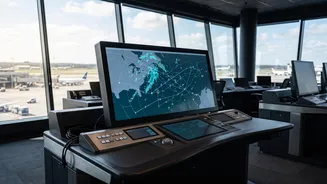
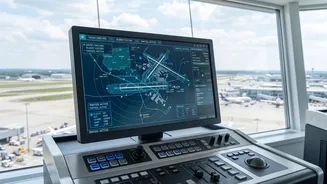
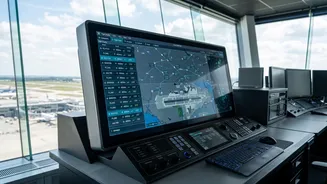
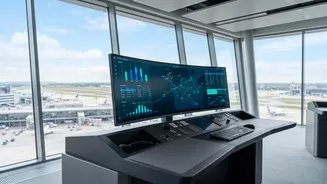
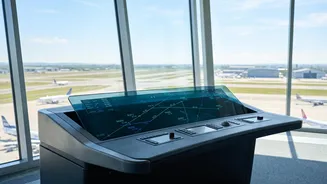
The centerpiece of this modernization is the Enterprise Information Display System, or E-IDS. The Federal Aviation Administration (FAA) has begun rolling out this new platform with the goal of installing it at 435 sites by the end of 2028. E-IDS is designed to replace four different legacy information display systems, consolidating crucial data into a single, streamlined interface. This means everything from weather updates, equipment outage alerts, airspace restrictions, and operational advisories will appear on one integrated display. The initial deployment has started at airports like Atlantic City, Nashville, and Rochester, as well as key data processing centers.
A Clearer View for Controllers
For the nation's air traffic controllers, E-IDS promises to make a demanding job safer and more efficient. By integrating disparate sources of information, the system gives controllers a more complete and real-time operational picture. This reduces the need to switch focus between different screens and manually piece together information, which can be critical in a fast-paced control tower environment. A key goal of the new system is to improve the distribution of Pilot Reports (PIREPs) and Notices to Airmen (NOTAMs), addressing what the FAA considers a top safety issue. With E-IDS, controllers can instantly share these critical alerts across the entire National Airspace System, enhancing situational awareness for everyone in the sky.
Impact on Air Travel
While the upgrade is happening behind the scenes, it has significant implications for the flying public. A more efficient and informed air traffic control system is a safer one. By giving controllers better tools to manage traffic, the FAA anticipates a reduction in the risk of incidents. Over time, the improved efficiency could also help mitigate flight delays. When controllers have a clearer, more predictable view of airspace conditions, they can manage aircraft sequencing and spacing more effectively. This is a crucial component of the FAA's broader NextGen initiative, which aims to shift from ground-based radar to satellite-based navigation, enabling more direct and fuel-efficient routes for aircraft. Modernizing these display systems is a key step toward realizing those longterm benefits.
The Broader Modernization Effort
The EID S rollout is just one piece of a much larger, multibillion dollar effort to overhaul America's air traffic infrastructure. Known as the Next Generation Air Transportation System (NextGen), this ambitious program involves replacing everything from copper telecommunications lines with fiber optics to upgrading radar systems and voice switches. Many of the core systems have been in place for decades, and while they have kept the skies safe, they lack the flexibility and capacity to handle projected growth in air traffic. This comprehensive modernization is designed to build a more resilient and adaptable National Airspace System, capable of integrating new types of aircraft, such as drones, and managing operations with greater precision.