





A Planet in Constant Motion
The ground beneath our feet feels solid, but it is part of a dynamic global puzzle. The Earth’s outer shell is not one solid piece but is broken into massive slabs called tectonic plates. These plates are in constant, slow-motion transit, moving a few
centimetres per year—about the speed your fingernails grow. This movement is responsible for shaping continents, raising mountain ranges, and triggering earthquakes and volcanic eruptions. The theory of plate tectonics beautifully explains these large-scale phenomena. For over half a century, it has been the framework through which we understand our planet's geology. Yet, for all its explanatory power, one of its fundamental processes, seafloor spreading, had only been understood through indirect evidence, like a crime scene investigated long after the event.
The Unseen Engine of Creation
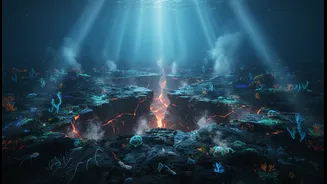
Seafloor spreading is the engine of plate tectonics. It occurs at mid-ocean ridges, vast underwater mountain chains that wrap around the globe like seams on a baseball. Here, molten rock from the mantle rises, cools, and forms new oceanic crust, pushing the older crust away on either side. Scientists built the case for this process by studying clues left behind. They found magnetic 'stripes' on the ocean floor—bands of rock with alternating magnetic polarity that provided a timeline of crust formation. They drilled rock samples, confirming that the crust was youngest at the ridges and grew progressively older farther away. This was compelling evidence, but it was all historical. No one had ever witnessed the process as it happened. The immense pressure and darkness kilometres beneath the ocean surface kept this planetary genesis hidden from direct view.
A Fortunate Window Opens
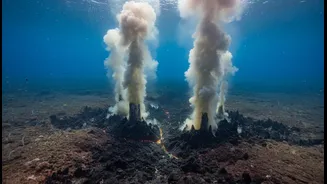
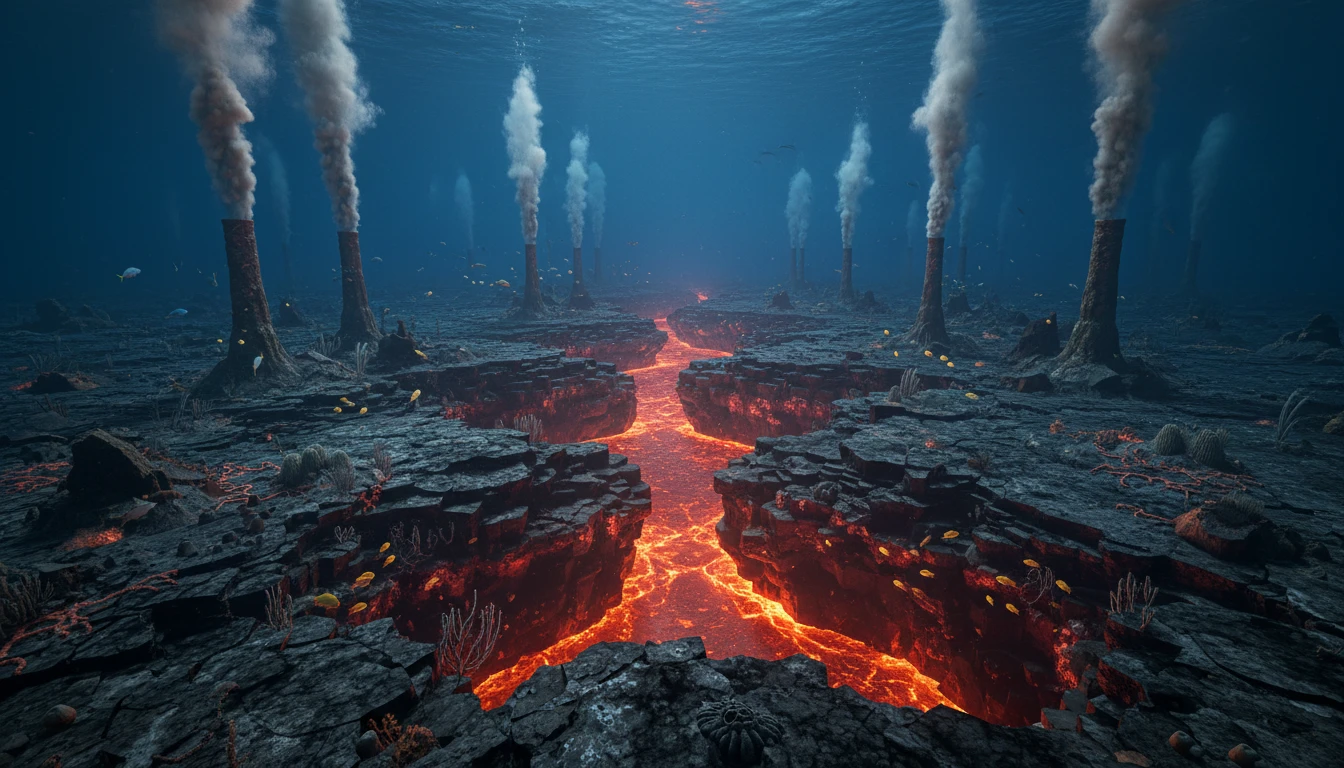
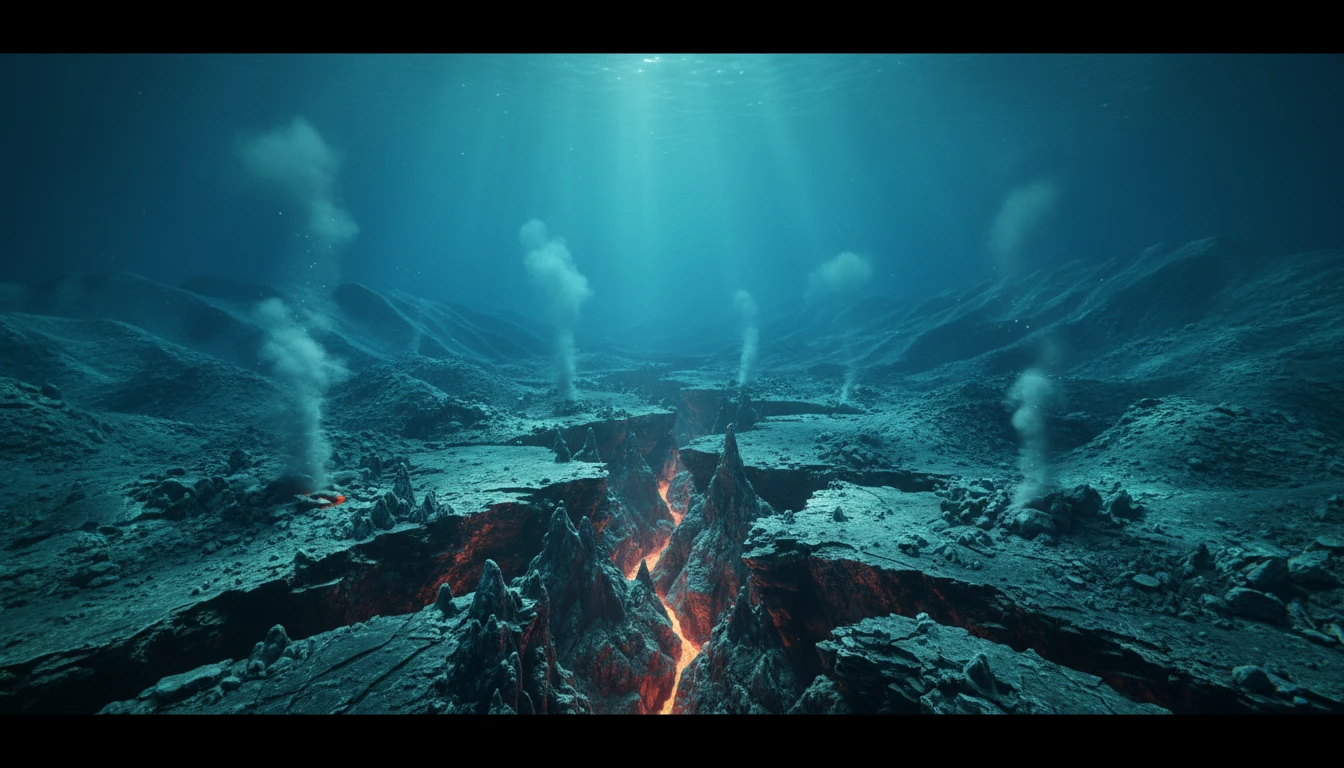
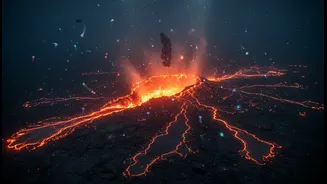
That all changed in April 2024 at the Southeast Indian Ridge, a remote boundary separating the Australian and Antarctic plates. In a stroke of scientific luck, a French-led research team had deployed a sophisticated underwater observatory just two months prior. On April 26, their instruments, including hydrophones and pressure gauges, lit up. A swarm of earthquakes began to propagate along the ridge. What followed was the first-ever direct, real-time observation of a complete seafloor spreading event. Over six days, the seafloor moved apart by 4.2 metres and sank by more than a metre. This dramatic shift was caused by a magma chamber located about 3.6 kilometres beneath the crust deflating as it injected vast amounts of lava into the spreading rift.
From Educated Guess to Eyewitness
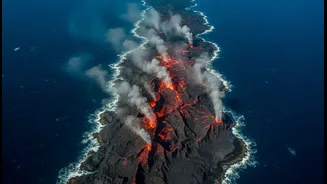
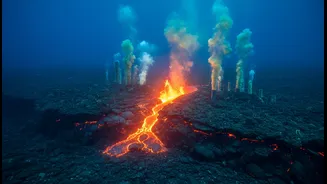
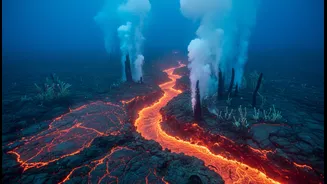
The sheer scale of the event was staggering. Researchers estimate that up to 160 million cubic metres of lava—enough to fill tens of thousands of Olympic swimming pools—erupted onto the ocean floor over 16 days, creating brand new Earth. The seafloor movement peaked at a blistering 5 centimetres per minute before slowing. In less than a week, the plates had released strain equivalent to what would normally accumulate over nearly 40 years of slow, steady movement. This confirms that the Earth's crust doesn't just grow in a slow, steady crawl but can also lurch forward in sudden, powerful bursts. The data collected by the OHA-GEODAMS observatory provides an unprecedented, minute-by-minute anatomy of the rifting process, from the initial seismic tremors to the final outpouring of magma.
Why This Observation Matters
Moving from inference to observation is a monumental leap in science. It's the difference between reconstructing a car crash from skid marks and watching high-definition footage of the collision. This discovery resolves long-standing questions, including the 'seismic deficit'—the mystery of why recorded underwater earthquakes couldn't fully account for the known speed of plate movement. This event showed that much of the separation happens through aseismic slip, or fault movement without tremors, driven by magma. For India and the world, a clearer understanding of these fundamental geodynamics is crucial. While this specific ridge is far from land, the insights gained will refine models for tectonic stress, volcanic activity, and even tsunami generation at other plate boundaries around the globe, including those much closer to home in the Indian Ocean. It marks a new era where we can finally watch the Earth's surface being actively reshaped.