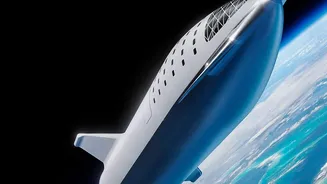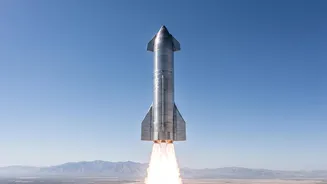



Look up. Soon, you might catch a glimpse of the largest rocket ever built streaking across the sky. SpaceX's Starship is preparing for an ambitious orbital flight that could see it pass over India, marking a new chapter in space exploration.
What is This Mission All About?
SpaceX is
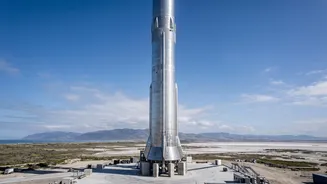
targeting as early as mid-November 2026 for its fifteenth Starship test flight, an ambitious mission that pushes the boundaries of rocket reusability. The launch is scheduled from the company's Starbase facility in Texas. Unlike previous tests that ended with a splashdown in the ocean, this flight has a groundbreaking goal: to have both the Super Heavy booster and the Starship upper stage return to the launch site and be caught by the giant 'chopstick' arms on the launch tower. This has never been done before and, if successful, would be the first full recovery of an entire orbital rocket system. The mission, pending regulatory approval, also plans to deploy 26 Starlink V3 internet satellites into orbit.
The Orbital Path and India's View
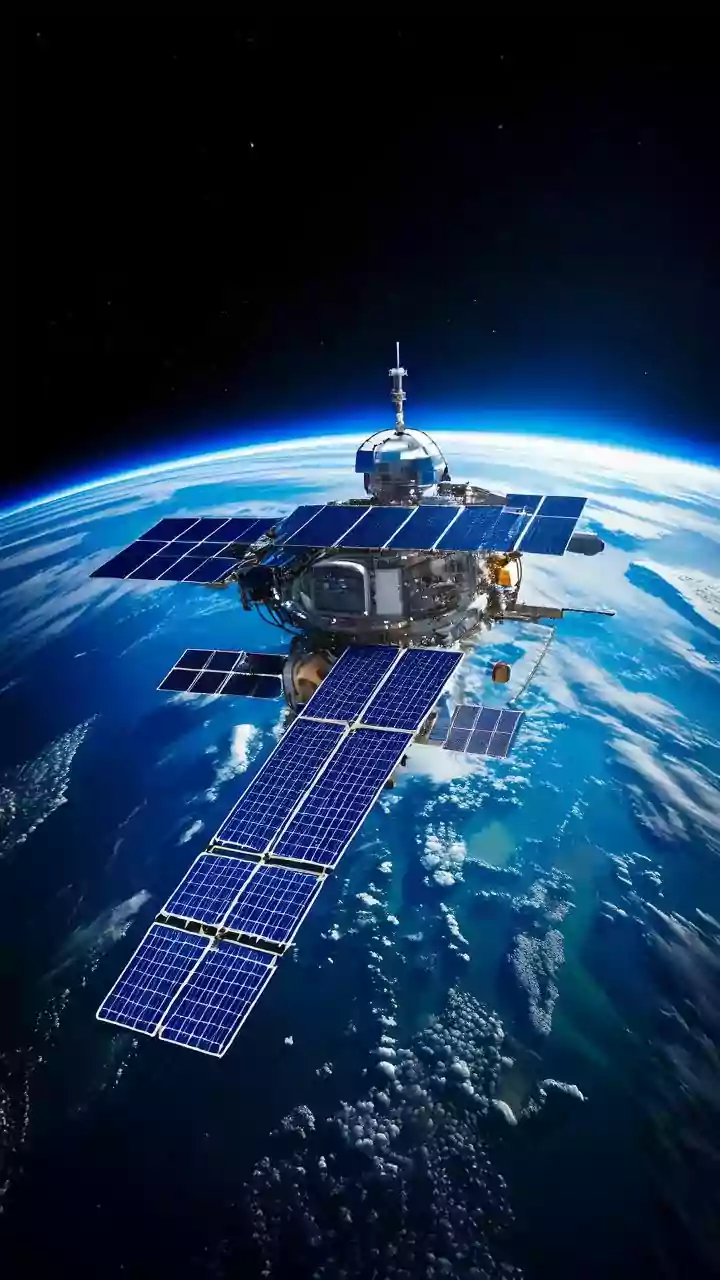
The upcoming flight plan is significantly longer than previous tests. Starship is expected to spend over 22 hours in space, completing approximately 14 orbits around the Earth before it attempts its return. It is this extended, multi-orbit journey that brings India into the picture. As the spacecraft circles the globe at an altitude of about 275 kilometres, its ground track is projected to pass over parts of India multiple times. This provides a potential and rare opportunity for people across the country to spot the massive vehicle as it travels across the sky. While the deorbit burn itself is expected to happen over the ocean, the orbital passes beforehand could be visible in dark skies.
Why the Indian Ocean is Key
The Indian Ocean has become a critical location for Starship's test program. For previous flights, SpaceX has designated splashdown zones in the Indian Ocean as a contingency. This location provides a safe, remote area for the spacecraft to come down if it doesn't proceed to a full orbital insertion or if issues arise. The trajectory allows SpaceX to test complex manoeuvres, like in-space engine relights, while maximizing public safety. In fact, even the very first orbital test flight, Flight 14, initially followed a suborbital path that would have naturally ended in the Indian Ocean before it successfully boosted itself into a full orbit. This built-in safety plan highlights the region's importance in the rocket's development.
The Vision: A Revolution in Travel
These orbital tests are stepping stones toward a much grander vision: fully reusable, point-to-point travel on Earth. SpaceX has formally declared this as a key future market. The concept involves using Starship to transport passengers and cargo between major cities in a fraction of the time it takes by plane. A flight from London to New York could take just 29 minutes, and Los Angeles to Tokyo could be 37 minutes. By reaching suborbital space, Starship could travel at speeds up to 27,000 km/h, connecting nearly any two points on the globe in under an hour. While a network of offshore launch platforms would be required, the company sees this as a way to revolutionize logistics and passenger travel.
The Dawn of a Reusable Rocket Age
At its core, the Starship program is about reusability. Catching and reflying both the booster and the ship is the key to making space travel dramatically cheaper and more frequent. This is what sets Starship apart. Previous orbital missions, like Flight 14 in September 2026, successfully reached orbit and deployed satellites, proving the core capabilities of the system. That flight ended with a controlled splashdown in the Pacific Ocean. Flight 15's attempt to catch the ship will be the culmination of years of testing. A success would validate SpaceX's entire architecture and accelerate its plans not just for Earth-to-Earth travel, but also for building bases on the Moon and, eventually, a city on Mars.