

The Crystal Titan of Siberia
In the heart of Siberia lies Lake Baikal, a true giant among lakes. It is the world's oldest, at an estimated 25-30 million years, and deepest, plunging to over 1,600 meters. It holds roughly 20% of the world's unfrozen fresh surface water, more than
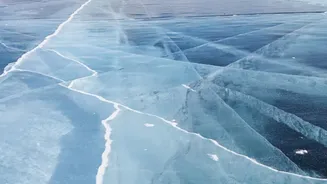
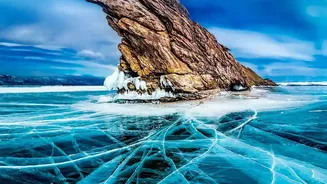
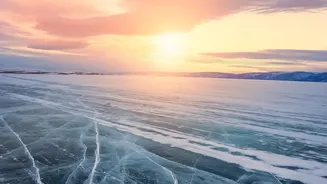
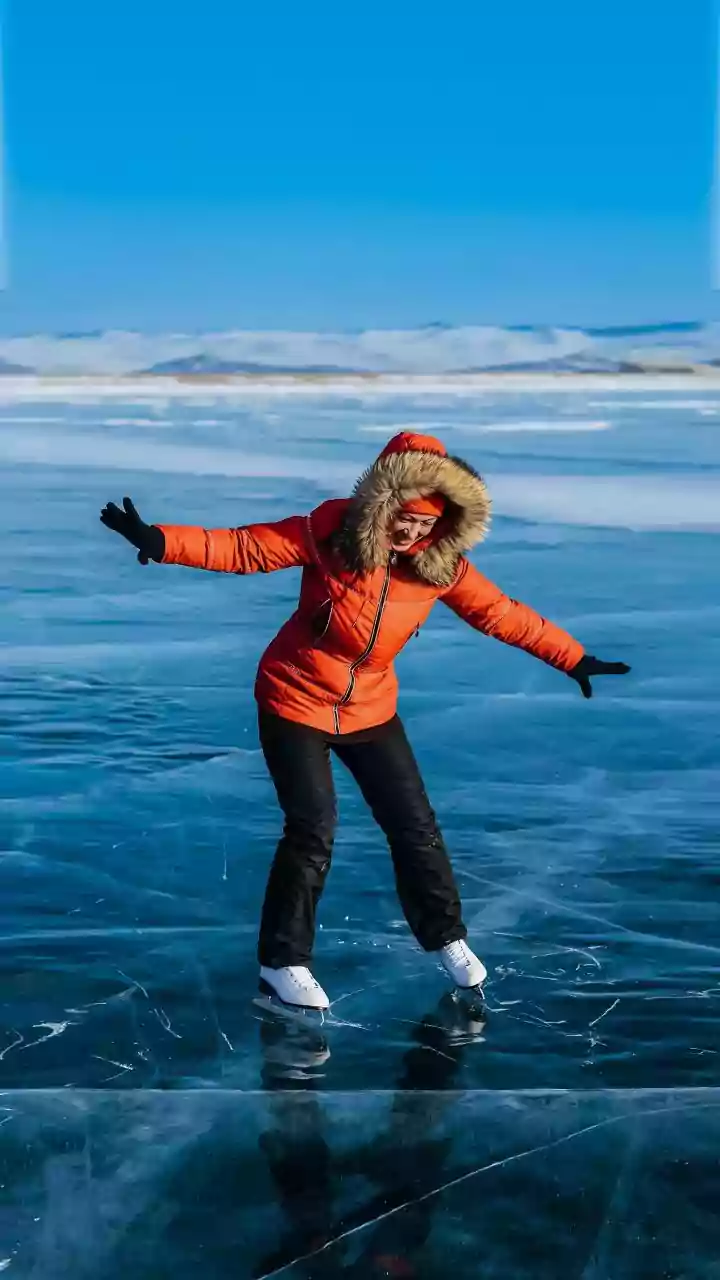
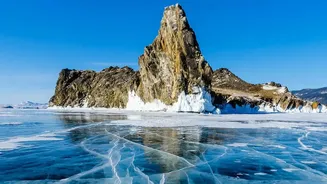
all the North American Great Lakes combined. But for all its staggering statistics, Baikal's most captivating feature emerges in winter. From January to May, the lake freezes over, but this is no ordinary sheet of ice. The water of Lake Baikal is exceptionally pure, with very few minerals or pollutants. This incredible clarity means the ice that forms is remarkably transparent, allowing you to see up to 40 meters into the dark depths below.
A Window of Turquoise Ice
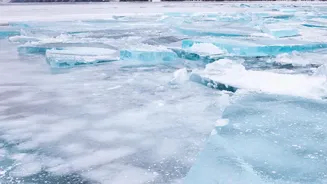
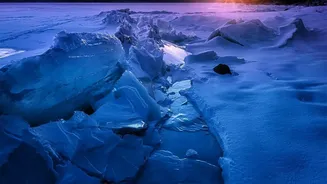
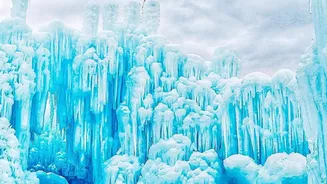
The magic of Baikal's winter is its famous turquoise ice. As the immense pressure of the freezing lake causes the ice sheet to crack and shift, massive blocks are thrust upwards. These jagged slabs, known as hummocks, catch the low winter sun and glow with an intense blue-green light, resembling enormous, uncut gems. This striking colour is a result of light scattering through the dense, clear ice, which absorbs other colours of the spectrum and reflects back the brilliant blue and turquoise. The wind and fluctuating temperatures sculpt these ice formations into surreal towers and grottoes, creating a landscape that feels otherworldly.
A Dance of Frozen Bubbles
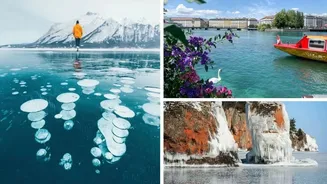
Half a world away in Alberta, Canada, another lake puts on a different kind of icy spectacle. Abraham Lake, a man-made reservoir on the North Saskatchewan River, has become famous for a captivating phenomenon: frozen bubbles. Unlike Baikal's ancient, deep waters, Abraham Lake was created in 1972. During winter, its surface transforms into a natural art gallery, with stacks of white, frozen orbs suspended in the clear ice, creating a polka-dotted effect against the dark water below. Photographers and nature lovers flock to the lake, especially between mid-January and early February, to witness this fleeting masterpiece.
The Science of a Fleeting Spectacle
The source of Abraham Lake's bubbles is biological. Decaying organic matter—plants and trees from the area flooded to create the lake—rests on the lakebed. Bacteria feed on this material, releasing methane gas as a byproduct. As the bubbles of flammable gas rise, they become trapped in the freezing water. The lake freezes in layers, trapping columns of these bubbles at different depths, creating the beautiful, stacked appearance. The area's strong, consistent winds often sweep the ice surface clear of snow, providing a perfect window to view the display. While beautiful, this phenomenon highlights a natural process with climatic implications, as methane is a potent greenhouse gas released into the atmosphere when the ice thaws.
A World of Icy Wonders
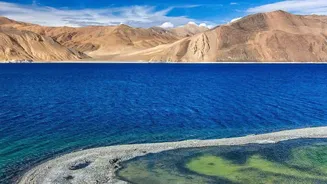
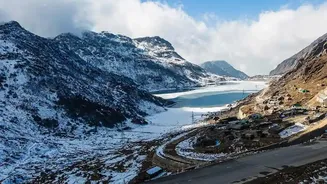
While Baikal and Abraham are exceptional, they are part of a global gallery of frozen art. In the United States, Lake Superior's Apostle Islands are known for their magnificent ice caves, formed when waves freeze against sandstone cliffs. In Iceland, the Jökulsárlón glacier lagoon fills with icebergs that break off from a nearby glacier, creating a surreal landscape of floating blue sculptures. From the frozen waterfalls of Croatia's Plitvice Lakes to the high-altitude Pangong Tso in the Himalayas, the transformation of water into ice provides a constant source of wonder. Each location offers a unique expression of nature's power and delicacy.