





Lohagad Fort, Maharashtra
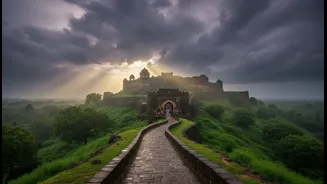
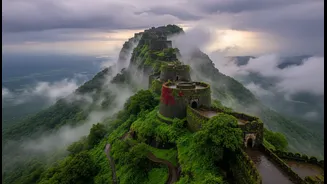
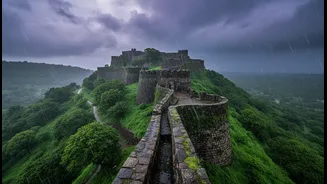
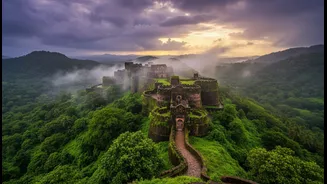
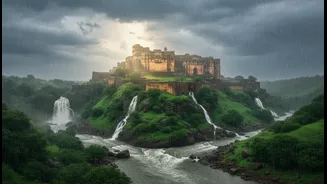
Perched in the Sahyadri range near Lonavala, Lohagad, or the “Iron Fort,” is a quintessential monsoon trek for adventurers from Mumbai and Pune. As the rains intensify, the fort and its surroundings transform into an emerald paradise. The trek is relatively
easy, with well-laid stone steps leading to the top, making it accessible even for beginners and families. The reward is a walk through clouds, with mist swirling around the ramparts and filling the valleys below. The highlight is the Vinchu Kata, a long, narrow ridge that resembles a scorpion's tail, offering breathtaking, panoramic views of the Pawna reservoir and the adjacent Visapur Fort. Captured by Chhatrapati Shivaji Maharaj in the 17th century, the fort’s robust gates and structures are a testament to Maratha military architecture. However, its popularity means it can get crowded, and the stone paths become slippery, so good trekking shoes and caution are essential.
Rajmachi Fort, Maharashtra
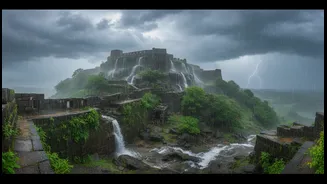
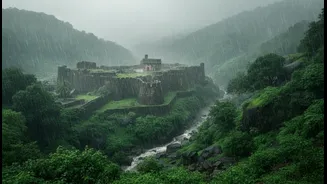
For those seeking a slightly more immersive adventure, Rajmachi offers a spectacular experience. This is not a single fort but a plateau with two fortified peaks: Shrivardhan and Manaranjan. Nestled between Lonavala and Karjat, the trek to Rajmachi is as beautiful as the destination itself, taking you through dense forests, past seasonal waterfalls, and across misty trails. During the monsoon, the route can be muddy and challenging, demanding a good level of fitness. Historically, Rajmachi guarded the ancient Bor Ghat trade route. Today, the base village of Udhewadi offers a unique opportunity for campers to stay within the fort's precincts, experiencing rural life. Exploring the twin forts provides commanding views of the surrounding Sahyadri valleys. Standing atop Shrivardhan, watching the clouds drift below, you connect with centuries of history while being surrounded by nature's raw beauty.
Kumbhalgarh Fort, Rajasthan
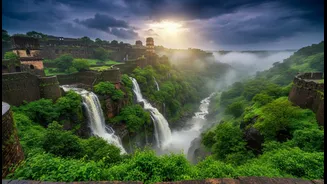
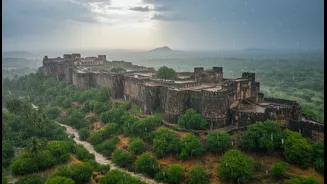
Rajasthan in the monsoon is a revelation, and nowhere is this more true than at Kumbhalgarh. A UNESCO World Heritage Site, this formidable Mewar fortress is encircled by a massive wall that stretches for 36 kilometres, the second-longest in the world. During the rains, the arid Aravalli hills that cradle the fort are carpeted in vibrant green, a stunning contrast to the rugged stone fortifications. The journey from Udaipur itself becomes a scenic drive through misty hills. The fort’s highest point, the Badal Mahal or “Palace of Clouds,” truly lives up to its name, as you can literally stand amidst the clouds and watch the mist roll over the drenched valleys of Marwar and Mewar. The monsoon season sees fewer tourists, allowing for a more peaceful exploration of its many temples, palaces, and intricate rainwater harvesting systems designed by Rana Kumbha.
Mandu, Madhya Pradesh
Mandu, the “City of Joy,” feels like it was built for the monsoon. This sprawling ruined city in Madhya Pradesh is a treasure trove of Afghan architecture, where palaces, tombs, and mosques are interspersed with lakes and lush greenery. During the rains, its numerous water bodies fill to the brim, ancient baolis overflow, and the entire plateau comes alive. The romance of Mandu is rooted in the legendary tale of Sultan Baz Bahadur and the beautiful Rani Roopmati. It is said you can still feel their story in the air as you visit Rani Roopmati’s Pavilion, which overlooks the vast, green Nimar plains below. Another architectural marvel, the Jahaz Mahal or “Ship Palace,” appears as if it's floating between two artificial lakes. The monsoon cloaks Mandu in an ethereal charm, making it easy to understand why Mughal emperor Jahangir himself chose to spend the rainy season here.