




Lofoten Islands: Dramatic Peaks and Fishing Villages
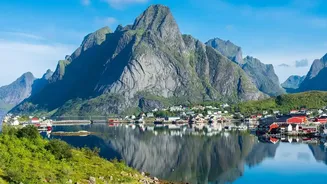
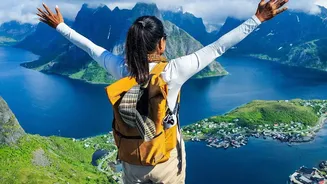
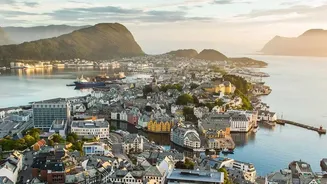
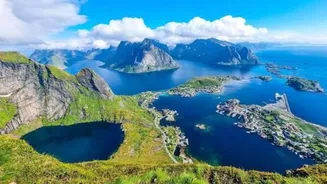
The Lofoten archipelago is the postcard image of Arctic Norway, a dramatic chain of islands where jagged mountains plunge directly into the sea. The experience here is defined by the landscape itself: driving along winding coastal roads, exploring charming
fishing villages with their iconic red 'rorbu' cabins, and hiking to viewpoints that will leave you breathless. While the islands are famous for their scenery, they are also habitats for diverse wildlife. You might spot majestic sea eagles soaring overhead or catch a glimpse of otters along the shore. However, whale sightings, which were once more common, are now rare as herring populations have shifted north. A trip to Lofoten is about soaking in the atmosphere, whether under the midnight sun of summer or the dancing northern lights of winter. The true prize is the feeling of being in a raw, powerful environment.
Senja: A Quieter, Wilder Alternative
Often called 'Norway in Miniature', Senja is the country's second-largest island and offers a similar dramatic beauty to Lofoten but with fewer crowds. Its western coast is a spectacle of sharp peaks, deep fjords, and secluded white-sand beaches. The National Scenic Route on Senja is a journey through constantly changing vistas, from the iconic jagged peaks of Okshornan to serene fjord arms. Hiking is a primary activity, with trails like the one to Segla peak offering challenging climbs and immense rewards. In Anderdalen National Park, you can wander through ancient pine forests. Wildlife here is present but elusive; you may see reindeer, moose, or sea otters. Senja encourages a slower pace of travel, focusing on immersion in the serene and wild landscapes that feel largely untouched.
Vesterålen: A Better Bet for Whales
Just north of Lofoten, the Vesterålen archipelago is considered one of Europe's premier destinations for whale watching. A deep underwater canyon called Bleiksdjupet lies close to the coast, creating a nutrient-rich feeding ground that attracts sperm whales year-round. While sightings are very likely, operators are careful to state that nothing in nature is ever 100% guaranteed. During winter months, migrating herring can also attract orcas and humpback whales. Beyond the whales, Vesterålen offers a gentler, more rounded landscape than Lofoten, with rolling hills and agricultural land complementing its coastal beauty. It's an ideal destination for those who want a high probability of a whale encounter while still enjoying the peaceful atmosphere of a Northern Norwegian island.
Svalbard: The True High Arctic
For a true Arctic expedition, the Svalbard archipelago is unparalleled. Located halfway between mainland Norway and the North Pole, this is a realm of glaciers, vast tundra, and the midnight sun. Nature here is raw and powerful. While Svalbard is famous as the kingdom of the polar bear, sightings are a matter of luck and are never promised by tour operators. The focus of a trip here is the experience of the High Arctic itself: cruising in a Zodiac past towering glacier fronts, hiking on the tundra, and witnessing unique flora and fauna that have adapted to this extreme environment, such as the Svalbard reindeer and Arctic fox. Marine life, including walruses, seals, and various whales like the beluga or even the blue whale, might be spotted in the icy waters. A journey to Svalbard is less of a vacation and more of an adventure into one of the planet's last great wildernesses.
Runde: The Southern Bird Island
Known as 'The Bird Island', Runde is home to one of Norway's southernmost major bird cliffs. During the nesting season from approximately April to August, the island becomes a bustling metropolis for over 100,000 seabirds. It's most famous for its large colony of Atlantic Puffins, but you can also find Northern Gannets, Great Skuas, and White-tailed Eagles. While the sheer number of birds makes sightings likely in season, seeing a specific species like a puffin often requires patience and timing, as they spend much of their day at sea. Even without a specific sighting, the experience of hiking the island's marked trails, feeling the Atlantic wind, and hearing the chorus of thousands of birds is unforgettable. Runde proves that you don’t need to go to the high Arctic to have a powerful wildlife-focused experience.