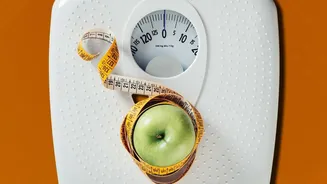







The Truth About Water Weight
Most short-term weight changes that you see on the scale are not fat gain or loss, but shifts in your body's water balance. Your total body weight is a combination of muscle, fat, bone, organs, and a large amount of water. It's normal for an adult's weight to fluctuate
by up to two or three kilograms in a single day, primarily due to fluid retention. This is when your body holds onto more water than usual, which can make you feel bloated and cause a temporary spike on the scale.
The Salt and Water Connection
Sodium plays a major role in how your body regulates fluids. When you consume a meal high in salt, your body holds onto extra water to dilute the sodium and maintain a healthy internal balance. This response can easily add a kilogram or more to your weight overnight. This is just water weight, not fat gain. Once your body processes the extra sodium, your fluid levels will typically return to normal within a few days. However, be mindful that many high-sodium foods are also highly processed and calorie-dense, which can contribute to actual fat gain over time.
How Carbohydrates Influence the Scale
Carbohydrates are another key factor in daily weight fluctuations. When your body stores carbs for energy, it does so in the form of glycogen in your muscles and liver. For every gram of glycogen stored, your body also stores approximately three to four grams of water. So, if you enjoy a pasta or rice-heavy dinner, your glycogen stores get replenished, and your body retains more water along with it. This is why some people notice rapid weight loss when starting a low-carb diet; they are initially losing water weight as their glycogen stores are depleted.
Exercise Can Temporarily Add Weight
It might seem counterintuitive, but starting a new exercise routine or pushing yourself harder than usual can lead to a temporary increase on the scale. Intense exercise causes micro-tears in your muscle fibres, which is a normal part of building strength. To repair this, your body sends fluid to the area, causing inflammation and water retention. This is a healthy and temporary part of the muscle-building process. Over the long term, building muscle is beneficial as it is denser than fat and increases your metabolism, helping with weight management.
Hormones and Hydration Matter Too
For many women, the menstrual cycle brings predictable weight fluctuations. In the days leading up to a period, changes in hormones like oestrogen and progesterone can cause the body to retain more sodium and water, leading to bloating and a higher number on the scale. This is a normal physiological response that usually subsides once the period begins. Furthermore, your hydration status has a direct impact. Dehydration can ironically cause your body to hold onto water to compensate, while staying well-hydrated helps your kidneys flush out excess fluid and sodium.