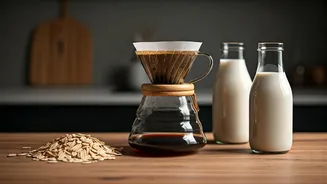









An Unchanging Morning Ritual
For millions, the day doesn't begin without it. Filter kaapi, particularly the South Indian variety, is more than a beverage; it's a cultural institution. The process itself is a cherished ceremony: the freshly ground coffee beans, rich with chicory,
packed into a traditional two-part metal filter. Hot water is poured over, patiently dripping to create a potent, almost syrupy decoction. This dark elixir is then mixed with hot, frothed, full-fat milk and poured back and forth between the tumbler and the davara in a dramatic, cooling arc. The result is a perfect balance of bitter, sweet, and creamy—a comforting hug in a cup that has remained largely unchanged for generations.
Why The Shift Away From Dairy?
So, why mess with perfection? The move towards non-dairy milk isn't a rejection of tradition but an adaptation to modern lifestyles and needs. For a growing number of people, lactose intolerance makes the classic kaapi an uncomfortable experience. Others are embracing veganism for ethical or environmental reasons, seeking to reduce their reliance on animal products. Health consciousness also plays a role, with some consumers looking for lower-calorie or cholesterol-free options. It’s less about a revolution and more about a personal evolution, with coffee lovers looking for ways to keep their beloved ritual without the dairy.
The Rise of the Plant-Based Froth
The challenge has always been finding a substitute that can stand up to the strong decoction and replicate the creamy texture of boiled milk. Early experiments with thin almond or soy milk often resulted in a watery, disappointing brew that would split or curdle. But the game has changed. The market is now flooded with 'barista-grade' plant milks specifically designed to be heated and frothed. These formulations have a higher fat and protein content, allowing them to create a stable, velvety microfoam that rivals, and sometimes even surpasses, traditional dairy froth. These aren't just alternatives; they are serious contenders for the perfect cup.
Oat Milk: The Uncontested Champion
Among the many plant-based options, oat milk has emerged as the clear favourite for filter coffee enthusiasts. Its secret lies in its inherent creaminess and relatively neutral flavour profile. Unlike soy, which can have a beany aftertaste, or almond, which can be thin and nutty, oat milk complements the coffee without overpowering it. When steamed, it develops a silky, rich texture that blends seamlessly with the dark, chicory-laced decoction. It froths beautifully, allowing for that classic airy head on your kaapi. For many, oat milk isn’t just a good substitute; it’s a genuinely delicious pairing that creates a new, yet satisfyingly familiar, experience.
Your Guide to the Perfect Non-Dairy Kaapi
Ready to experiment? Here are a few tips. First, always opt for a 'barista edition' or 'professional' version of your chosen plant milk—oat and soy work best. These are engineered not to split in hot beverages. Second, don't boil it. Heat the milk gently to around 60-65°C. Overheating can degrade the flavour and texture. Third, for that signature froth, use a handheld milk frother before combining it with your decoction. Pouring it back and forth between two tumblers also works wonders. Finally, remember that plant milks often have their own subtle sweetness, so you might want to adjust the amount of sugar you add. The goal is to find a new balance that works for your palate.