







The Dangers of the Desk Job
It's often called 'sitting disease', and for good reason. A sedentary lifestyle, defined by long hours of sitting with little movement, is a significant health concern. Research consistently links prolonged sitting to a host of problems, including an increased
risk of obesity, type 2 diabetes, high blood pressure, and certain types of cancer. When we sit for extended periods, our bodies enter a low-energy state. This can negatively affect our metabolism, making it harder for our bodies to manage blood sugar and fats. Over time, this contributes to what is known as metabolic syndrome, a cluster of conditions that heighten the risk of serious cardiovascular diseases. The issue is so pronounced that some studies suggest that even a regular daily workout might not fully undo the damage of sitting for eight or more hours a day.
What Happens When You Sit Too Long
Physiologically, sitting for hours on end puts our bodies into a state of shutdown. The large muscles in our legs and glutes, which are crucial for movement and metabolic health, become inactive. This lack of muscle contraction reduces circulation, which can lead to blood pooling in the legs and increase the risk for issues like varicose veins. At the same time, your body’s ability to process glucose is impaired, which can cause blood sugar levels to spike, particularly after meals. Beyond the metabolic impact, prolonged sitting also affects our musculoskeletal system, contributing to tight hip flexors, back pain, and a weakened core. It can even take a toll on our mental state, with sedentary behaviour linked to increased feelings of anxiety and fatigue.
The 'Exercise Snack' Solution
The antidote to constant sitting isn't necessarily a marathon. Instead, the solution lies in frequency. Enter the 'exercise snack', a term for short bursts of physical activity sprinkled throughout the day. These aren't full-blown workouts; they can be as short as one to five minutes. The key is that they are done consistently to break up long stretches of inactivity. A landmark 2023 study found that walking for just five minutes every half hour was significantly effective at lowering both blood sugar and blood pressure levels in participants who sat for long periods. This approach works by repeatedly 'waking up' your muscles and metabolic systems, preventing them from going into a prolonged dormant state.
How Movement Resets Your Body and Brain
When you take a short movement break, you're hitting a physiological reset button. That brief activity improves blood flow, helping to deliver fresh oxygen to your muscles and brain. This simple action helps counteract blood sugar spikes and improves blood pressure regulation. But the benefits aren't just physical. Movement breaks have been shown to improve mood, reduce feelings of fatigue, and boost mental clarity. Stepping away from a task for a few minutes can reset your brain's focus, making it easier to return to your work with renewed energy and attention. These short intervals can even enhance creativity by giving your brain a moment to process information subconsciously.
Practical Moves for Your Workday
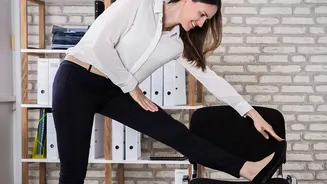
Integrating exercise snacks doesn't require a gym membership or special equipment. The goal is simply to move. Consider these easy, office-friendly options: take a brisk walk up and down a flight of stairs; do a set of 10-15 bodyweight squats or lunges by your desk; perform some simple stretches for your neck, shoulders, and back; march in place while on a phone call; or even just stand up and walk around your office for a couple of minutes. One popular guideline is the 20-8-2 rule: for every 30 minutes, sit for 20, stand for eight, and move for two. The specific activity is less important than the consistency of breaking up your sitting time.