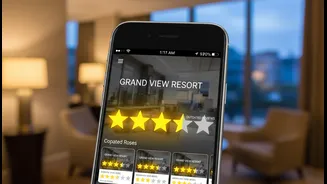









The Trouble with Star Ratings
The hotel star rating system was designed to give travellers a simple, at-a-glance measure of quality. More stars are meant to equal more luxury and better amenities. However, these ratings have significant limitations. A major issue is the lack of a universal,
global standard; a four-star hotel in one country might not match the quality of a four-star in another. These ratings often focus on a checklist of tangible facilities—like having a restaurant or a fitness centre—rather than subjective qualities like staff friendliness, atmosphere, or actual service quality. As a result, a hotel can tick all the boxes for a high star rating but fail to deliver a consistently pleasant guest experience. A lower-rated hotel might even offer superior personalised service that the star system simply can't capture.
From Numbers to Narratives
While a 4.5-star average seems great, the real insights are buried in the written reviews. These narratives provide the context that aggregate scores lack. A study from Cornell University found that the text of reviews offers insights into the guest experience that numerical ratings alone do not reveal. This is where you can discover patterns of consistency or inconsistency. Multiple reviews mentioning “spotless rooms” and “helpful staff” are a strong indicator of reliable service. Conversely, if several guests complain about slow check-ins or noisy hallways, you’ve identified a potential recurring problem. These details, not the overall score, paint a true picture of what you can expect during your stay.
Your Secret Weapon: The Review Filter
Most travellers scroll through a few recent reviews, but the real power lies in using the filters provided by booking platforms like Booking.com, Expedia, and others. Instead of just sorting by date, you can use these tools to zero in on what matters most to you. Platforms allow you to filter results by review score (e.g., only showing properties rated 8+). More importantly, many have a keyword search function for reviews. This is the game-changer. Are you a light sleeper? Search for the word “noise” to see what past guests have said. Need reliable internet for work? Search for “wifi” or “internet speed.” Other useful keywords include “cleanliness,” “location,” “breakfast,” and “staff.” This allows you to quickly assess a hotel based on your personal priorities.
How to Spot a Genuinely Useful Review
As you filter and read, it’s important to know how to distinguish helpful feedback from unhelpful noise. Look for reviews that offer balanced pros and cons; these are often more credible than those that are entirely positive or negative. A review that says, “The location was perfect and the bed was comfortable, but the bathroom could have been cleaner,” provides specific, actionable information. Vague comments like “great hotel” or “terrible stay” are far less useful. Also, pay attention to the date of the review, as recent feedback is more relevant, especially concerning things like construction or recent renovations. Finally, try to find reviews from travellers like you—whether you’re a solo business traveller, a couple, or a family with young children—as their needs and perspectives will more closely align with your own.
Building a Smarter Booking Strategy
To book your next hotel with confidence, integrate this approach into your planning. Start by using star ratings and price to create a shortlist of potential hotels. But before you book, dive into the written reviews. Use filters to sort by recent reviews and a high score to narrow the field. Then, use keyword searches to investigate your non-negotiables. If you find multiple, recent, and detailed reviews that consistently praise the aspects you care about most, you've likely found a winner. This method takes a few extra minutes, but it moves you beyond the ambiguous promise of a star rating and toward a decision based on evidence of consistent, quality service.