


A Window into Creation
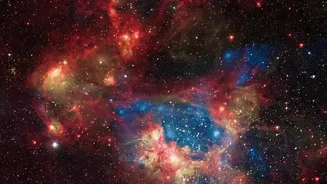
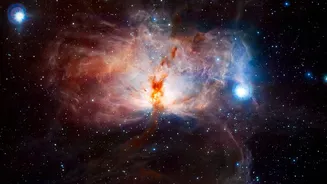
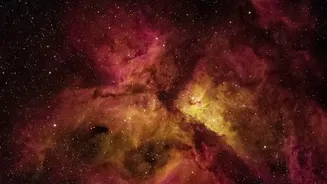
Imagine a sprawling, churning cloud of gas and dust, thousands of light-years across. These regions, known as stellar or cosmic nurseries, are the birthplaces of stars. Within these immense clouds, gravity slowly pulls material together into dense clumps.
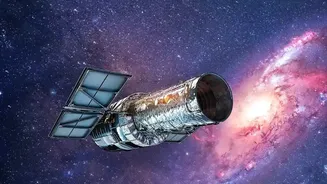
As these clumps collapse and heat up, they ignite, forming protostars. For astronomers, these nurseries have long been objects of fascination and frustration. The same dust that fuels star birth also acts like a thick fog, obscuring the view of visible-light telescopes like Hubble. The processes happening deep inside have been largely hidden, forcing scientists to piece together the story of star and planet formation from limited clues.
What Webb's Infrared Eye Reveals
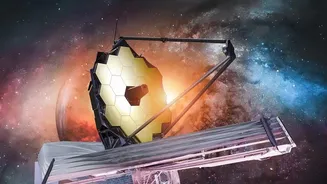
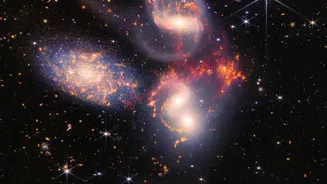
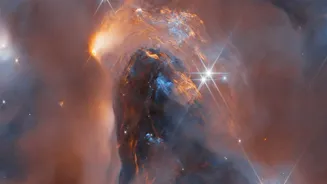
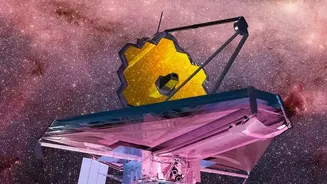
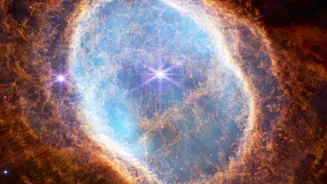
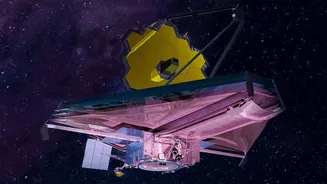
This is where the James Webb Space Telescope (JWST) changes the game. Webb is designed to see the universe in infrared light, which has longer wavelengths that can penetrate the cosmic dust clouds where visible light cannot. In a recent observation of the Serpens Nebula, a star-forming region about 1,300 light-years away, JWST used its powerful Near-Infrared Camera (NIRCam) to cut through the haze. The telescope revealed a stunningly detailed scene of dozens of young stars emerging from their dusty cocoons. Most striking was the discovery of a group of protostellar outflows—jets of gas spewing from newborn stars—all aligned in the same direction, like cosmic rain. This had been theorized but never seen so directly before.
The Blueprint of New Worlds
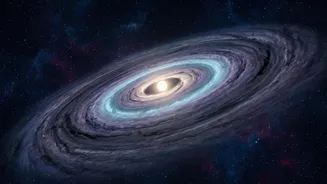
Finding young stars is one thing, but the headline discovery is the evidence of planetary systems forming around them. The material not consumed by the new star settles into a spinning platter of gas and dust called a protoplanetary disk. It is within these disks that planets are born, as material clumps together to form rocky cores and gas giants. By observing these disks in their infancy, Webb is essentially watching the first chapter of a planet's life story. Recent studies using Webb have focused on how this material gets distributed and how quickly it dissipates—a process that sets a strict timeline for planet formation. The new Serpens Nebula image provides a historical record of how stars are born, which directly impacts our understanding of how their planets, in turn, come into being.
Why This Discovery Matters
These observations are far more than just breathtakingly beautiful images. They provide crucial data for understanding our own origins. Every star, including our Sun, began its life in a stellar nursery. The planets of our solar system formed from a protoplanetary disk about 4.6 billion years ago. By studying these processes as they happen elsewhere in the galaxy, scientists can refine their models of how solar systems are built. It helps answer fundamental questions: Is our solar system's architecture common or rare? What are the essential ingredients for forming a planet like Earth? By analyzing the chemical composition of these nurseries and disks, JWST can even detect the building blocks of life, like water and carbon-based molecules, and see how they are incorporated into new worlds.
The Next Frontier for Webb
This discovery is not an endpoint, but a beginning. Scientists will use Webb's powerful spectrographs to dissect the light from these young stars and their disks, mapping the chemical makeup of these nascent planetary systems. The aligned jets in the Serpens Nebula suggest the entire region inherited its spin from the parent cloud of gas, providing a key insight into the dynamics of star birth. Each new observation builds a more complete picture of the universe's lifecycle. While this scan focused on the birth of stars and planets, the same technology allows Webb to study the end of a star's life and probe the atmospheres of mature exoplanets, searching for biosignatures. The telescope continues to prove its worth as a time machine, looking back at the dawn of stars and forward to the possibility of life elsewhere.