





The Challenge with Traditional Solar
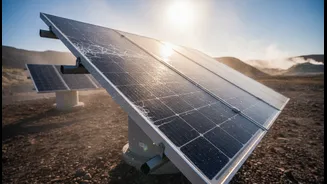
Conventional solar panels, typically made from silicon, are at their best under direct, bright sunlight. Their entire structure is optimised to capture a specific spectrum of light that is most abundant on a clear, sunny day. When clouds roll in, they
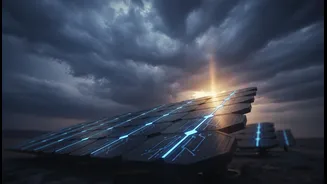
scatter the sunlight, creating what is known as diffuse light. This light is less intense and has a different spectral composition. For a standard silicon panel, this means a significant drop in performance. On a heavily overcast day, a traditional solar panel might only produce 10% to 25% of its rated power.. While this is better than nothing, it creates a reliability problem, especially in regions with frequent cloudy weather, like during India’s monsoon season.
A New Generation of Light Catchers
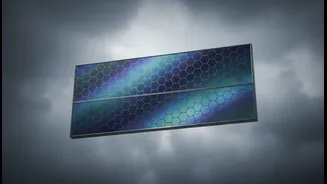
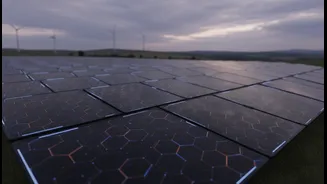
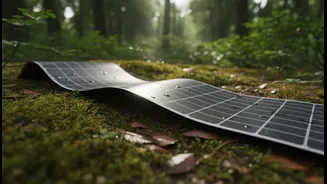
The headline-making advancements are not just slightly better silicon panels; they are fundamentally different technologies. The two most promising are Dye-Sensitized Solar Cells (DSSCs) and Perovskite Solar Cells (PSCs). Unlike their rigid silicon counterparts, these cells are part of the 'thin-film' family and can be flexible, lightweight, and even semi-transparent.. Their unique chemical and physical structures are specifically what make them so adept at handling low-light conditions, turning the conventional wisdom about solar energy on its head. These aren't just lab curiosities; they are powering a new wave of innovation in renewable energy.
How They Capture 'Grey' Light
The magic of DSSCs and PSCs lies in the materials. DSSCs work a bit like artificial photosynthesis.. They use a layer of light-sensitive dye to absorb photons, much like chlorophyll in a leaf. This dye is highly effective at capturing scattered, indirect light—the exact kind present on a cloudy day.. Perovskite cells, on the other hand, use a unique crystal structure that is exceptionally good at absorbing a broad spectrum of light and converting it into electricity, even from low-intensity indoor lighting.. Essentially, while silicon panels are like a specialist that excels in one specific task (capturing direct sunlight), these new technologies are generalists, skilled at harvesting energy from a much wider variety of light sources and conditions.
Reality Check: What 'Works Better' Really Means
It is crucial to clarify the headline’s claim. These innovative panels do not generate more absolute power on a cloudy day than on a sunny one. Peak performance for any solar panel will always be in bright, direct sunlight. The term 'works better' refers to their relative efficiency. In low-light conditions, a traditional silicon panel might see its efficiency plummet by 75-90%. In contrast, a DSSC or Perovskite panel loses a much smaller fraction of its power, maintaining a higher level of performance relative to its own peak capacity.. Some studies have shown they can be twice as efficient as silicon in low light, meaning the performance gap between the technologies widens significantly when the sun goes behind a cloud..
The Future: From Rooftops to Raincoats
The potential applications for this technology are vast. Because they are lightweight, flexible, and efficient in ambient light, they can be integrated into almost anything. Imagine windows that generate electricity, backpacks that charge your phone, or electronic devices powered by the lights in your office.. Some of the most exciting research involves hybrid cells. Scientists have developed panels using perovskites that can not only generate power from sunlight but also from the kinetic energy of falling raindrops.. While many of these technologies are still moving from the lab to mass production, facing challenges in durability and cost, the trajectory is clear. The days of solar power being an exclusively fair-weather friend are numbered.
A Game-Changer for India
For a country like India, with ambitious renewable energy goals and a climate defined by dramatic seasonal shifts, this technology is particularly transformative. The annual monsoon brings months of heavy cloud cover, which has traditionally been a period of reduced solar generation. Panels that maintain high efficiency during these grey months would drastically improve the year-round reliability and viability of solar power.. This could help stabilize the grid, reduce reliance on fossil fuels during the monsoon, and accelerate the adoption of solar energy in regions previously considered less suitable, ensuring India’s solar dream shines brightly, regardless of the weather.