




Understanding a Total Solar Eclipse
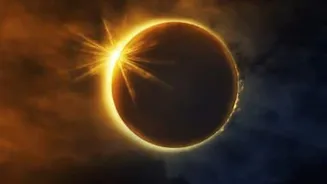
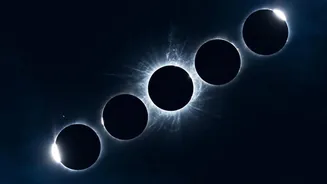
A total solar eclipse is a celestial alignment where the Moon passes directly between the Sun and Earth, completely blocking the Sun's bright face. This event casts a deep shadow, called the umbra, onto a small part of our planet. For those within this
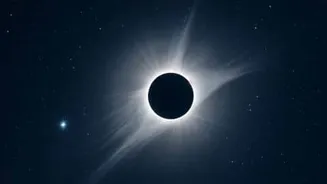
shadow, daylight turns to a deep twilight, temperatures can drop, and the Sun's faint, wispy outer atmosphere—the corona—becomes visible to the naked eye. This brief period of complete blockage is known as 'totality', and it is an experience often described as unforgettable. Outside this specific path, observers will only see a partial eclipse, which lacks the dramatic full effect of totality.
The Narrow Path of Totality
The 2026 eclipse path is incredibly specific and quite remote. It begins over the Arctic, sweeps across Greenland, passes over the western edge of Iceland, and then crosses the Atlantic to reach northern Spain and a tiny corner of Portugal. This will be the first total solar eclipse visible in mainland Europe since 1999. The path of totality is only a few hundred kilometres wide, making it a truly exclusive event. The maximum duration of totality will be just over two minutes, experienced off the coast of Iceland. For many observers, especially in Spain, the eclipse will occur close to sunset, promising potentially spectacular photographic opportunities of the eclipsed Sun low on the horizon.
Will the Eclipse Be Visible From India?
Unfortunately, the total solar eclipse of August 12, 2026, will not be visible from India. The path of totality is thousands of kilometres away, primarily crossing the Arctic and parts of Europe. Due to the time zone difference, the eclipse will occur late at night on August 12 and into the early morning of August 13 in Indian Standard Time. While you won't be able to look up and see the event in the Indian sky, you won't have to miss out entirely. Several organisations, including NASA, will provide live broadcasts of the eclipse, allowing anyone with an internet connection to witness the spectacle from the best viewpoints on Earth.
NASA's High-Flying Science Mission
A total solar eclipse is more than just a beautiful sight; it's a golden opportunity for science. NASA is deploying its WB-57 high-altitude research aircraft to chase the Moon's shadow. Flying at 50,000 feet, above most of the atmosphere, the jet's advanced cameras will capture incredibly clear images of the Sun's corona. Scientists hope to better understand the corona's extreme heat and its role in the solar wind that flows out from the Sun. By flying along the eclipse path, the jet can extend its observation time of totality to nearly three minutes. Additionally, NASA is supporting student teams who will launch dozens of scientific balloons from Iceland and Spain to study how the temporary loss of sunlight affects Earth's atmosphere.
How to Watch the Eclipse Safely
For those in India, the safest and only way to watch is through official livestreams. NASA typically provides a high-quality, commentary-filled broadcast on its website and YouTube channel. While you'll be watching on a screen, it's still crucial to remember the rules of safe solar viewing for any future eclipses you might witness in person. Never look directly at the Sun, even when it is partially covered, without certified eclipse glasses or a special-purpose solar filter. Ordinary sunglasses are not safe. The only time it is safe to look without protection is during the brief moments of 100% totality, an experience that will be reserved for those inside the narrow path for this event.