

Earth's Mysterious, Hostile Twin
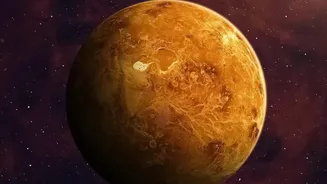
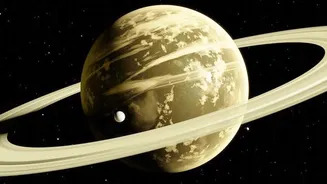
Venus is often called Earth's sister planet. Both are rocky, of similar size and mass, and were born from the same cosmic materials. But the family resemblance ends there. Today, Venus is a vision of a runaway greenhouse effect, a cautionary tale for
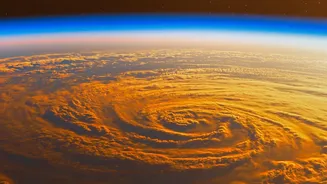
planetary evolution. Its surface roasts at an average temperature of 467°C, hot enough to melt lead, under an atmospheric pressure 93 times greater than Earth's—equivalent to being 900 meters underwater. The planet is permanently veiled by thick, opaque clouds composed not of water, but of corrosive sulfuric acid. This toxic blanket makes the surface impossible to see with conventional cameras, hiding its geological secrets from view. These extreme conditions mean that past landers, like the Soviet Venera 13, have survived for only a couple of hours before being crushed and cooked.
Shukrayaan: India's Ambitious Journey to Venus
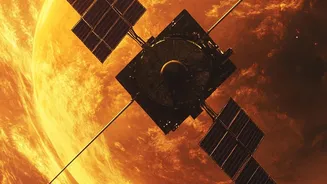
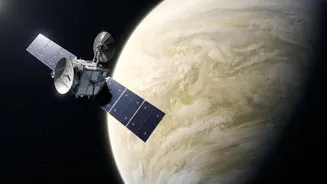
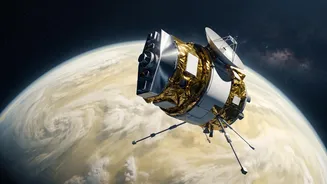
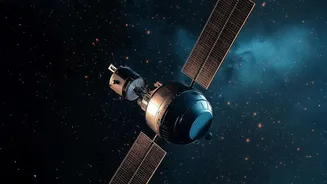
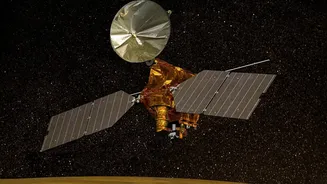
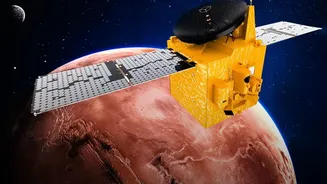
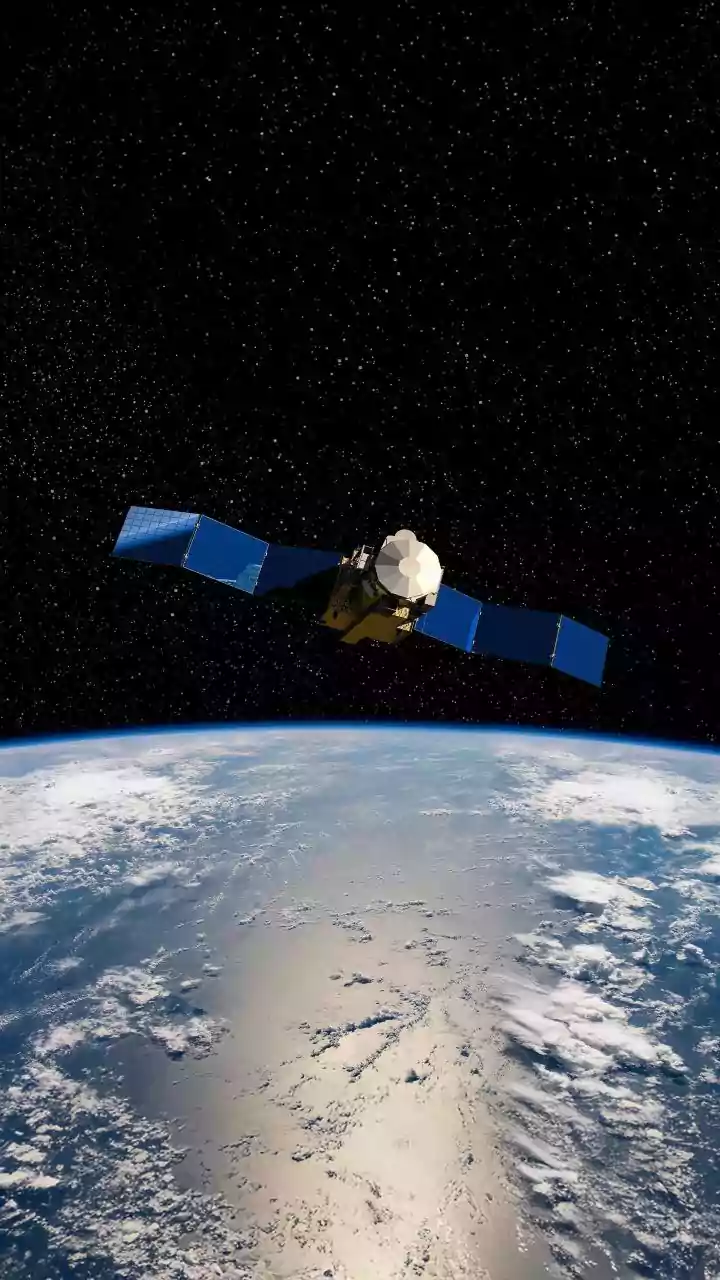
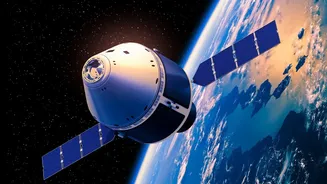
Following the monumental successes of Chandrayaan and Mangalyaan, the Indian Space Research Organisation (ISRO) is setting its sights on this enigmatic neighbour with the Shukrayaan mission, officially known as the Venus Orbiter Mission. Approved by the Union Cabinet in September 2024, this mission marks India's first foray to Venus and its second interplanetary venture. Scheduled for launch on March 29, 2028, aboard the powerful LVM-3 rocket, the spacecraft will embark on a 112-day journey to reach Venusian orbit by July 19, 2028. The 2,500 kg orbiter will carry around 100 kg of scientific instruments designed to operate for four years from a carefully planned elliptical orbit, studying the planet from varying altitudes. Shukrayaan's primary goals are to investigate the Venusian surface and subsurface, study its complex atmospheric chemistry, and analyze the interaction between the planet and the solar wind.
The Power of Radar: Seeing the Unseen
So, how do you map a world you can’t see? The answer is the mission's flagship instrument: a high-resolution Synthetic Aperture Radar (SAR). Unlike optical cameras that rely on light, radar is an active system that sends out its own microwave pulses and records the echoes that bounce back. These microwaves have the unique ability to penetrate the thick sulfuric acid clouds, darkness, and weather, allowing Shukrayaan to create detailed images of the surface day or night. The 'synthetic aperture' technique uses the spacecraft's motion to simulate a much larger antenna, dramatically increasing image resolution. This will allow ISRO to generate a high-resolution map of Venus's topography, providing insights into its geological features like volcanoes and impact craters with a resolution potentially four times better than NASA's Magellan mission in the 1990s.
Unlocking Venus's Ancient Secrets
The data from the SAR and other key instruments, including a ground-penetrating radar, will help scientists tackle some of the biggest questions about Venus. A primary objective is to search for signs of active volcanism and lava flows, which could reveal if the planet is still geologically alive. The mission will investigate surface and subsurface features to understand how the planet was resurfaced over its history. One of the most compelling mysteries is why Venus, which may have once been habitable and similar to Earth, evolved so differently. By studying its geology and atmosphere, scientists hope to learn more about how Earth-sized planets evolve, which has implications for understanding exoplanets orbiting other stars. The mission will also contribute to our understanding of how planetary climates can change dramatically, serving as a crucial data point for climate modeling on our own world.
A New Era of Venus Exploration
ISRO is not alone in its renewed interest in Venus. NASA and the European Space Agency are also planning missions, turning the 2030s into a golden decade for exploring our sister planet. This global focus is significant. Multiple missions observing the same planet from different orbits and with complementary instruments will allow scientists to build the most comprehensive picture of Venus ever achieved. Shukrayaan, with its unique payload including international contributions from Sweden and Russia, is poised to be a major player in this collaborative effort. By successfully executing this mission, India will not only solidify its position as a major force in interplanetary exploration but will also contribute vital knowledge to one of the most compelling puzzles in planetary science.