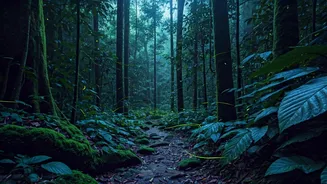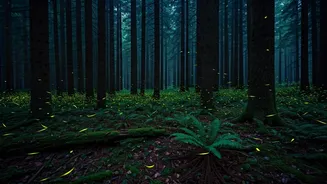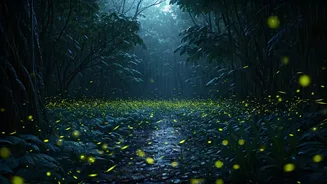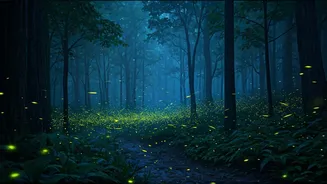


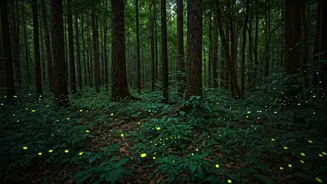


A Forest Dressed in Stars
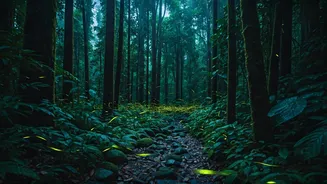
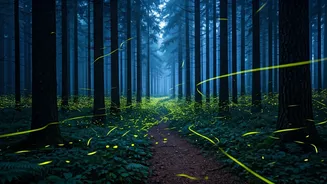
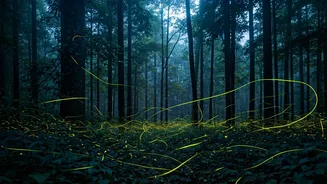
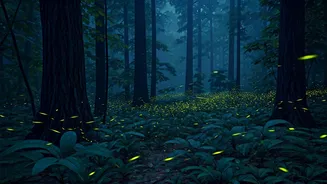
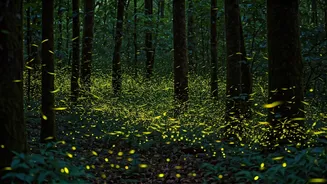
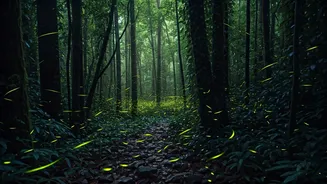
Imagine standing in complete darkness, the air thick with the smell of wet earth. Suddenly, a single point of light pulses nearby. Then another, and another, until the entire landscape is alive with a silent, synchronised symphony of blinking stars. This
isn't a dream; it's the annual firefly mating ritual, a breathtaking spectacle that plays out in specific pockets of India, most famously in the Western Ghats. In places like Purushwadi in Maharashtra, entire trees appear to be decorated with fairy lights, their branches dripping with the cool, yellow-green glow of countless beetles looking for love. The experience is deeply immersive, a reminder of nature's quiet, persistent artistry that continues just beyond the glare of our city lights.
The Science of the Sparkle
What powers this incredible light show? The answer is bioluminescence, a chemical reaction that occurs inside the firefly's body. These insects produce a chemical called luciferin, which, when combined with an enzyme called luciferase and oxygen, releases energy in the form of light. Unlike a light bulb, this process is incredibly efficient, producing 'cold light' with almost no heat loss. Each species of firefly has its own unique flashing pattern—a sort of Morse code for the insect world. The males fly around, flashing their species-specific signal, while the typically stationary females watch from leaves and branches, flashing back if they are impressed by a particular suitor's display. It's a complex and beautiful language written in light.
Nature's Synchronised Dance
One of the most mesmerising aspects of the firefly phenomenon is synchronicity. In many locations, thousands of male fireflies will begin flashing in perfect unison, creating waves of light that ripple through the forest. Scientists have long been fascinated by this behaviour. The leading theory suggests it’s a way for males to amplify their signal, making it easier for females to spot them and for the males to see the females' faint responses. By flashing together, they reduce the 'noise' of competing individuals, creating a clear, collective beacon that cuts through the darkness. This cooperative display turns a simple mating call into a large-scale, coordinated performance that captivates all who witness it.
Where to Witness the Magic
This fleeting spectacle typically occurs in the pre-monsoon and early monsoon period, from late May to the end of June, when humidity is high and the nights are dark. The Western Ghats region, particularly in Maharashtra, is the most famous destination. Villages like Purushwadi, Bhandardara, and Rajmachi host firefly festivals, drawing nature lovers from across the country. However, the phenomenon isn't limited to Maharashtra. You can also find firefly populations in the forests of Coorg in Karnataka, parts of Goa, and certain regions in the Anamalai Tiger Reserve in Tamil Nadu. The key is to find a location with minimal light pollution, as artificial lights can disrupt the fireflies' flashing patterns and interfere with their ability to find mates.
A Fading Glow?
Unfortunately, this magical glow is becoming rarer. Fireflies are sensitive indicators of a healthy ecosystem, and their populations are declining worldwide. The primary culprits are habitat loss, as forests and wetlands are cleared for development, and the pervasive creep of light pollution from our cities and towns. Streetlights, house lights, and vehicle headlights can outshine the fireflies' delicate signals, effectively rendering them invisible to each other. Pesticide use in agriculture also poses a significant threat, harming both the adult fireflies and their larvae, which live in the soil. Protecting these enchanting creatures means protecting their habitats, reducing light pollution, and adopting more sustainable land-use practices.