








The Core Mission of PM POSHAN
The Pradhan Mantri Poshan Shakti Nirman (PM POSHAN), formerly the Mid-Day Meal Scheme, is one of the world's largest school feeding programs, covering around 11.8 crore children across 11.2 lakh schools. Its primary goals are to combat classroom hunger,
improve the nutritional status of children, and increase school enrolment and attendance. The scheme provides one hot cooked meal on all school working days to children in government and government-aided schools. The responsibility for implementing this centrally-sponsored scheme lies with state governments and UT administrations, who work in partnership with the central government.
Understanding the Nutritional Blueprint
The foundation of PM POSHAN is not a rigid national menu, but a set of nutritional standards. For primary school children (classes I-V), each meal must provide at least 450 calories and 12 grams of protein. For upper primary students (classes VI-VIII), the requirement is 700 calories and 20 grams of protein. To achieve this, the guidelines also specify the quantity of key food groups, including food grains (like rice and wheat), pulses, vegetables, and oil. For example, a primary school child's meal should be made with 100 grams of food grains, 20 grams of pulses, and 50 grams of vegetables.
Defining Equivalent Ingredient Replacements
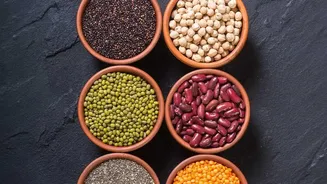
The term 'equivalent ingredient replacements' refers to a core principle of the scheme: flexibility. The central government sets the nutritional targets, but states and UTs decide the actual menus. This is where substitutions become critical. The guidance encourages states to design menus that are suitable for local conditions, using locally grown and culturally preferred foods. If a particular pulse is unavailable or expensive due to seasonal changes, a school can substitute it with another pulse, as long as the nutritional value remains equivalent. The key is meeting the protein and calorie targets, not adhering to a single, mandated ingredient list.
Why Flexibility is Key
This framework allows schools to adapt to real-world challenges. It empowers them to manage supply chain disruptions, price fluctuations, and take advantage of seasonal produce, which is often fresher and more affordable. For example, some states have chosen to add eggs or milk to their menus to boost protein, while others, based on local dietary norms or availability, use vegetarian alternatives like paneer, soy, or groundnuts to meet the same nutritional goal. The scheme also encourages the use of local coarse grains like millets and the establishment of School Nutrition Gardens to supply fresh vegetables and herbs, further enhancing dietary diversity.
The Practical Challenges
While flexible guidelines provide a robust framework, implementation is not without its hurdles. Ensuring that every replacement ingredient genuinely meets the nutritional standard requires careful monitoring and training for cook-cum-helpers. Challenges like supply chain leakages, inadequate kitchen infrastructure, and ensuring food quality and hygiene remain persistent concerns in many areas. There have been reports of teachers spending valuable academic time on meal administration and issues related to the timely release of funds for cooking costs. Furthermore, without standardized quality checks for locally procured food, there is a risk of using lower-quality ingredients, potentially compromising the meal's nutritional value.
Looking Ahead: Quality and Consistency
The principle of equivalent substitution is a pragmatic approach to a complex logistical challenge. It allows the PM POSHAN scheme to remain adaptable while striving for its nutritional goals. The focus, as reiterated in government communications, is on outcomes—the calories and protein delivered—rather than a rigid list of inputs. For this to work effectively on the ground, continued investment in training, infrastructure, and robust monitoring systems is crucial. By empowering local bodies to make informed choices, the scheme aims to ensure that no matter the specific ingredients on the plate, the promise of a nutritious meal is always fulfilled for India’s schoolchildren.