






A Living Architectural Museum
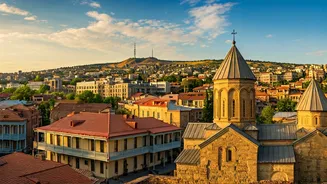
Tbilisi’s skyline is a conversation between centuries. Forget a uniform cityscape; here, history is written in stone, wood, and glass. Wander through the cobbled lanes of the Old Town (Dzveli Tbilisi) and look up. You’ll see colourful, intricately carved
wooden balconies hanging precariously over the streets—a signature of the city. These structures reflect a blend of European and Persian influences. Just a short walk away, you can find stern, imposing examples of Soviet-era brutalism and neoclassicism along Rustaveli Avenue. Then, look towards the Mtkvari River and see the future in the form of the gleaming, wave-like Bridge of Peace and the futuristic Rike Park Concert Hall. Every corner turned reveals a different architectural era, making a simple walk an exploration through time.
The Undisputed Cradle of Wine
While France has its famous vineyards, Georgia has an 8,000-year-old love affair with wine. This is, quite literally, where wine culture began. A visit to Tbilisi is incomplete without sampling the local vino, traditionally fermented in huge subterranean clay pots called 'qvevri'—a method so unique it’s on UNESCO’s Intangible Cultural Heritage list. You don’t need to be a sommelier to appreciate it. Dive into a cozy wine bar in the Sololaki neighbourhood and let the owner pour you a glass of amber-hued Saperavi or a crisp Tsinandali. The passion for wine is palpable, woven into the fabric of Georgian identity. It’s not just a drink; it’s a story in a glass.
A Feast You Won't Forget
Prepare your taste buds for a culinary revolution. Georgian food is hearty, flavourful, and designed for sharing. The undisputed king is 'khachapuri,' a cheese-filled bread that varies by region. The most famous is the Adjaruli version: a boat-shaped bread filled with molten cheese, a raw egg yolk, and a pat of butter stirred in at the table. Then there are 'khinkali,' delicious twisted dumplings filled with spiced meat and broth (the trick is to slurp the broth first!). From sizzling 'mtsvadi' (barbecued meat skewers) to vegetarian delights made with walnuts and aubergine, the food is an adventure in itself. It's comfort food elevated to an art form.
Ancient Sulphur Baths and Rejuvenation
Nestled in the Abanotubani district, you'll spot distinctive brick domes rising from the ground. These are the legendary sulphur baths that gave the city its name—'Tbilisi' means 'warm place.' According to legend, King Vakhtang Gorgasali founded the city here after his falcon fell into a hot spring. For centuries, these baths have been a place for cleansing, healing, and socialising. Book a private room, brace yourself for the eggy smell of sulphur, and let the naturally hot water work its magic. For the full experience, indulge in a 'kisi' scrub, where an attendant exfoliates your skin with an abrasive mitt. You’ll leave feeling cleaner and more relaxed than you thought possible.
A Vibe That’s All Its Own
Perhaps Tbilisi’s greatest asset is its atmosphere. This is a city that buzzes with creative energy. Old Soviet factories have been transformed into hip, multi-concept spaces like Fabrika, home to cafes, bars, studios, and a hostel. The streets are a canvas for artists, and the nightlife, particularly its world-renowned techno scene, rivals that of Berlin. Yet, for all its modern cool, Tbilisi remains deeply connected to its traditions of hospitality. Locals are warm and welcoming. And the best part? It’s incredibly affordable. A fantastic meal, a bottle of great wine, or a taxi across town costs a fraction of what you’d pay in Paris, allowing you to immerse yourself fully without constantly checking your wallet.