





The Challenge of Open-Plan Living
The modern open-plan layout, popular in both homes and offices, is intended to foster a sense of community and flexibility. [17] While it excels at creating bright, airy environments, it often falls short in providing privacy and quiet zones. [9, 20]
Noise travels easily, visual distractions are constant, and creating distinct areas for different activities—like a workspace within a living room or a quiet corner in a bustling office—can be a significant challenge without resorting to permanent, expensive construction. [4, 9] The key is to find a solution that divides space functionally while maintaining the light and flow that makes open plans desirable in the first place. [22]
The Sustainable Strength of Bamboo
Bamboo is the hero material in this design solution, and for good reason. Technically a fast-growing grass, it offers the strength and durability of wood but is far more sustainable. [5, 13] Some bamboo species can be harvested in just three to five years, compared to decades for many hardwoods. [10, 24] It often requires no pesticides or fertilisers to grow, produces 35% more oxygen than an equivalent stand of trees, and is a powerful carbon sink. [5, 11] As a material for screens, bamboo is lightweight, making it easy to move and reposition, yet it is also remarkably durable and resistant to moisture with proper treatment. [10, 14] Its eco-friendly credentials make it a smart choice for a greener home or office. [11, 24]
Crafting 'Soft' Divisions with Elegance
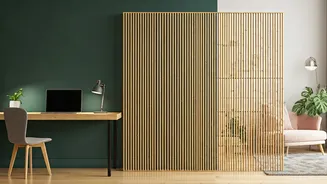
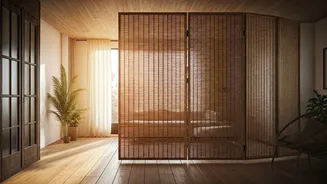
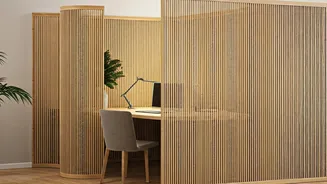
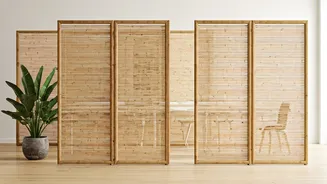
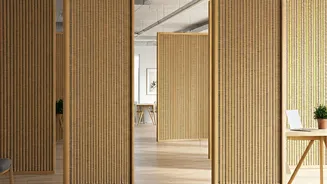
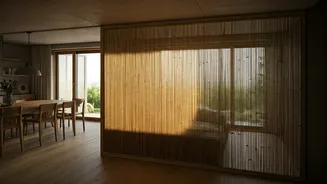
Bamboo screens excel at creating what designers call 'soft' divisions. Unlike a solid wall, a screen carves out a distinct zone while allowing light and air to pass through, preserving the sense of openness. [18, 25] The natural texture and warm tones of bamboo add a layer of visual interest and elegance to any decor. [3, 23] These screens can be used to create a welcoming entryway, partition a home office from a living area, or establish collaborative pods within a larger office. [16, 19] Because they are not permanent fixtures, they offer unmatched flexibility, allowing you to reconfigure a space as your needs change. [4, 20]
The Wellness Factor: Biophilic Design Benefits
Incorporating natural materials like bamboo into our indoor environments is a core principle of biophilic design—a concept focused on connecting people with nature to improve well-being. [1, 2] Studies have shown that exposure to natural elements in the workplace and at home can reduce stress, lower cortisol levels, and improve concentration and creativity. [1, 6, 15] The presence of natural textures can create a calming atmosphere, helping to reduce mental fatigue and boost mood. [1, 15] By using bamboo screens, you are not just dividing a room; you are investing in a healthier, more productive, and less stressful environment. [6, 8]
Choosing and Placing Your Bamboo Screen
When selecting a bamboo screen, consider its primary function. To create visual privacy, look for a screen with a dense weave or thick poles. For simple spatial definition where light flow is a priority, a screen with a more open design is ideal. [22] Pay attention to size and stability; measure your space to ensure the divider is proportionate and won't feel overwhelming. [7, 12] Look for screens with sturdy feet or bases to prevent tipping. [7] Placement is key: use screens to guide foot traffic, section off a cozy reading nook, or create a serene backdrop for video calls. [7, 19] Don't be afraid to experiment with different positions to find what works best for your space and workflow. [12]