






The Old Way: A Frustrating Exercise
For years, dictation software was more of a gimmick than a practical tool. The experience was defined by clunky interfaces, frustrating inaccuracies, and the need to speak like a robot, pausing unnaturally and enunciating every single syllable. Users
had to meticulously train the software to their voice, and even then, the results were often a jumble of misunderstood words and ignored punctuation. Correcting the errors frequently took more time than it would have taken to type the document from scratch, relegating the technology to a niche audience with specific accessibility needs or unwavering patience.
What Changed? The AI Revolution
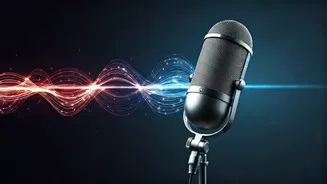
The shift from frustrating to functional is powered by the same technology driving today's headlines: advanced artificial intelligence, particularly large language models (LLMs). Unlike older rule-based systems, modern AI doesn't just match sounds to a phonetic dictionary. It understands context, grammar, and nuance. Trained on massive datasets of text and audio, these AI engines can distinguish between homonyms, handle various accents, and even insert punctuation automatically based on the speaker's cadence. The result is a system that can process natural, conversational speech, including pauses and filler words, and turn it into clean, structured text.
Beyond Simple Transcription: Intelligent Tools
The new practical phase of dictation goes far beyond just converting speech to text. Today's AI tools are intelligent productivity companions. Many can identify and label different speakers in a conversation, which is invaluable for meeting notes. Some can automatically generate summaries, pull out key action items, and create searchable transcripts of audio or video files. This transforms dictation from a typing alternative into a comprehensive information processing system. A one-hour interview that once took hours to transcribe manually can now be a searchable, summarized document within minutes.
Real-World Impact Across Professions
This technological leap is revolutionizing workflows across numerous industries in India and globally. Doctors in the healthcare sector now use ambient AI scribes that listen passively to patient consultations and automatically generate structured clinical notes, drastically reducing administrative burnout. Lawyers can dictate complex legal arguments and drafts, with AI trained on legal jargon ensuring high accuracy. For journalists and researchers, transcribing interviews is no longer a time-consuming chore, allowing them to focus on analysis rather than typing. Even students are using these tools to record lectures and generate instant study notes, making learning more efficient.
Getting Started with Modern Dictation
Embracing this technology is easier than ever. High-quality dictation is now built directly into the operating systems of most smartphones and computers from Apple and Microsoft. For more advanced features, a host of third-party applications offer specialized services. Some tools, like Otter.ai or Fathom, are designed as AI meeting assistants that record and transcribe calls on platforms like Zoom and Google Meet. Others, such as Descript, integrate transcription into video and audio editing workflows. Many now support multiple languages, including Hindi and other regional Indian languages, making them accessible to a wider user base.