





A whirlwind tour of Europe, hopping between countries, sounds like a dream. But the reality can be hours wasted in queues for borders, museums, and trains. Here’s how to plan a smarter, faster trip and maximise every moment of your adventure.
Plan Your Route, Not a Race
The biggest
mistake on a multi-country trip is trying to see too much. Experienced travellers follow a simple rule: for a 10-day trip, stick to a maximum of three cities in two countries. Every time you change cities, you lose at least half a day to transit, packing, and checking in. Instead of zig-zagging across the continent, choose a logical route. A classic Western Europe trip might connect Paris, Brussels, and Amsterdam by train. For a central European experience, a route connecting Prague, Vienna, and Budapest is efficient and culturally rich. Planning a sensible geographic loop means you spend more time exploring and less time on the move, turning train journeys into a scenic part of the experience rather than a chore. Give each major city at least three nights to truly appreciate it without feeling rushed.
Navigate New Border Rules with Ease
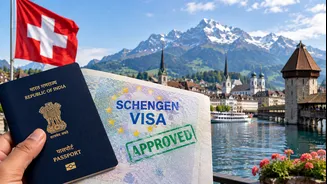
European border controls have become more digital. As of April 2026, the Entry/Exit System (EES) is fully operational across the 29-country Schengen Area. This system replaces manual passport stamping with a digital process that captures your biometric data (fingerprints and a facial image) the first time you enter. For Indian travellers with a Schengen visa, this process is mandatory but requires no action before you arrive at the border. Be prepared for this one-time registration to add a few extra minutes to your first border crossing. Frequent travellers will find subsequent crossings faster. It's also crucial to know that ETIAS, a separate travel authorisation, does not apply to Indian passport holders who require a Schengen visa; you continue to apply for the visa as usual.
Master the Art of Skipping Attraction Queues
For top attractions like the Louvre in Paris or the Colosseum in Rome, booking tickets online in advance is non-negotiable. Most major sights now offer timed-entry tickets, which guarantee your admission at a specific hour and let you bypass the long ticket-buying queue entirely. Some attractions sell out weeks in advance, so booking early is key. For very popular spots, consider visiting during off-peak hours. An early morning slot right at opening time, or a late evening visit where available, can offer a much calmer experience. For example, the Louvre is often quieter during its evening openings. Another strategy is to look for combo-tickets that grant access to multiple sites; you can often buy these at a less-crowded partner museum to skip the line at the main attraction.
Embrace the Efficiency of Train Travel
High-speed trains are the backbone of multi-country European travel. To save time and stress, use aggregator apps like Omio or Trainline. These platforms show options from multiple operators in one place, allowing you to compare prices and journey times for trains, buses, and even flights. Booking through an app means all your tickets are stored digitally on your phone, eliminating the need to print anything. The official apps of national rail services, like Germany's DB Navigator or Switzerland's SBB Mobile, are also excellent for checking live timetables, platform numbers, and delay information. The Interrail Rail Planner app is another powerful tool that works offline, letting you plan routes and check train times without needing a data connection.
Fly Smarter, Not Harder
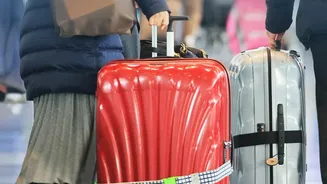
If your itinerary includes flights, a few simple tricks can save hours. Whenever possible, travel with only a carry-on bag. This allows you to bypass the baggage drop queue and head straight to security. Upon arrival, you can walk out of the airport while others are waiting at the carousel. Before you even leave home, download a map of the airport terminals you'll be using. Knowing the layout, including the location of your departure gate or the shuttle needed to transfer between terminals at hubs like Paris Charles de Gaulle or London Heathrow, can prevent stressful sprints. At large, unfamiliar airports, this simple preparation can be the difference between a relaxed connection and a missed flight.