




Beyond Broadband
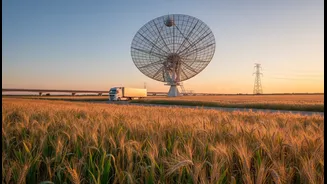
While Low Earth Orbit (LEO) constellations from companies like Starlink and the upcoming Jio-SES partnership grab headlines for bringing internet to remote villages and moving vehicles, the most profound shift isn't just about faster streaming. The true
game-changer is the explosion of new capabilities that have little to do with consumer broadband. We are moving from merely connecting people to connecting the core of our industries. The real opportunity lies in a powerful combination of Earth observation (EO) and the Internet of Things (IoT), creating a new digital nervous system for the Indian economy. This is about gaining unprecedented visibility and control over assets in the most inaccessible corners of the country.
The Data Goldmine from Above
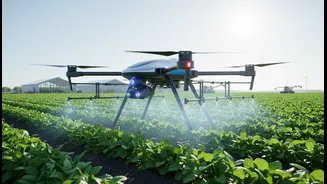
Imagine being able to monitor the health of every farm in the country, in near real-time. Modern EO satellites are doing just that. They are no longer just taking pictures; they are collecting sophisticated multispectral data. This allows for the precise monitoring of crop health, soil moisture, and nutrient deficiencies. For India’s agricultural sector, this is transformative. Instead of relying on traditional methods, farmers and agribusinesses can use this satellite data to apply water and fertilisers with pinpoint accuracy, a practice known as precision agriculture. This optimises yield, reduces waste, and boosts sustainability. Beyond farming, this data helps forecast weather, manage natural disasters like floods and droughts, and even helps insurance companies assess risk more accurately.
Connecting Everything, Everywhere
India's economy is powered by industries that operate far from urban centres—mining, energy, logistics, and fisheries. For these sectors, reliable cellular connectivity is often a non-starter. Satellite IoT (Sat-IoT) fills this critical gap. Think of a logistics company tracking a fleet of trucks through remote mountain passes, an energy firm monitoring thousands of kilometres of pipelines for leaks, or fishing vessels transmitting their catch data from deep sea. Sat-IoT enables machines to communicate with each other ('M2M') using small, rugged, low-power terminals, providing always-on connectivity independent of terrestrial networks. This market is projected to grow exponentially, driven by falling costs and the rising demand for real-time data from every corner of the economy.
The New Economy In-Orbit
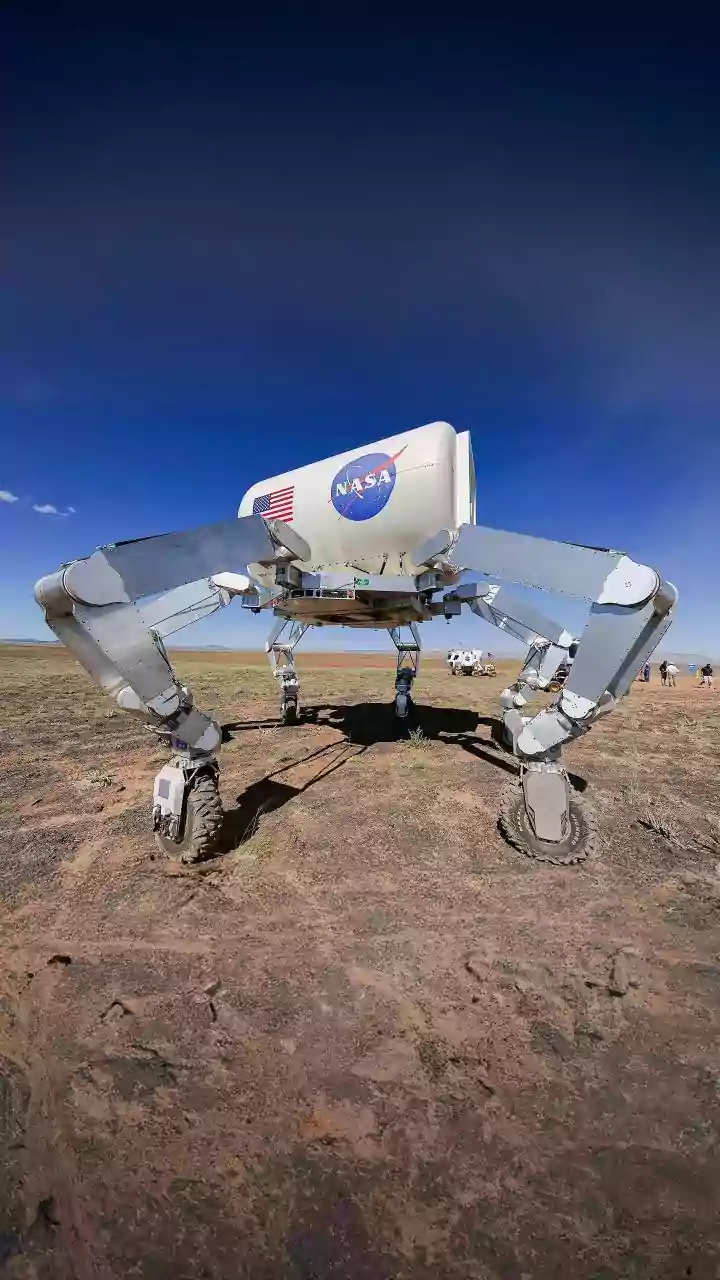
The opportunity isn’t limited to data from space. A new frontier is opening up in space itself. Known as In-Space Servicing, Assembly, and Manufacturing (ISAM), this emerging field aims to end the era of “one and done” missions. Future robotic spacecraft will be able to refuel, repair, and upgrade existing satellites, extending their lifespan and reducing space debris. Looking further, the goal is to assemble large structures like telescopes or even manufacture components in orbit, free from Earth's gravitational constraints. With India's growing prowess in space technology, driven by ISRO and a burgeoning private sector, participating in this high-value, in-orbit economy represents a significant long-term opportunity.