





The New Rhythm of Rain
When we talk about 'irregular rainfall,' it isn't just about less rain. In fact, it often means the opposite. Climate scientists have noted a worrying trend across India: fewer rainy days, but more intense, extreme downpours when it does rain. This is coupled
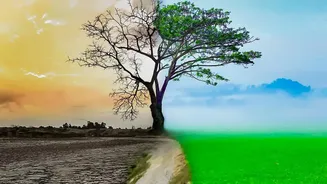
with longer dry spells and shifts in when the monsoon arrives and departs. For instance, a study in central India's Panchmarhi Biosphere Reserve found that precipitation patterns have shifted away from the post-monsoon period toward the pre-monsoon season, disrupting the natural cycle that forests have adapted to over centuries. This pattern of 'drought and deluge' is becoming the new normal, creating a high-stress environment for plant life.
From Soil to Canopy
The direct consequences of this erratic weather are twofold. Intense bursts of rain on dry, hardened ground lead to massive soil erosion, washing away essential nutrients that trees need to thrive. Instead of replenishing groundwater, the water runs off the surface, carrying topsoil with it. Conversely, the extended dry periods between these deluges subject trees to severe water stress. This combination weakens them, making them more susceptible to pests, disease, and an increased risk of forest fires when temperatures soar. Studies by IIT Kharagpur have shown that despite India appearing 'greener' in satellite images, the photosynthetic efficiency of its forests—their actual ability to grow—has declined, partly due to reduced soil moisture and higher temperatures.
A Change in Forest Character
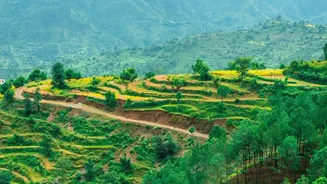
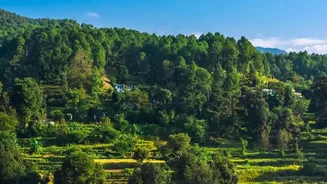
These new conditions are not affecting all tree species equally. The changes are triggering a slow but steady transformation in the very composition of India's forests. Some species that are more resilient to drought may gain an advantage and spread, while those that depend on consistent moisture may struggle to regenerate. In parts of Uttarakhand, for example, there are signs of reduced regeneration in oak forests, while chir pine is spreading to higher elevations. In some regions, landscapes could even shift from stable forests to more open, savanna-like states. This alters the fundamental character of the ecosystem, changing it from the ground up.
Regional Hotspots and Vulnerabilities
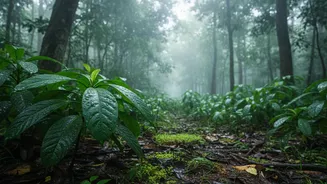
The impact of changing rainfall is not uniform across the subcontinent. The Western Ghats, a global biodiversity hotspot, are particularly vulnerable. Delayed monsoons and prolonged dry conditions here threaten delicate ecosystems that rely on stable weather cycles. Similarly, central Indian forests have seen significant changes, with studies showing forest cover loss and degradation linked to both climate shifts and human pressures. Even the traditionally wet regions of Northeast India are experiencing a decline in southwest monsoon rainfall, leading to more frequent droughts. These regional changes have a cascading effect, impacting everything from local water availability to the habitats of unique wildlife.
The Broader Ripple Effect
The transformation of forest growth carries consequences that extend far beyond the trees themselves. Forests are critical for regulating water flow, storing carbon, and supporting the livelihoods of countless communities. As their health and composition change, these essential services are compromised. Altered forest structures can affect biodiversity, threatening the survival of plants and animals that depend on specific habitats. Furthermore, the health of India's forests is intrinsically linked to its agricultural economy; degraded forests can even impact regional rainfall patterns, creating a feedback loop that exacerbates the very problem that caused it.