

Narkel Naru
No Bijoya celebration is complete without Narkel Naru, delightful coconut laddoos that taste of pure nostalgia. These humble spheres, made from grated coconut and either sugar (chinir naru) or the more prized date palm jaggery (gurer naru), are a testament
to the beauty of simple ingredients. Making them is often a family affair, a ritual that connects generations. Despite the availability of fancier sweets, the act of reaching for a Narkel Naru is like holding onto a piece of tradition.
Ghugni
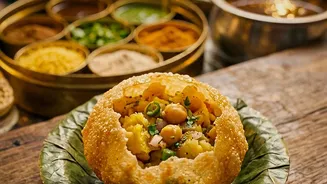
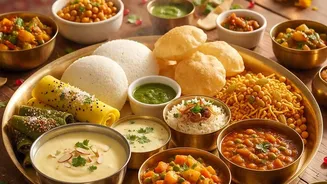
A warm, comforting bowl of ghugni is a quintessential part of any Bijoya gathering. This hearty curry, made from dried yellow or white peas, is slow-cooked with a medley of spices. Often prepared without onion or garlic for festive purity, its flavour is rich and complex. Served as a standalone snack, sometimes garnished with chopped coconut and a squeeze of lime, it’s a savoury fixture that brings people together over shared stories and afternoon tea.
Luchi o Aloor Dom
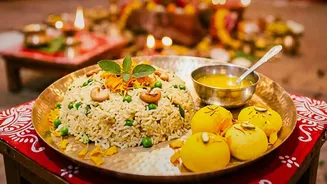
The combination of fluffy, deep-fried bread (luchi) and a spicy, tangy potato curry (aloor dom) is Bengali comfort food at its finest. Luchis are pristine white, puffed-up discs made from refined flour, distinct from the whole-wheat puri. They are the perfect vehicle for scooping up the rich, flavourful aloor dom, a dish of baby potatoes cooked in a thick, aromatic gravy. This pairing is a must-have during festivals, representing both indulgence and heartwarming tradition.
Goja
Goja is a delightful sweet that offers a satisfying crunch and a burst of syrupy goodness. This layered, deep-fried pastry is made from a simple dough of flour and ghee, which is then cut into rectangular or diamond shapes and fried until golden and flaky. After frying, the pieces are soaked in a sugar syrup, which they absorb while retaining their crisp texture. It's a festive treat that bridges the gap between a snack and a dessert, perfect for any celebratory occasion.
Malpua
Malpua are soft, sweet pancakes that are a festive favourite across many parts of India, with the Bengali version holding a special place. The batter is typically made with flour, semolina, and sometimes mashed banana or coconut, then pan-fried in ghee until the edges are crisp and the centre is fluffy. They are often soaked in sugar syrup before serving, turning them into a decadent, melt-in-your-mouth treat that embodies the sweetness of the festive season.
Dorbesh (Boondi Laddoo)
While similar to the common boondi laddoo, the Bengali Dorbesh has its own unique character. These vibrant orange sweets are made from tiny fried droplets of chickpea flour batter (boondi) that are soaked in sugar syrup. What often sets Dorbesh apart is the addition of khoya (mawa) or milk powder, cashews, and raisins, giving it a richer, more complex flavour and a softer texture. It's a sweet that signifies joy and is an essential part of the Bijoya platter.
Nimki: The Unsung Hero
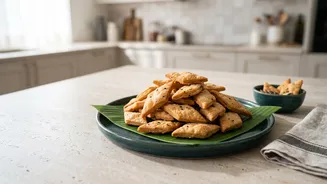
Amidst the array of sweets, one savoury snack stands tall: the humble nimki. Known as namak para in other parts of India, nimki is a deep-fried, crunchy snack made from a simple dough of flour, salt, and nigella seeds (kalo jeera). Its name derives from 'namak' (salt), and its purpose is to provide a perfect savoury balance to the festive sweets. But why does this simple, diamond-shaped crisp remain a celebration staple? The answer lies in its simplicity, versatility, and deep-rooted cultural significance. Nimki is incredibly easy to make with pantry staples, a testament to the resourcefulness of home kitchens. It has a long shelf life, meaning households could prepare a large batch in advance of Bijoya, always ready for the stream of guests. There are different variations, from the small, diamond-shaped 'kucho nimki' to larger, triangular folded ones, but the essence remains the same: a flaky, salty, satisfying crunch. It is the perfect accompaniment to a cup of tea and a session of post-puja gossip. More than just a snack, nimki is a shared memory, evoking nostalgia for times when families would gather to prepare festive foods together. Its enduring presence on the Bijoya platter is a reminder that sometimes, the most basic things provide the most profound comfort and connection.