


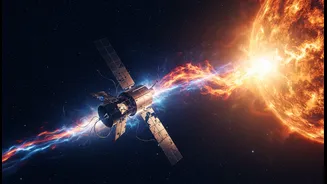


What Is Space Weather?
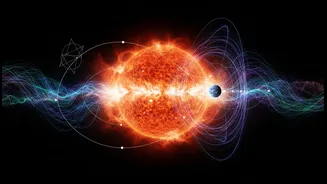
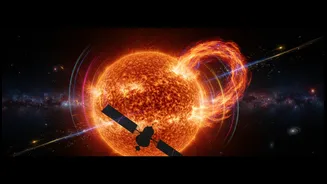
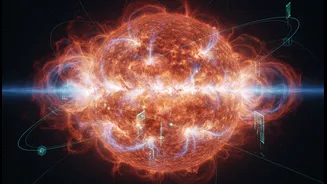
For most of history, space weather was little more than a scientific curiosity, best known for producing the beautiful auroras. It refers to the volatile conditions in space driven by the Sun's activity. The primary culprits are solar flares, which are intense
bursts of radiation, and Coronal Mass Ejections (CMEs), which are massive clouds of solar plasma hurled into space. When these phenomena are directed at Earth, they can have significant effects on our technology. What was once the domain of astrophysicists is now a topic of discussion in boardrooms and government agencies, as the potential economic impact of a severe space weather event runs into billions of dollars.
Our Crowded Skies and Growing Dependence
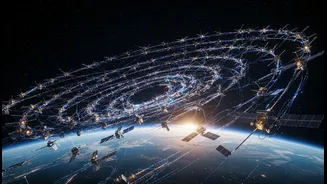
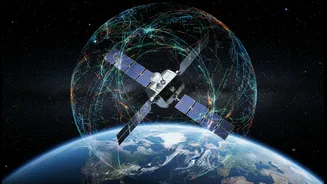
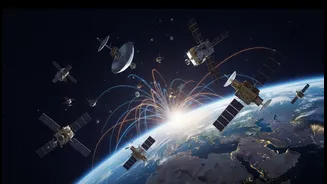
The urgency has grown with our reliance on space. Just a few decades ago, only a few thousand satellites orbited Earth. Today, that number has exploded. Mega-constellations from companies like SpaceX (Starlink) and OneWeb have launched thousands of satellites, with plans for tens of thousands more. These networks aim to provide global internet coverage, connecting the most remote parts of our planet. This proliferation means there is simply more hardware in orbit at risk. From managing power grids and stock market transactions to enabling everyday activities like using a ride-sharing app or paying for coffee, our societal and economic infrastructure is deeply intertwined with the flawless functioning of satellites.
How Solar Storms Threaten Satellites
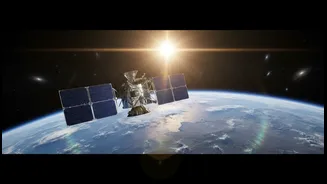
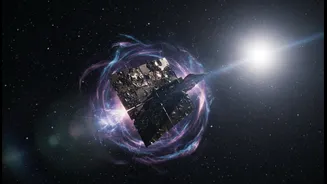
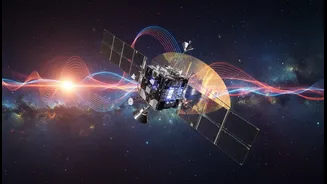
Space weather poses a multi-faceted threat to satellites. Energetic particles from a solar storm can damage critical electronics, causing phantom commands, data corruption, or even complete failure. This radiation also degrades solar panels over time, shortening a satellite's operational lifespan. For satellites in Low Earth Orbit (LEO), where most new constellations operate, there's another major risk: atmospheric drag. A geomagnetic storm heats Earth’s upper atmosphere, causing it to expand. This increases the density of the air, creating more drag on satellites, which can cause them to lose altitude and fall out of orbit prematurely. A stark example occurred in February 2022, when a relatively moderate geomagnetic storm caused the loss of up to 40 newly launched Starlink satellites.
The Cascading Consequences on Earth
A disruption in our satellite infrastructure wouldn't just be an inconvenience; it could trigger cascading failures across critical sectors. A loss of GPS signals, even for a short period, would cripple transportation, logistics, and agriculture, which rely on precision timing and navigation. High-frequency radio and other communications could be blacked out. Even power grids on the ground are vulnerable; severe geomagnetic storms can induce currents that damage transformers and lead to widespread outages. Experts now warn that the first trillion-dollar disaster might not be a hurricane or earthquake, but a massive solar storm.
The Race to Predict and Protect
Recognising the growing risk, space agencies and companies are investing heavily in mitigation. Organizations like NOAA's Space Weather Prediction Center in the US and ISRO in India are working to improve forecasting models, giving satellite operators advance warning to take protective measures. These measures can include temporarily shutting down sensitive electronics or adjusting a satellite's orientation to minimize exposure. Engineers are also designing more resilient satellites with better shielding and more robust electronics. ISRO, for instance, has launched dedicated meteorological satellites like the INSAT series to enhance weather monitoring and disaster warning capabilities, including the ability to predict lightning strikes with greater advance notice.