








From Roommates to Relationships
In many Indian households, having multiple pets is becoming increasingly common. The old adage that cats and dogs are natural enemies is slowly being replaced by a more nuanced understanding. Pet owners are no longer satisfied with mere tolerance; they
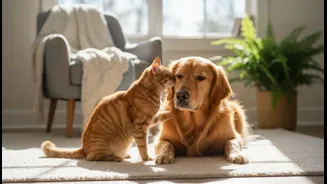
are actively trying to foster friendships between their animals. This shift comes from a deeper appreciation of our pets as family members with their own complex social needs. A harmonious home isn't just one where fights are absent; it's an environment where all members, furry or otherwise, feel secure and content. This focus on inter-pet relationships reflects a broader evolution in how we view pet ownership—it's less about possession and more about conscious companionship, recognising that our pets' happiness is interconnected.
Learning Their Secret Language
To truly understand the dynamic between a cat and a dog, one must become a student of their non-verbal cues. Animals communicate volumes through body language, and misinterpreting their signals is a common source of household friction. For instance, a dog’s wagging tail isn't always a sign of friendliness; a high, stiff wag can signal agitation. Conversely, a cat's upright tail is often a sign of a confident, friendly greeting. Paying attention to the details—the position of their ears, the dilation of their pupils, and their overall posture—can tell you everything. A relaxed dog will have a loose body and a gently wagging tail, while a content cat might slow-blink or hold its ears forward naturally. Recognizing signs of stress, like a cat with flattened ears or a dog tucking its tail, allows owners to intervene before tensions escalate.
A New Form of Mindfulness
This close observation is more than just good pet management; it's a powerful mindfulness practice. In our fast-paced, digitally saturated lives, taking the time to quietly watch our pets interact forces us to be present. A recent survey highlighted that a significant number of Indian pet parents feel more present and mindful because of their pets, with 88% saying their pets help reduce overthinking. Instead of scrolling through social media, you’re engaged in the subtle drama of your living room. Is the cat’s tail flicking in irritation or playful curiosity? Is the dog’s play bow being accepted or ignored? This act of focused attention pulls you out of your own worries and into their world, providing a mental break that research shows can lower stress and anxiety.
The Science of a Calm Household
The benefits aren't just in our heads; they are biological. Interacting with animals has been shown to release oxytocin, often called the 'love hormone', which promotes bonding and reduces the stress hormone cortisol. This creates a calming effect, lowering blood pressure and heart rate. When your pets coexist peacefully, that sense of calm permeates the entire home. A household free of hissing, growling, or stressful chases is a more relaxing space for everyone. The wellbeing of our pets is directly linked to our own. Studies have consistently shown that pet ownership improves mental health, but a truly peaceful multi-pet home amplifies those benefits, turning your space into a sanctuary of interspecies calm.
How to Foster a Peaceful Kingdom
Creating harmony between a cat and a dog requires patience and strategy. The key is to manage their environment to ensure both feel safe. Providing vertical spaces like cat trees or shelves gives your cat a secure place to observe or escape from an overly enthusiastic dog. Introductions should be slow and supervised, starting with scent-swapping before any face-to-face meetings. Rewarding calm behaviour from both animals with treats and praise helps them build positive associations with each other. Feeding them in separate areas is also crucial to prevent food-related territorial disputes. Ultimately, the goal is to create a predictable and safe environment where both animals can learn to not just tolerate each other, but potentially even become friends.