



A Tale of Two Rhythms
The first difference you'll feel is the pace. Vietnam moves to a faster, more energetic beat. Its cities, like Hanoi and Ho Chi Minh City, are a thrilling whirlwind of motorbikes, bustling street markets, and vibrant commerce. The country is a long, dynamic
journey, offering immense variety from its northern highlands to its southern delta. Cambodia, in contrast, operates on a slower, more contemplative rhythm. Outside the tourist hub of Siem Reap, you'll find a more tranquil atmosphere, with peaceful countryside scenes and a gentler pace of life that encourages deeper immersion into its ancient culture. While Vietnam feels like a journey of constant motion and discovery, Cambodia feels more like a singular, profound destination.
Echoes of History: Empires and Scars
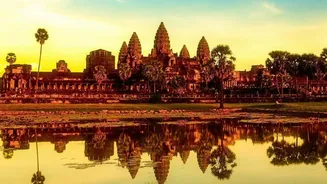
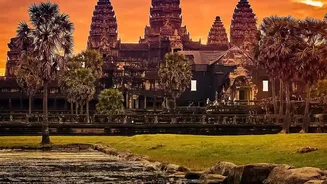
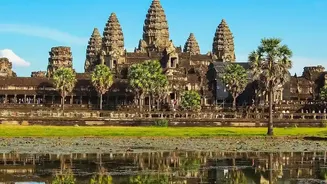
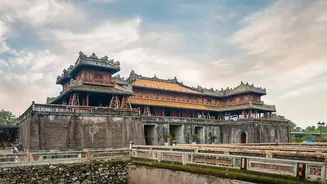
Both nations bear the marks of recent, traumatic 20th-century conflicts, but their deeper histories tell different stories. Vietnam's identity is shaped by over a thousand years of Chinese influence and a strong Confucian foundation focused on family and lineage. Its historical sites, like the imperial city of Hue, reflect this dynastic past. Cambodia's story is dominated by the monumental legacy of the Khmer Empire. The awe-inspiring temple complex of Angkor Wat stands as the world's largest religious monument and the undeniable heart of Cambodian heritage, a testament to an empire that once ruled much of Southeast Asia. A combined trip allows you to witness the grandeur of an ancient Hindu-Buddhist empire in Cambodia and then explore the imperial and colonial past of Vietnam, all while acknowledging the resilience of two peoples who have overcome the devastating wars of the modern era.
A Contrast in Cuisines
While both cuisines use fresh ingredients, they offer distinct flavour profiles. Vietnamese food is celebrated for its balance of five flavours and its emphasis on fresh herbs, with dishes like pho and goi cuon feeling light and aromatic. The French colonial influence is unmissable in the popular banh mi baguette sandwich. Cambodian (or Khmer) cuisine is often milder in spice but rich with unique ingredients like prahok, a fermented fish paste that adds a deep umami flavour. National dishes like Fish Amok, a steamed fish curry with a creamy, mousse-like texture, showcase a style that is comforting and complex. A journey through both countries is a culinary education in how two neighbouring cultures have developed their own unique, delicious identities on the plate.
Landscapes and Logistics
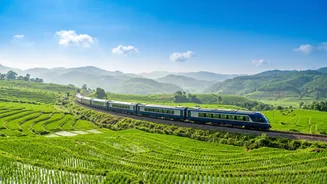
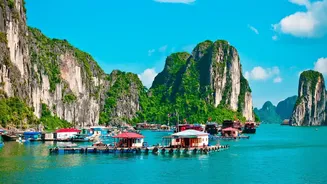
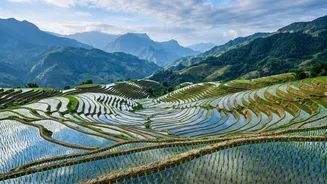
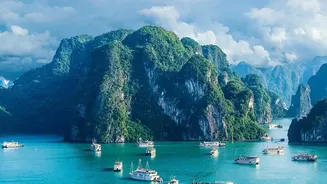
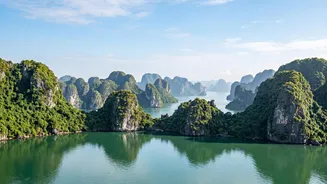
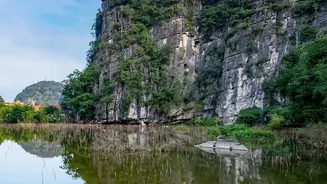
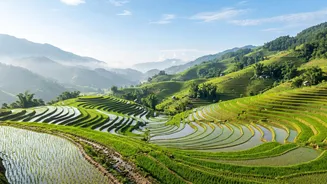
Geographically, Vietnam is a country of epic diversity, stretching over 1,600 kilometres. It boasts dramatic mountain ranges in the north, a vast coastline dotted with beaches, and the iconic limestone karsts of Ha Long Bay. Cambodia’s landscape is generally flatter, characterized by sprawling rice paddies and the great Tonlé Sap Lake, the largest freshwater lake in Southeast Asia. Traveling between the two is remarkably easy. Short flights connect major cities like Ho Chi Minh City, Phnom Penh, and Siem Reap in about an hour. For a more scenic route, many travellers opt for a bus journey from Ho Chi Minh City to Phnom Penh, which takes about six hours, or a boat trip along the Mekong River, physically connecting you from the delta in Vietnam to the heart of Cambodia.