



Establishing Your Roots First
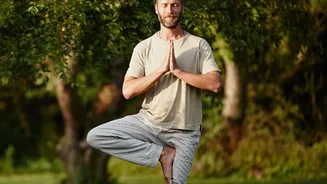
Before you can grow your branches, you need to establish strong roots. Start in Mountain Pose (Tadasana), standing tall with your weight evenly distributed. Shift your weight onto one foot, grounding it firmly into the mat. Bend your other knee and place
the sole of your foot on your inner ankle, calf, or high up on your inner thigh. It's crucial to avoid placing your foot directly on the knee joint to prevent sideways pressure. Engage your core to keep your hips level and facing forward, and lengthen your spine. Find a fixed point to gaze at (your drishti) to help maintain your focus and balance. Only once you feel stable here should you begin to explore arm variations.
Hands at Heart Centre: The Grounded Start
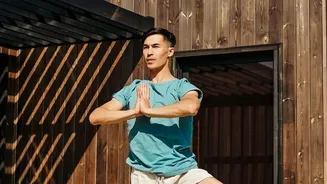
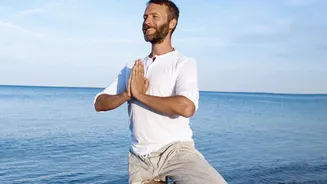
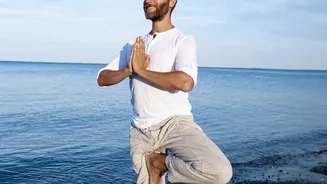
The most common and stable arm position is bringing your palms together in front of your chest in Anjali Mudra, or prayer position. This variation keeps your centre of gravity low and close to your midline, which promotes stability and grounding. Pressing the palms together gently can actively help with balance and focus. This is an excellent starting point for anyone new to the pose or for days when your balance feels a bit wobbly. It allows you to focus on the foundation of the pose—the strength in your standing leg and the openness of your hip—without the added challenge of raising your arms. For those with high blood pressure, keeping the hands at the heart is often recommended over raising them overhead.
Hands on Hips: Checking Your Alignment
Placing your hands firmly on your hips is another variation that helps maintain a low centre of gravity. This position is particularly useful for building awareness of your alignment. With your hands on your hip bones, you can physically feel if one hip is hiking up or if your pelvis is tilting forward or back. It encourages you to keep your hips squared and level, which is essential for stability and the long-term health of your spine and sacroiliac joints. This hands-on approach provides direct feedback, making it a great diagnostic tool as you build strength and proprioception in the pose.
Arms Overhead: Growing Your Branches
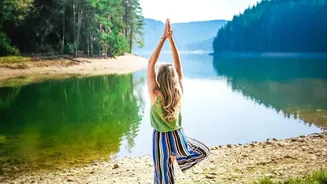
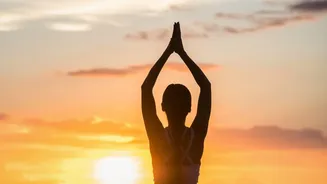
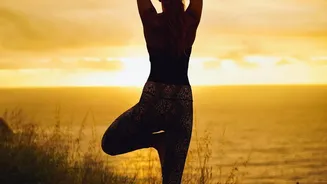
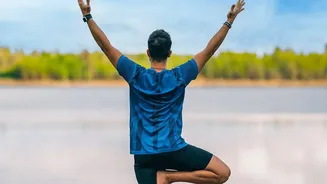
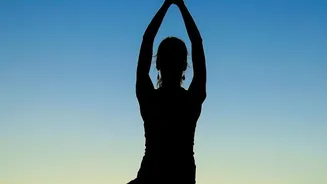
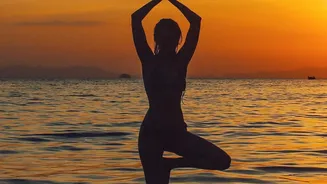
Extending your arms straight up towards the ceiling is the classic expression of Tree Pose, symbolising a tree's branches reaching for the sun. This variation immediately raises your centre of gravity, making balance more challenging. It also lengthens the spine, stretches the shoulders and side body, and engages the chest and breathing muscles more actively. You can keep your palms touching or separate them to shoulder-width apart. This upward reach requires more core engagement to prevent your ribcage from flaring out and to maintain a long, stable torso. It transforms the pose into a full-body experience of growth and extension.
Arms Out to the Sides: Challenging Your Stability
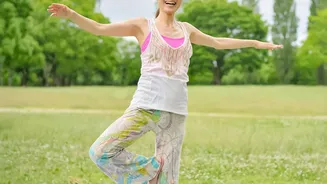
For a different kind of balance challenge, extend your arms straight out to the sides, parallel to the floor, like wide-spreading branches. This variation widens your base of support in the upper body but can also make you more susceptible to wobbling, as any slight shift is amplified. It requires significant core and shoulder strength to keep the arms lifted and steady. Some practitioners find it helpful to imagine their arms as branches swaying gently in the wind, which encourages controlled, fluid adjustments rather than rigid stillness. This dynamic approach can build stabilization endurance in the core.
Advanced Grips: Reverse Prayer and Binds
For experienced practitioners looking to deepen the pose, more complex arm variations await. Bringing the hands into Paschima Namaskarasana (Reverse Prayer) behind your back opens the chest and shoulders while significantly challenging your balance. Another advanced option is to take a bind, perhaps bringing the lifted foot into a Half Lotus position on the standing thigh and wrapping the corresponding arm around your back to clasp the toes. These variations should only be attempted when you are very stable in the foundational pose, as they require a high degree of flexibility, strength, and concentration.