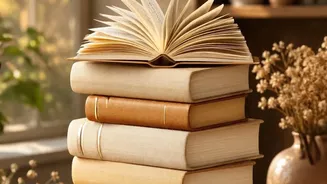








A bookshelf tells a story far beyond the titles on its spines. For many readers, books are not just stories to be read, but containers for memories, transformed into personal time capsules with ticket stubs, photos, and pressed flowers.
More Than Just a Bookmark
For as long as there
have been books, readers have been leaving things inside them. What begins as a convenient placeholder—a train ticket, a receipt, a postcard—often remains long after the last page is read. These forgotten items become part of the book's history, a faint whisper of a life lived between the lines. Second-hand bookshops and libraries are unofficial museums of this habit, with librarians and booksellers often discovering fragments of strangers' lives. You might find a faded photograph used as a bookmark, a love letter tucked into a romance novel, or a pressed flower marking a favourite passage in a book about nature. Each object tells a story within a story, turning the physical book into a deeply personal artifact.
An Antidote to the Digital Age
In an era of e-readers and audiobooks, the tangible nature of a physical book has become more precious. While digital formats offer convenience, they lack the sensory experience: the weight of the book, the smell of the paper, and the satisfaction of turning a page. For many, personalizing a book is a quiet rebellion against the intangible. The act of highlighting a passage, scribbling a note in the margin, or tucking a memento inside is a way of claiming ownership and creating a connection that a digital file cannot replicate. This trend has seen a surge in popularity, with social media tags like #loveletterbooks and communities on BookTok and Bookstagram celebrating the art of annotating and personalizing reads. It’s a way to make a mass-produced object uniquely one's own.
A Conversation with the Text
Leaving a keepsake in a book is often an emotional act, a way to anchor a memory to a story. A concert ticket might be placed in the book that was a companion on that trip. A note from a friend who gifted the book gets tucked inside the front cover. Psychologists and researchers note that physical possessions can become extensions of the self, and books are powerful symbols of our identity and aspirations. The items we leave inside them are part of that story, creating a dialogue between our own lives and the world the author has built. This practice transforms reading from a passive activity into an interactive one, where personal experience and fiction become intertwined.
The Stories We Leave Behind
These personalized books often become the most treasured items on a shelf, holding more value than a pristine first edition because they contain a piece of the reader's own history. They are tangible markers of life experiences. Finding an old boarding pass might transport you back to a specific holiday, while discovering a note in your own handwriting from years ago can feel like receiving a message from a younger self. The objects serve as a direct link to a time, a place, or a feeling. It’s this blend of the author’s narrative and the reader’s personal history that makes the book a unique heirloom, imbued with layers of meaning.
A Legacy for the Next Reader
When a book filled with annotations and keepsakes is passed on, it carries more than just one story. It becomes a generational artifact, offering a glimpse into a previous owner's life. Finding your grandmother's favourite cookbook with her handwritten notes in the margins, or a novel from your father with a ticket stub from his youth, is to receive a story within a story. These discoveries connect us to the people who read the book before us, creating a quiet, unseen community across time. The book is no longer just a vessel for the author's words, but a living document of the hands it has passed through and the lives it has touched.