




A Sudden, Unprecedented Brightening
For years, the galaxy known as SDSS1335+0728 was just another calm, inactive dot in the vastness of space. But in December 2019, something changed. Telescopes, like the Zwicky Transient Facility in California, detected a dramatic and sudden increase in the galaxy's
brightness. This wasn't a fleeting explosion like a supernova. Instead, the galaxy just kept getting brighter, and over four years later, it continues to radiate more light across ultraviolet, optical, and infrared wavelengths. By February 2024, it even began to glow in X-rays. According to Paula Sánchez Sáez, an astronomer at the European Southern Observatory (ESO), the changes were unlike any typical cosmic event ever seen before. This has led to a groundbreaking conclusion: we are watching the awakening of the supermassive black hole at its core in real time.
Challenging the 'Quiet Giant' Theory
Our models of galaxy evolution have long been built on the idea that supermassive black holes, while immensely powerful, are mostly quiet in mature galaxies like this one. These cosmic monsters, with masses millions of times that of our sun, are believed to co-evolve with their host galaxies. They go through active phases, devouring gas and dust and creating intensely bright Active Galactic Nuclei (AGN), but this is thought to happen primarily in the early universe. Once a galaxy settles down, its central black hole is expected to enter a long slumber, only occasionally snacking on a passing star in an event known as a tidal disruption event (TDE). These TDEs, however, are relatively brief, lasting for a few hundred days at most. The sustained and growing brightness of SDSS1335+0728 points to something far more significant and long-lasting.
What It Means for a Black Hole to 'Wake Up'
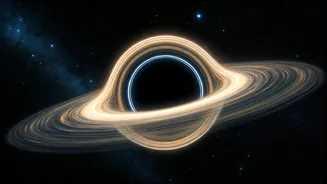
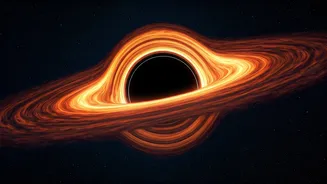
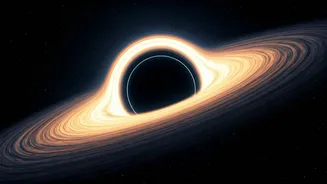
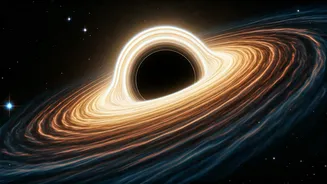
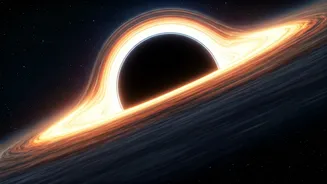
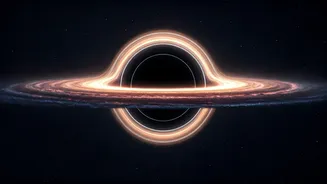
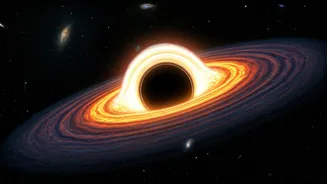
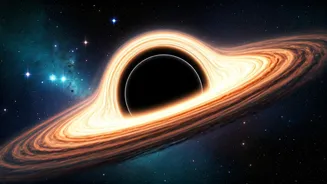
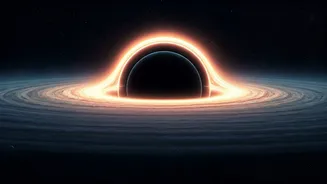
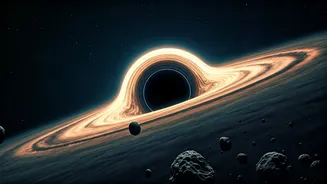
The awakening process being observed is the transition from a dormant state to a fully-fledged Active Galactic Nucleus. Scientists believe the black hole has begun to feast on a massive supply of gas that has swirled into its gravitational grip. As this material forms a glowing, superheated accretion disk around the black hole, it releases an immense amount of energy, causing the galaxy's core to shine with incredible intensity. While astronomers had previously found galaxies that had switched from inactive to active, they had never caught one in the act. Observing this process live offers an unprecedented opportunity to understand how these cosmic engines turn on and influence their surroundings. It provides a real-world laboratory for theories that, until now, have existed only in simulations.
Rewriting the Rules of Galactic Life
This discovery fundamentally challenges the notion that galaxies lead a relatively quiet existence after their formative years. The awakening of SDSS1335+0728 suggests that the life cycle of a galaxy can be much more dynamic. The immense outflow of energy from a newly active black hole can have a profound impact, potentially clearing out gas that would otherwise form new stars or, conversely, triggering new bursts of star formation. This observation implies that a galaxy's evolution isn't a one-way street toward quiet retirement. It can be punctuated by dramatic, late-life events that reshape its destiny. This forces scientists to reconsider the triggers for AGN activity and accept that it might be a more common, cyclical process than previously thought, even in the local universe.